US-Iran Nuclear Deal: Donald Trump Claims Agreement Is Close, Says Tehran Ready to Accept Anti-Nuclear Terms
U.S. President Donald Trump announced that the United States is on the verge of finalizing a comprehensive nuclear agreement with Iran. Speaking to reporters and via social media, Trump asserted that the Iranian leadership is ready to accept terms that would permanently prevent Tehran from acquiring or developing nuclear weapons.

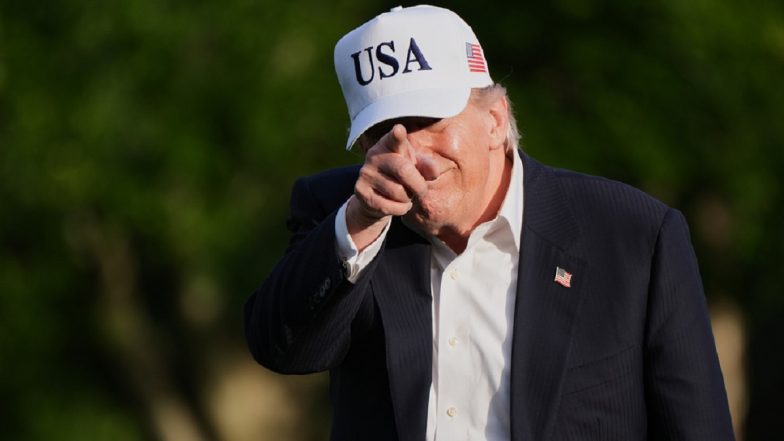
U.S. President Donald Trump announced that the United States is on the verge of finalizing a comprehensive nuclear agreement with Iran. Speaking to reporters and via social media, Trump asserted that the Iranian leadership is ready to accept terms that would permanently prevent Tehran from acquiring or developing nuclear weapons. The statements come amid a complex backdrop of regional tensions and ongoing diplomatic negotiations, which Trump indicated could conclude within days. While expressing high optimism for a diplomatic breakthrough, the U.S. President emphasized that Washington's strict naval blockade will remain fully enforced until a final, legally binding accord is signed.
Finalizing a 'Good Deal'
According to President Trump, Washington and Tehran are in the final stages of establishing a permanent framework. In recent media interviews, Trump revealed that a foundational element of the agreement—Iran's commitment to never possess a nuclear weapon—has already been agreed upon in principle. "We are very close to a final deal with Iran. It is going to be a good deal," Trump stated, noting that negotiations are proceeding rapidly. Donald Trump Calls on Israel and Iran To ‘Immediately Stop Shooting’ As Tensions Escalate.
The U.S. administration is reportedly seeking precise, amended language in the final document to explicitly clarify that Iran does not hold the right to develop, purchase, or acquire nuclear weapons under any circumstances. Furthermore, the proposed framework involves the coordinated extraction and destruction of Iran's remaining enriched uranium stockpile utilizing American technical equipment.
Verification and Sanctions Leverage
Despite the optimistic timeline, the U.S. administration is maintaining structural leverage. President Trump confirmed that the United States will not lift existing economic sanctions or unfreeze Iranian assets upfront as an initial gesture. Instead, any economic relief or the unfreezing of funds will be strictly conditional and performance-based. "If they behave, if they do a good job, we start talking," Trump remarked, adding that the ongoing U.S. naval blockade surrounding critical maritime corridors would stay in place as enforcement until the deal is officially certified.
U.S. Secretary of State Marco Rubio echoed this stance during a Senate Foreign Relations Committee briefing, confirming that for the first time, Iran has agreed to negotiate sensitive aspects of its nuclear program that it previously refused to discuss. Rubio emphasized that any future sanctions relief remains strictly dependent on verifiable compliance. Iran-Israel War: IRGC Launches ‘Operation Nasr’, Strikes Nevatim and Tel Nof Air Bases in Fresh Attack on Israel.
Regional Context and Potential Obstacles
The push for a permanent accord follows a period of heightened friction in the Middle East, including localized military engagements and exchanges of fire that occurred earlier in the year. A temporary, indefinite ceasefire reached in April has largely held, allowing negotiators to bridge gaps via intermediary channels. Trump dismissed concerns that sporadic regional flare-ups or criticisms from domestic political opponents would derail the diplomatic momentum, stating that recent intelligence suggests Iran's leadership is currently acting with greater rationality.
However, external factors continue to test the diplomatic track. Recent reports indicated ongoing friction regarding the exact terms of maritime transit through the Strait of Hormuz, a vital global energy chokepoint. While U.S. officials maintain that a final deal will guarantee open maritime access without arbitrary restrictions, semi-official Iranian media outlets have occasionally pushed back on the scope of U.S. demands, suggesting that minor logistical points remain under debate as the timeline moves forward.
(The above story first appeared on LatestLY on Jun 09, 2026 07:43 AM IST. For more news and updates on politics, world, sports, entertainment and lifestyle, log on to our website latestly.com).