US Strikes Iran in ‘Self-Defence’: Will Doha Truce Talks Collapse?
Fresh US strikes near the Strait of Hormuz and intensified Israeli attacks on Hezbollah in Lebanon have raised doubts over fragile Doha negotiations aimed at ending the wider West Asia conflict. While Washington and Tehran appear close to preliminary understandings on key issues, the latest military escalations risk undermining momentum toward a broader regional truce.

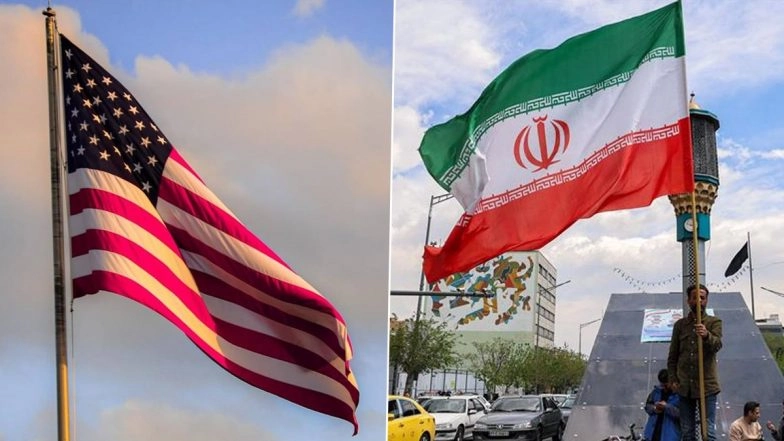
High-stakes negotiations in Doha aimed at easing the wider West Asia conflict are facing fresh uncertainty after two major military escalations involving the United States and Israel threatened to complicate fragile ceasefire efforts underway behind closed doors.
The developments come at a sensitive moment in Qatar-mediated talks between Washington and Tehran, where negotiators are attempting to secure broader understandings on regional security, Iran’s frozen overseas assets and the future of its enriched uranium stockpile. US-Iran War: US Forces Strike Missile Launch Sites and Mine-Laying Boats in Southern Iran in ‘Self-Defense’ Operation Amid Ongoing Ceasefire Talks.
US Launches ‘Self-Defence Strikes’ on Iran Near Hormuz Strait
The first escalation emerged from southern Iran, where US forces carried out what officials described as “self-defence strikes” against Iranian military targets near the strategic Strait of Hormuz on Monday, May 25.
According to United States Central Command spokesperson Captain Tim Hawkins, the operation targeted missile launch sites and Iranian vessels allegedly attempting to deploy naval mines in the waterway, through which a significant portion of global oil supplies passes each day. US-Iran Peace Agreement: Negotiators Agree on Broad Principles of Deal, Including Uranium Disposal.
“The operation was executed to protect American troops from imminent threats posed by Iranian forces,” Hawkins told Fox News.
Citing a senior US official, Fox News reported that two boats linked to the Islamic Revolutionary Guard Corps were caught laying naval mines in the Strait of Hormuz. US forces reportedly destroyed both vessels and also struck a surface-to-air missile site in Bandar Abbas that was allegedly targeting American warplanes.
Sources familiar with the matter described the strikes as “defensive” and said they do not necessarily signal the collapse of ongoing negotiations between Washington and Tehran. Iranian media outlets have also reported casualties linked to the operation.
Israel Intensifies Hezbollah Offensive
A second flashpoint emerged in Lebanon, where Israel sharply intensified strikes on Hezbollah positions in the south of the country. Israeli Prime Minister Benjamin Netanyahu said he had ordered the military to accelerate operations against the Iran-backed militant group.
“I have ordered an even greater acceleration of our operations,” Netanyahu said in a video statement posted on Telegram. The escalation comes as the United States and Iran attempt to finalise the contours of a broader regional agreement that could include the Lebanon front, where Israel and Hezbollah have been engaged in conflict since March 2.
Although a ceasefire officially came into effect on April 17, near-daily exchanges of fire between Israel and Hezbollah have continued, keeping tensions elevated despite ongoing diplomatic efforts. Neither Iran nor Qatari mediators have publicly responded to the latest military developments.
Will Doha Truce Talks Collapse? Peace Truce Enter Critical Phase
Senior Iranian officials, including Parliament Speaker Mohammad Bagher Ghalibaf, Foreign Minister Abbas Araghchi and Central Bank Governor Abdolnaser Hemmati, are currently in Doha for what is being described as one of the most consequential negotiation rounds since the conflict began.
According to Al Jazeera, citing an informed source, Washington and Tehran have already reached a preliminary understanding, mediated by Qatar, regarding Iran’s frozen overseas assets, one of Tehran’s central demands in the negotiations.
US President Donald Trump also signalled possible movement on another key sticking point: Iran’s enriched uranium stockpile.
In a post on Truth Social, Trump said the enriched uranium, which he described as “Nuclear Dust!”, could either be handed over to the United States for destruction or dismantled inside Iran under international supervision. The remarks are being closely watched because they appear to indicate a possible shift in Washington’s position on Iran’s nuclear material.
Earlier US proposals largely focused on removing enriched uranium entirely from Iranian territory. Trump’s latest comments, however, suggest the material could instead be dismantled inside Iran under an internationally monitored mechanism, a position closer to what Tehran has advocated during the talks.
Uncertainty Over Regional Truce
The latest military escalations have added new uncertainty to negotiations that were already considered fragile.
Diplomats and regional observers are now watching closely to see whether the Doha talks can withstand the renewed violence or whether the momentum toward a broader regional settlement begins to unravel.
For now, negotiators appear to be attempting to separate military developments on the ground from the diplomatic track in Doha. However, continued escalation in either Iran or Lebanon could significantly complicate efforts to secure a lasting agreement.
(The above story first appeared on LatestLY on May 26, 2026 07:18 AM IST. For more news and updates on politics, world, sports, entertainment and lifestyle, log on to our website latestly.com).