
Business News | Lot of Uncertainty in Overall Ecosystem in Country, Impacting Energy Supply, Crude Oil, Says PHDCCI CEO Ranjeet Mehta
Get latest articles and stories on Business at LatestLY. The escalating crisis in West Asia is exerting a definite impact on India, triggering significant disruptions in energy supplies and global logistics. While the Indian economy maintains strong fundamentals and a high level of resilience, the ongoing conflict is creating an atmosphere of deep uncertainty across multiple industrial sectors.

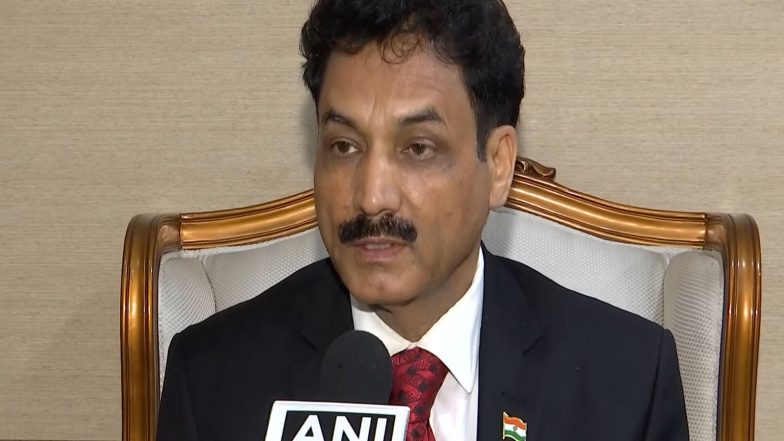
New Delhi [India], March 23 (ANI): The escalating crisis in West Asia is exerting a definite impact on India, triggering significant disruptions in energy supplies and global logistics. While the Indian economy maintains strong fundamentals and a high level of resilience, the ongoing conflict is creating an atmosphere of deep uncertainty across multiple industrial sectors.
Speaking to ANI, Ranjeet Mehta, CEO and Secretary General of the PHD Chamber of Commerce and Industry (PHDCCI), stated that the current situation is "very worrisome" and has become a primary concern for industry members.
Also Read | Leonid Radvinsky Dies: All About Ownership and Revenue of OnlyFans As Owner Passes Away After Cancer Battle.
"People are really concerned about the supply of energy, supply of gas, supply of crude oil and we have seen there has been a lot of disruption in the supply chain also. There are problems at the ports. This is a time of uncertainty. There's a lot of uncertainty in the overall ecosystem in the country," he said.
Mehta highlighted that India's long-standing trade relations with Iran are particularly vulnerable during this period. He explained that "many of our fertilizers, our gas, our crude oil, comes from Iran," and specifically pointed to the Strait of Hormuz as a critical chokepoint.
According to the CEO, "60% of supplies" pass through that passage, which has been "very very badly affected" by the regional instability.
The conflict has also impacted India's ties with other major Gulf partners, including Saudi Arabia, the United Arab Emirates, and Qatar. Mehta observed that because India maintains "very good relations" with these countries, their involvement in the crisis directly reaches Indian shores.
"So when they are affected in this war, definitely there is an impact on India," he remarked, adding that if the crisis lasts longer, the country will be forced to look for "new ways" to secure its energy needs.
The economic strain is already visible in the sharp rise of global energy prices. Mehta pointed out that crude oil, which was approximately USD 62 per barrel before the recent escalations, has surged significantly.
"Now it is USD 117, USD 112, USD 106. It's around double," he said. This price hike has placed immediate "pressure on the Rupee also," leading to its depreciation against the dollar.
He noted that while the government is attempting to source energy from the US, Australia, and Mozambique, "this has a cost" that impacts the broader economy.
Beyond energy, the ripples of the war are felt in the service and manufacturing sectors. Mehta noted that the "tourism industry is affected, our MSMEs are affected, travel has become very expensive," which has led many to postpone their travel plans. This shift is currently weighing on the hospitality and manufacturing industries.
Mehta also emphasized the necessity of a diplomatic resolution, echoing the stance of the Indian leadership. "Even Prime Minister Modi has also said that war is not the answer to any problem. Ultimately, it is diplomacy, discussion, and sitting around the table that will bring some kind of solution. The war will never get any solution to anybody," he stated.
He maintained that history shows "only the dialogue that brings the solution" and expressed hope that the involved leaders would engage in discussions to relieve the global suffering caused by the instability in the Gulf energy hub. (ANI)
(The above story is verified and authored by ANI staff, ANI is South Asia's leading multimedia news agency with over 100 bureaus in India, South Asia and across the globe. ANI brings the latest news on Politics and Current Affairs in India & around the World, Sports, Health, Fitness, Entertainment, & News. The views appearing in the above post do not reflect the opinions of LatestLY)