
India News | 1984 Bhopal Gas Tragedy: SC to Deliver Verdict Tomorrow on Centre's Curative Plea for Additional Compensation to Victims
Get latest articles and stories on India at LatestLY. The Supreme Court will deliver the verdict on the Centre's curative plea for enhanced compensation for the victims of the 1984 Bhopal Gas tragedy from US-based firm Union Carbide Corporation, now owned by Dow Chemicals, tomorrow.

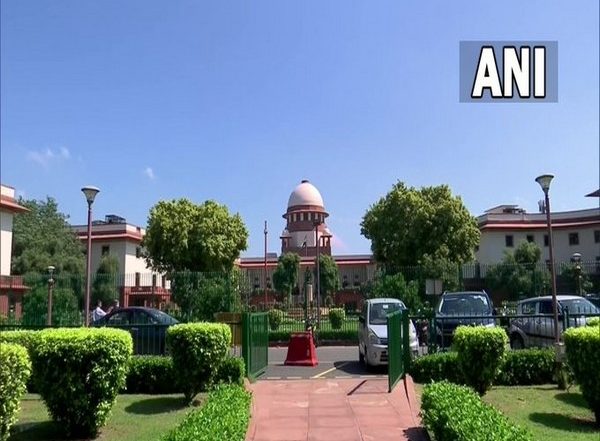
New Delhi [India], March 13 (ANI): The Supreme Court will deliver the verdict on the Centre's curative plea for enhanced compensation for the victims of the 1984 Bhopal Gas tragedy from US-based firm Union Carbide Corporation, now owned by Dow Chemicals, tomorrow.
On January 12, the Supreme Court on Thursday reserved its verdict on the Centre's curative plea for enhanced compensation for the victims of the 1984 Bhopal Gas tragedy from US-based firm Union Carbide Corporation, now owned by Dow Chemicals.
The judgement will be pronounced by a five-judge constitution bench headed by Justice Sanjay Kishan Kaul. The bench also comprises Justices Sanjiv Khanna, Abhay S Oka, Vikram Nath and JK Maheshwari.
The Centre's curative plea for enhanced compensation for the victims sought a direction to Union Carbide and other firms for over Rs 7,400 crore additional amount over and above the earlier settlement amount of USD 470 million (Rs 715 crore at the time of settlement in 1989) for paying compensation to the gas tragedy victims.
The government sought a re-examination of the apex court's February 14, 1989 judgment which had fixed compensation at USD 470 million, contending that the 1989 settlement was seriously impaired.
The contention of the Central government was that the compensation, determined in 1989, was arrived on the basis of assumptions of truth unrelated to realities.
During the hearing, successor firms of the Union Carbide Corporation told the apex court that the depreciation of the rupee since 1989, when a settlement was arrived at between the company and the Centre, cannot be a ground to now seek a top-up of compensation for the victims.
Senior advocate Harish Salve, appearing for one of the firms, had told the top court that the government of India never suggested at the time of the settlement that it was inadequate.
The Bhopal gas tragedy, touted as the world's worst industrial disaster, had claimed the lives of several thousand people after deadly gas leaked from the Union Carbide India Limited pesticide plant on the intervening night of December 2 and 3, 1984.
The tragedy unfolded in Bhopal, Madhya Pradesh, when the highly dangerous and toxic gas, methyl isocyanate (MIC), escaped from the Union Carbide India Limited (UCIL) and resulted in the death of 5,295 human beings, injuries to almost 5,68,292 persons besides loss of livestock.
The apex court had already dismissed a curative petition filed by the Central Bureau of Investigation (CBI) in 2010 for enhancement of punishment. The agency had approached the Supreme Court, facing public outcry over a Bhopal court order that sentenced Union Carbide executives to two years imprisonment. Those convicted included former Union Carbide India chairman Keshub Mahindra.
Dismissing the CBI's curative plea in 2011, the top court had held that "no satisfactory explanation has been given to file such curative petitions after about 14 years from the 1996 judgment". (ANI)
(The above story is verified and authored by ANI staff, ANI is South Asia's leading multimedia news agency with over 100 bureaus in India, South Asia and across the globe. ANI brings the latest news on Politics and Current Affairs in India & around the World, Sports, Health, Fitness, Entertainment, & News. The views appearing in the above post do not reflect the opinions of LatestLY)