
India News | From Blue Streets to Graffiti: India's Cities Redefine Identity Through Art
Get latest articles and stories on India at LatestLY. From the iconic blue lanes of Jodhpur to the dynamic street art of New Delhi, this artistic transformation is reshaping tourism, livelihoods, and youth expression.

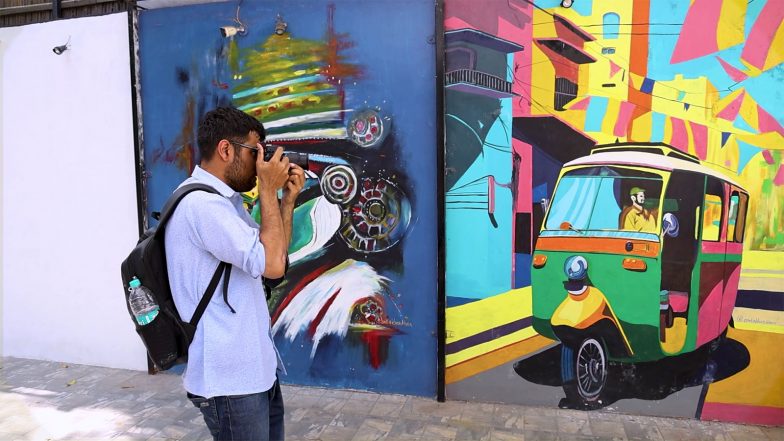
New Delhi [India], April 20 (ANI): Walls across India are no longer just structures of brick and cement; they are evolving into vibrant canvases of identity, culture, and expression.
From the iconic blue lanes of Jodhpur to the dynamic street art of New Delhi, this artistic transformation is reshaping tourism, livelihoods, and youth expression.
Also Read | Online LPG Cylinder Bookings Increased to 99% Amid US-Iran War 2026: Government.
Jodhpur, globally known as the "Blue City," draws visitors with its maze of blue-painted houses and narrow lanes that feel like stepping into a living painting.
A tourist, Simon, said, "I saw many cultural designs and symbols here, and they blend beautifully with the blue colour."
Another visitor, Colin Clark, noted, "These paintings are not just decorative--they reflect Jodhpur's history. You can understand the city's past just by walking through its streets."
Traditionally, the blue colour was believed to keep homes cool and repel insects, and was also associated with Brahmin identity and devotion to Lord Shiva. Over time, this tradition has evolved into a major tourism attraction.
With the rise of social media, Jodhpur's blue lanes have gained even greater global visibility. A resident shared, "Reels and videos have taken this identity far and wide, bringing more tourists to the city."
This surge in tourism has boosted the local economy, with old homes being transformed into cafes, handicraft shops, and art spaces, creating new livelihood opportunities.
Meanwhile, in the national capital, walls tell a different story. In New Delhi, modern street art and graffiti are redefining urban aesthetics.
Renowned graffiti artist Art Akbar said, "For an artist, there are no limits. Even an empty wall is full of possibilities. Today, murals and graffiti are transforming the city's vibe."
These artworks have turned Delhi's streets into open-air galleries, where passersby stop, admire, and capture the visuals.
A student, Madhav, said, "Art is about connection. Even in the digital age, experiencing it in person feels special."
Tourist Sangeeta Verma added, "Artists now design their work keeping social media in mind, so it can reach a wider audience."
Whether it is Jodhpur's traditional blue walls or Delhi's contemporary graffiti, both highlight how public art can redefine a city's identity. Today, these walls are more than just surfaces -- they are voices of culture, platforms of expression, and drivers of economic opportunity, reflecting a changing India. (ANI)
(The above story is verified and authored by ANI staff, ANI is South Asia's leading multimedia news agency with over 100 bureaus in India, South Asia and across the globe. ANI brings the latest news on Politics and Current Affairs in India & around the World, Sports, Health, Fitness, Entertainment, & News. The views appearing in the above post do not reflect the opinions of LatestLY)