Who Is Justice Swarana Kanta Sharma? Delhi High Court Judge at Centre of Row With Arvind Kejriwal
Delhi High Court judge Swarana Kanta Sharma is set to rule on Arvind Kejriwal’s plea seeking her recusal from the excise policy case. Kejriwal argued potential bias citing prior rulings, alleged conflicts of interest, and affiliations. The CBI opposed the plea, calling it a dangerous precedent. The court had earlier reserved its order.

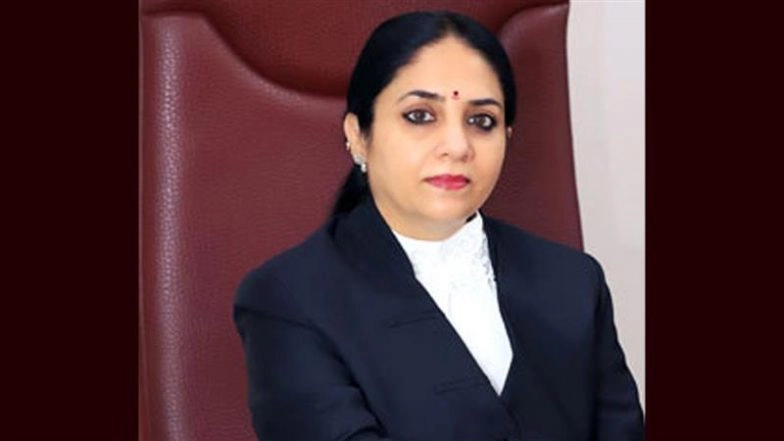
The Delhi High Court is set to pronounce its decision on Monday on whether Justice Swarana Kanta Sharma should recuse herself from hearing a petition linked to the Delhi excise policy case involving Aam Aadmi Party (AAP) convenor Arvind Kejriwal. The ruling is expected at 4:30 pm.
The recusal plea has placed Justice Sharma of the Delhi High Court at the centre of a high-profile legal and political debate, raising questions about judicial conduct, perceived bias, and courtroom propriety. CBI Opposes Arvind Kejriwal Affidavit on Judge Swarana Kanta Sharma’s Family, Flags ‘Social Media Campaign’ and Risks to Judiciary.
Who Is Justice Swarana Kanta Sharma
Justice Sharma began her judicial career after studying English Literature at Delhi University’s Daulat Ram College, followed by law degrees and later a PhD focused on judicial education systems across several countries.
She entered the judicial services at a young age and spent over three decades in the district judiciary before being elevated to the Delhi High Court in March 2022. Liquor Policy Case: ED Moves Delhi High Court Challenging Arvind Kejriwal’s Acquittal in Complaints Over Non-Compliance With Summons.
Her experience spans multiple forums, including family courts, sexual offence cases, and CBI-related trials. She has also authored books ranging from legal education to fiction.
The Case That Brought Her Into Focus
The current controversy stems from proceedings in the Delhi excise policy case. Justice Sharma heard matters related to the case, including a CBI challenge to a trial court order that had discharged several accused, including Kejriwal. She also passed interim directions in the matter, which later became part of the arguments for recusal.
Kejriwal argued that key observations were made after limited hearing and without full opportunity for his side to respond.
Arguments on Recusal and Perception of Bias
Appearing personally before the court, Kejriwal sought Justice Sharma’s recusal, arguing that judicial fairness includes not only actual bias but also the “appearance of bias.”
He cited prior judgments on judicial impartiality and pointed to her participation in events organised by a lawyers’ body linked to the Rashtriya Swayamsevak Sangh as a factor raising concerns of perception. He also raised a potential conflict of interest based on the professional roles of her children, who are empanelled as government lawyers.
CBI’s Opposition and Court’s Response
The Central Bureau of Investigation (CBI) opposed the plea, calling it a dangerous precedent that could undermine judicial independence.
It argued that attending legal events does not indicate bias and that the judge’s family members have no connection to the case. Justice Sharma has already reserved her order after hearing both sides and considering additional submissions.
(The above story first appeared on LatestLY on Apr 20, 2026 07:06 PM IST. For more news and updates on politics, world, sports, entertainment and lifestyle, log on to our website latestly.com).