Honda Motor Co Reports First Annual Loss Since 1957 Amid USD 10 Billion EV Strategy Pivot and US Policy Shifts
Honda Motor Co reported its first full-year operating loss in nearly 70 years, as it faced a costly reassessment of its EV strategy. The company posted a net loss of 423.9 billion yen ($2.7 billion) for fiscal year ending March 2026, driven by write-offs in North America and weakening demand for electric vehicles.

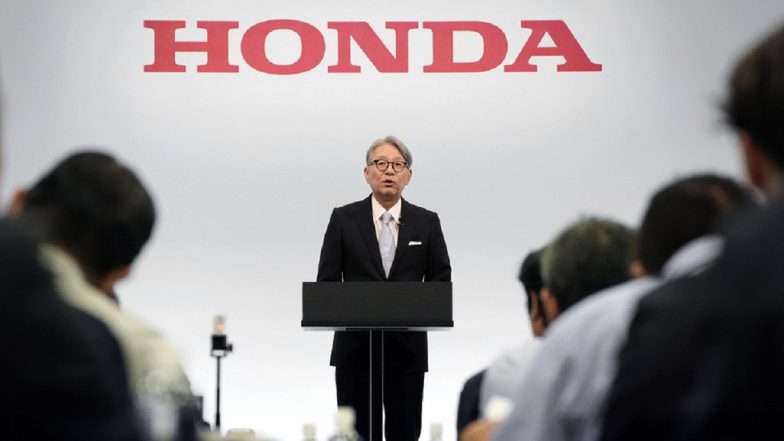
Honda Motor Co. reported its first full-year operating loss in nearly seven decades on Thursday, as the Japanese automaker grapples with the fallout of a costly reassessment of its electric vehicle (EV) strategy. The company booked a net loss of 423.9 billion yen ($2.7 billion) for the fiscal year ending March 2026, driven by massive write-offs in North America and a cooling global appetite for battery-powered cars.
A Historic Deficit
The loss marks a dramatic reversal for Honda, which earned a record profit just two years ago. The downturn is primarily attributed to a ¥1.58 trillion ($10 billion) hit related to the company’s EV business. This includes the cancellation of three major EV models planned for the North American market and the indefinite suspension of a multi-billion dollar EV value chain project in Ontario, Canada. Honda Reports First Loss in Decades as It Slows EV Strategy.
CEO Toshihiro Mibe told reporters at a news briefing that the "drastic shifts" in the global market necessitated a prompt reorganization of investments. "We are rebuilding our automobile business structure to ensure mid- to long-term growth," Mibe said, noting that the company had been forced to respond to slowing demand and a rapidly changing regulatory landscape.
The 'Trump Effect' and Market Pressures
The automaker cited several external factors for its financial struggle, most notably shifting U.S. policies. The second administration of President Donald Trump has rolled back EV tax credits and introduced higher tariffs on imported components, undermining the financial logic of Honda’s earlier, aggressive pivot toward electrification. In addition to policy changes in the U.S., Honda has faced intense pressure in China. Local manufacturers have successfully leveraged shorter development cycles and advanced software features to gain market share, leaving Honda’s current EV offerings struggling to compete on price and technology.
Pivot to Hybrids and Recovery Path
Despite the record loss, Honda’s stock rose nearly 8% following the announcement, as investors reacted positively to a clear recovery roadmap. The company plans to lean heavily on its profitable motorcycle division-which saw record sales of 22.1 million units this year-and its robust hybrid vehicle lineup to bridge the gap. Honda has announced it will reallocate 4.4 trillion yen toward gasoline and hybrid technologies over the next three years. The company aims to launch 15 next-generation hybrid models by 2030, betting that consumers will prefer the flexibility of gas-electric power as charging infrastructure and EV costs remain hurdles for many buyers. Honda Records Its First-ever Annual Loss.
Looking Ahead
For the current fiscal year ending March 2027, Honda is forecasting a return to profitability with a projected net profit of 260 billion yen. While the company expects to incur another 500 billion yen in EV-related expenses this year, executives believe the worst of the restructuring is over. The company’s "Triple Half" approach-aiming to cut development costs, timeframes, and workloads by 50%-is expected to return the automobile segment to record-high operating profits by 2029. For now, the historic loss serves as a stark reminder of the financial risks facing legacy automakers as they navigate an uncertain transition to a zero-emission future.
(The above story first appeared on LatestLY on May 14, 2026 10:42 PM IST. For more news and updates on politics, world, sports, entertainment and lifestyle, log on to our website latestly.com).