Union Budget 2026: Consumer and Retail Sector Urges Government for Demand-Led Growth Measures
The CPR sector, which contributes over 10% to India’s GDP and employs approximately 8% of the workforce, is currently at a critical juncture. Following a period of input cost volatility and geopolitical tensions, industry stakeholders are urging Finance Minister Nirmala Sitharaman to prioritize 'consumption revival' in Budget 2026.

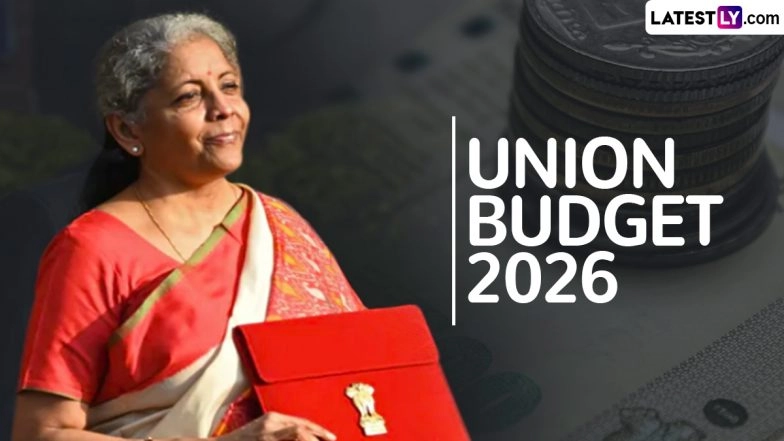
New Delhi, January 31: As India prepares for the presentation of the Union Budget 2026-27 on February 1, the consumer products and retail (CPR) sector is calling for a pragmatic policy roadmap focused on reviving demand and simplifying taxation. Industry leaders are optimistic yet cautious, seeking targeted measures to boost disposable income and strengthen domestic manufacturing amidst shifting global trade dynamics and persistent supply chain pressures.
The CPR sector, which contributes over 10% to India’s GDP and employs approximately 8% of the workforce, is currently at a critical juncture. Following a period of input cost volatility and geopolitical tensions, industry stakeholders are urging Finance Minister Nirmala Sitharaman to prioritize "consumption revival." Union Budget 2026 Date, Time, Live Streaming: When and Where to Watch Nirmala Sitharaman’s Budget Speech.
Projections suggest the retail market could expand from $952 billion in 2024 to over $1.6 trillion by 2030. To reach this milestone, experts suggest that rationalizing Goods and Services Tax (GST) rates or providing direct income tax relief to lower-income households would have a significant multiplier effect on mass-market demand.
Streamlining E-commerce and Digital Retail
Digital transformation remains a double-edged sword for the industry. While the e-commerce and Direct-to-Consumer (D2C) segments are growing rapidly, smaller brands continue to struggle with complex compliance requirements. Budget 2026 Date: Know When Is It Presented, Time, and Live Streaming Details.
Business leaders have highlighted the burden of Tax Collected at Source (TCS) on e-commerce transactions and state-wise GST complexities. The industry is seeking a simplification of these provisions to reduce working-capital bottlenecks. Additionally, there are calls for tax credits for investments in digital infrastructure, such as AI-powered supply chain solutions and modern Point of Sale (POS) systems, to help traditional retailers upgrade their technology.
Strengthening "Make in India" Competitiveness
To enhance India’s position in the global supply chain, the sector is advocating for a renewed focus on domestic manufacturing. Key demands include:
-
Concessional Tax Regimes: The reintroduction of corporate tax incentives for new manufacturing units to maintain competitiveness.
-
R&D Incentives: Weighted deductions for research and development, particularly in food processing, sustainable packaging, and energy-efficient machinery.
-
Customs Rationalization: Simplifying the current tariff structure—which currently spans eight slabs—to reduce disputes and lower the cost of raw materials.
Addressing Rural and Middle-Class Concerns
Recent reports indicate a shift in consumer sentiment toward a more pragmatic outlook. Concerns over inflation and job security have led to more restrained discretionary spending.
To counter this, the industry is hopeful for a "Budget of Opportunity" that increases the standard deduction for salaried individuals and introduces measures to stabilize the prices of essential commodities. Strengthening rural incomes through infrastructure spending and agri-linked incentives is also seen as vital to supporting the broader consumption cycle.
(The above story first appeared on LatestLY on Jan 31, 2026 03:51 PM IST. For more news and updates on politics, world, sports, entertainment and lifestyle, log on to our website latestly.com).