Wangala Festival 2025: What and When Is 100 Drums Festival of Meghalaya? Know Date, History, Rituals and Significance of the Harvest Festival Held in Honour of ‘Saljong’
Wangala Festival is the occasion when the tribals offer sacrifices to please their main deity Saljong - the Sun God. It is generally celebrated for two days and sometimes continues for even a week. The ceremony performed on first day is known as "Ragula" is performed inside the house of the chief

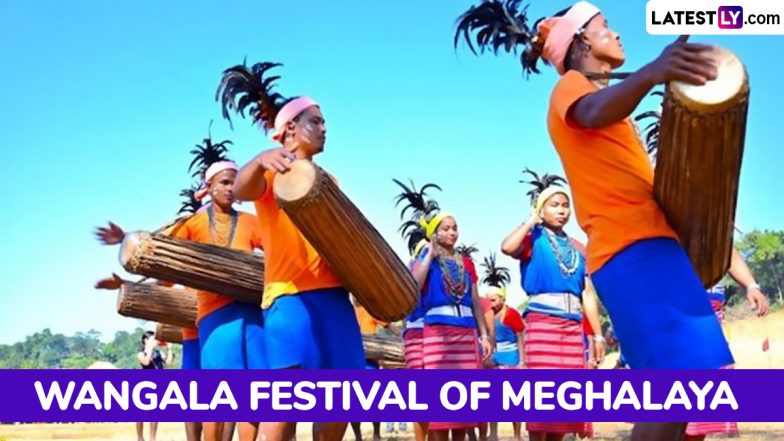
The Wangala Festival, also popularly known as the 100 Drums Festival, is one of the most vibrant and significant cultural celebrations of Meghalaya. It is a harvest festival celebrated by the Garo tribe, who live in Meghalaya, Nagaland, and Assam in India, to honour Misi Saljong, the Sun God of fertility and good harvest. Wangala is celebrated in the months from September to December, with different villages setting different dates for the occasion. This year, the Wangala Festival 2025 in Meghalaya falls on November 7. Wangala Festival of Meghalaya is the most popular festival among the Garos of Meghalaya, India.
The celebration of the Wangala Festival marks the end of a period of toil, which brings good output of the fields. It also signifies the onset of winter. The festival is a way to preserve and promote the cultural identity of Garos in Meghalaya and exhibit the culture and tradition of the region. In this article, let’s know more about the Wangala Festival in Meghalaya, its history and significance and more. Bank Holidays in November 2025: From Kannada Rajyothsava to Wangala Festival, Banks To Remain Closed for More Than 10 Days Next Month; Check Full List of Bank Holiday Dates.
Wangala Festival 2025 Date
Wangala Festival 2025 falls on Friday, November 7.
Wangala Festival History
As per historical records, the first Hundred Drums Wangala Festival was organised on December 6 and 7 in the year 1976 at Asanang, 18 km from Tura, India. Since then, it has been celebrated every year. The festival has grown so big as to include dance troupes from outside Garo Hills such as Bangladesh and Karbi Anglong. The 100 Drums Festival is a state-sponsored event, attracting many local, national and international tourists every year.
Wangala Festival Celebrations
During the Wangala Festival, men and women dress in colourful traditional attire and perform the famous Wangala dance, accompanied by rhythmic beats of long drums and buffalo horns. The sound of the drums symbolises happiness and prosperity.
Wangala Festival is the occasion when the tribals offer sacrifices to please their main deity Saljong - the Sun God. It is generally celebrated for two days and sometimes continues for even a week. The ceremony performed on first day is known as "Ragula" is performed inside the house of the chief. On the second day is known as "Kakkat”, where people dressed in their colourful costumes with feathered headgears dance to the tune of music played on long oval-shaped drums. The popular dance forms are performed during the festival.
Wangala Festival Significance
The Wangala festival holds great cultural significance as it showcases the rich traditions and folklore of the Garos and also strengthens community bonds through music, dance, and feasting. This festival is celebrated with great fanfare and enthusiasm after the completion of the harvest season and marks a time of gratitude, joy, and togetherness among the Garo people. The Wangala Festival attracts visitors from across India and beyond, showcasing Meghalaya’s tribal heritage and unforgettable cultural experience.
(The above story first appeared on LatestLY on Nov 05, 2025 08:00 AM IST. For more news and updates on politics, world, sports, entertainment and lifestyle, log on to our website latestly.com).