How Did the People on the Cruise Ship Get Hantavirus?
Authorities are investigating how passengers on MV Hondius contracted hantavirus, with WHO suggesting possible rare person-to-person transmission of the Andes strain. Eight cases and three deaths have been reported. Experts say infection likely began before boarding, but close-contact spread is being examined as passengers remain under quarantine and strain identification continues.

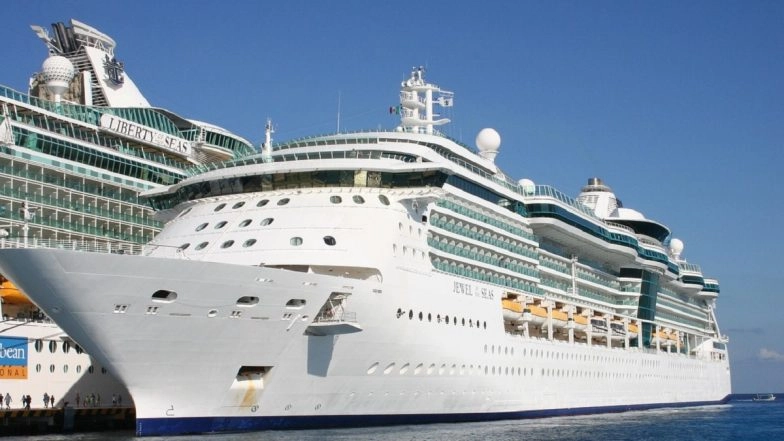
Health authorities are investigating how passengers aboard the cruise ship MV Hondius contracted hantavirus, as the World Health Organization (WHO) says there may be limited person-to-person transmission in the ongoing outbreak. The vessel, carrying nearly 150 people, has reported eight infections and three deaths, with most passengers currently under quarantine at sea.
The outbreak has raised urgent questions because hantavirus is usually spread from rodents to humans, not between people. Scientists say this incident may involve the rare Andes strain, which is known in exceptional cases to spread through close contact such as shared cabins or prolonged exposure among family members. Hantavirus Outbreak on Cruise Ship: MV Hondius Passengers Could Face up to 8 Weeks in Quarantine.
Switzerland Reports Case of Hantavirus in Man Who Recently Traveled on Hondius Cruise Ship
Swiss authorities have confirmed a case of #hantavirus identified in a passenger from the MV Hondius cruise ship.
He had responded to an email from the ship’s operator informing the passengers of the health event, and presented himself to a hospital in Zurich, Switzerland, and… pic.twitter.com/4mmBd7qSA4
— World Health Organization (WHO) (@WHO) May 6, 2026
How Did the People on the Cruise Ship Get Hantavirus?
WHO epidemiologist Maria Van Kerkhove said early findings suggest passengers were likely infected before boarding the ship, but added that limited human transmission cannot be ruled out.
“Our assumption is they were infected off the boat and then joined the cruise,” she said. “However, we do believe that there may be some human-to-human transmission that’s happening among the really close contacts, the husband and wife, people who’ve shared cabins, etc.” The ship began its journey in Argentina, a region where the Andes strain is present, though experts say the exact source remains unclear. Hantavirus Outbreak on Cruise Ship: WHO Flags Possible Human-to-Human Transmission.
What Makes This Outbreak Unusual
Hantavirus is typically transmitted through exposure to infected rodent droppings, urine, or saliva. Infection occurs when contaminated particles become airborne and are inhaled. Human-to-human spread is extremely rare and has only been documented with the Andes strain.
Professor Sabra Klein said transmission requires close physical contact. “Andes virus… requires a significant degree of contact with bodily fluids,” she said. “That is where you have the spread.” Doctors emphasize that unlike respiratory viruses such as flu or Covid-19, hantavirus does not spread easily between people.
Of the nearly 150 passengers and crew, eight people have tested positive or shown symptoms, according to the WHO. Three infections have been confirmed by laboratory testing. Three passengers have died. A British man is in intensive care in South Africa, while others with mild symptoms are being monitored.
The outbreak began after the ship departed from Ushuaia, Argentina, on April 1, stopping at multiple South Atlantic and Antarctic locations. Early cases included a 70-year-old passenger who developed symptoms days into the voyage and later died.
Most passengers remain in quarantine onboard the ship, which is currently anchored off Cape Verde. Some critically ill patients have been evacuated, including three passengers flown to the Netherlands.
The European Centre for Disease Prevention and Control said patients requiring urgent care are being transferred, while others will be screened further in the Canary Islands before repatriation. Health officials say the incubation period can last two to eight weeks, meaning additional cases may still emerge.
Experts say there are still major gaps in understanding how transmission may have occurred. Dr. Shauna Gunaratne noted that the infectious dose and exact transmission conditions remain unclear. “It’s not really understood,” she said, referring to how much exposure is needed for infection.
Scientists are also investigating whether exposure occurred on land in Argentina or through contaminated supplies brought onboard.
Researchers are now working to confirm which hantavirus strain is responsible. The Andes strain, found in South America, has a fatality rate of up to 40% and is the only type known to occasionally spread between humans.
Morgan Gorris said identifying the strain is crucial. “If we can identify which hantavirus caused this disease, that will give us a clue to where the cases originated,” she said. Officials expect sequencing results in the coming days
Hantavirus outbreaks are rare but can be severe, often causing respiratory failure. Unlike Covid-19, experts stress that the current situation does not indicate a pandemic risk. Still, scientists say the combination of a cruise ship environment, close contact among passengers, and a rare strain capable of limited human transmission makes this outbreak unusual and closely monitored.
(The above story first appeared on LatestLY on May 06, 2026 06:44 PM IST. For more news and updates on politics, world, sports, entertainment and lifestyle, log on to our website latestly.com).