What is Alzheimer's Disease? Symptoms, Causes, Treatment and Preventive Measures of This Degenerative Disease
Alzheimer's disease is a brain disorder that eats away at the memory of the person until they lose the sense of time and space.


In 1901, Dr Alois Alzheimer was observing the brain of a woman Auguste D who had died of an unusual mental illness. He was curious about the 50-year-old woman whose disease had progressed with increasing intensity. Her husband recalled that she was suffering from sleep disorders, disturbances of memory, aggressive behaviour, crying and progressive confusion. Little did Dr Alzheimer know that his clinical investigation into her death would result in a major turning point in medical history. He would discover a disease that will make his name eponymous with one of the most chronic and severe diseases in the world today – Alzheimer’s disease. Here’s what you need to know about the symptoms, causes, treatment and prevention of this degenerative neurological disease. George Fernandes Dies: Former Defence Minister Breathes His Last at 88.
What is Alzheimer’s Disease?
The National Institutes of Health (NIH) describes Alzheimer’s as “an irreversible, progressive brain disorder that slowly destroys memory and thinking skills.” It mostly affects people in their mid-60s.
The word is often used interchangeably with ‘dementia’ but Dr Vinit Suri Senior Consultant, Neurology, Indraprastha Apollo Hospital says the two are not the same.
“People generally think that the terms ‘dementia’ and Alzheimer’s mean the same. So, sometimes they use it interchangeably. However, these two conditions are not similar and Alzheimer is a type of dementia.”
“India accounts for than 4 million people suffering from some form of dementia and Alzheimer’s being the most common condition out of all of them affect around 1.6 million people,” stressed Dr Suri. World Alzheimer’s Day 2018: 5 Myths about The Commonest Form of Dementia.
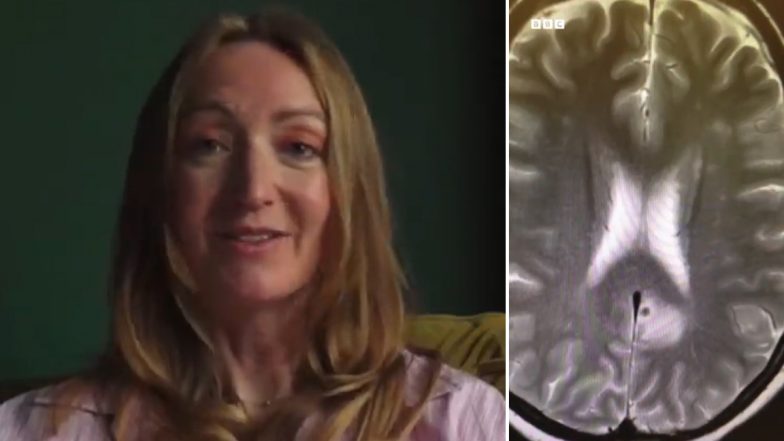
Here's How Alzheimer's Disease Changes the Brain
What Are The Symptoms of Alzheimer’s Disease?
Memory Loss- “People afflicted with the condition start forgetting dates and events. They even forget their way around familiar paths,” he adds.
Difficulty in Planning and Performing Familiar Tasks– The early signs of Alzheimer’s include an inability to keep track of plans such as paying bills on time. They may also face problems keeping track of things in their everyday life. World Alzheimer’s Day 2018: 5 Bollywood Movies That Depicted Alzheimer’s Disease.
Confusion With Time and Place – Among the early signs, people with Alzheimer’s may forget the day, month or year or the season. They may have trouble remembering where they are at.
Vision Problems – Some people may experience vision problems as a sign of impending Alzheimer’s. Reading, judging distance or recognising colours may become difficult.
Trouble Speaking – People suffering from Alzheimer’s may have trouble conversing and may often be at loss of words since they can’t remember the appropriate word.
Failure To Recognise Family- When the disease gets to its advanced stage, people stop recognising their family members and relatives.
Behavioural Change- The eroding memory can often change the person’s behaviour, making them seem like a whole new person. They may withdraw themselves from social life.
Paranoia and Aggression- People in the more advanced stages of the disease also become paranoid and aggressive since they can’t recognise anyone around them.
What Causes Alzheimer’s Disease?
According to the NIH, the cause of Alzheimer’s has not been fully understood. It could possibly be a combination of factors such as genetic, environmental, lifestyle, etc.
Genetics – One of the possible causes of Alzheimer’s is genetics. The gene apolipoprotein E (APOE) may be responsible for Alzheimer’s in people who have a late-onset form of the disease (after 60s). But that doesn’t mean carrying the gene would mean that the person would develop the disease.
People who have early onset of Alzheimer’s (between 30s and mid-60s), may have inherited a change in one of three genes, which causes an early-onset familial Alzheimer’s disease. NIH states that other cases of early-onset Alzheimer’s could be caused by a genetic component related to factors other than these three genes.
Environmental and Lifestyle Factors – Alzheimer’s risk may be influenced by environment and lifestyle choices. According to research, a host of factors apart from genetics may play a role in the development of the disease. Lifestyle choices that affect brain health like diet, exercise and social engagement can have a role in Alzheimer’s risk.
Underlying Health Conditions – Heart diseases, stroke, high blood pressure, diabetes and obesity are all related to cognitive decline. Currently, research is being done in deducing how reducing the risk of these diseases may help in reducing overall Alzheimer’s risk.
How Is Alzheimer’s Disease Treated?
Since the disease is progressive and degenerative, it can never be cured only. No drug can halt the progression of the disease but some can address behavioural abnormalities and improve day-to-day functioning.
Diagnosis – The disease is diagnosed after investigating the person’s medical history, past medical problems, daily activitites, changes in behaviour and overall health.
Tests to check the person’s memory, problem-solving skills, attention span and linguisitic skills are carried out. Blood and urine tests, brain scans, CT scans, PET and MRI are conducted to detect Alzheimer’s.
Treatment – The treatment of Alzheimer’s diseases is complex. No one method or drug can treat it. Currently, treatment focuses on managing the symptoms such as memory loss and behavioural change. Drugs such as Donepezil (Aricept®), rivastigmine (Exelon®), and galantamine (Razadyne®) are used to treat mild to moderate Alzheimer’s.
Small measures can go a long way in helping an Alzheimer’s patient cope with the difficulties of day-to-day living. Labelling objects, maintaining a routine, keeping the room well lit in the evenings can help them cope well.
Preventing Alzheimer’s
According to Dr Suri, measures to prevent dementia includes improving lifestyle by having a healthy diet, and controlling hypertension, diabetes, dyslipidemia. Since it is a degenerative brain disease, keeping the organ healthy by indulging in stimulating exercises such as learning a new language, playing an instrument, solving mental puzzles will do a lot of good.
(The above story first appeared on LatestLY on Jan 29, 2019 12:18 PM IST. For more news and updates on politics, world, sports, entertainment and lifestyle, log on to our website latestly.com).