Delhi High Court Grants Wife Legal Guardianship of Husband After Massive Brain Haemorrhage Leaves Him in Vegetative State
The Delhi High Court has appointed a wife as the legal guardian of her husband, who has been lying in a persistent vegetative state since February 2025 after suffering a massive intracranial haemorrhage.

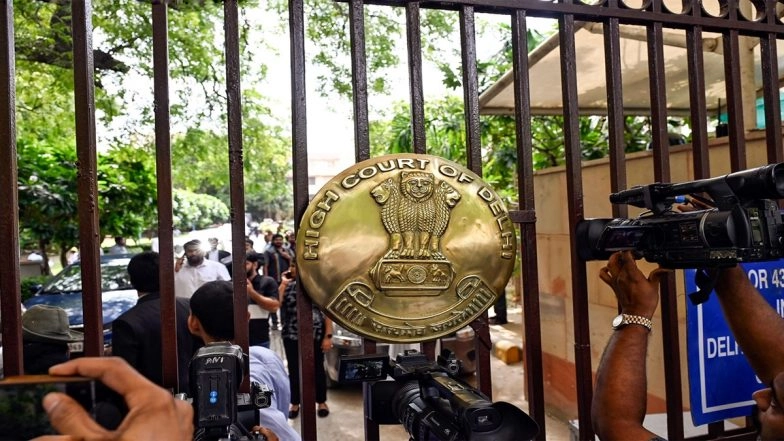
New Delhi, January 2: The Delhi High Court has appointed a wife as the legal guardian of her husband, who has been lying in a persistent vegetative state since February 2025 after suffering a massive intracranial haemorrhage. Invoking its parens patriae jurisdiction, a single-judge Bench of Justice Sachin Datta allowed a writ petition filed by Professor Alka Acharya, seeking guardianship of her husband Salam Khan, who underwent emergency brain surgery and has since remained unconscious, bed-bound and dependent on life-support measures.
Recording the findings of a medical board from G.B. Pant Institute of Post Graduate Medical Education and Research (GIPMER), the Delhi High Court noted that Khan is in a “persistent vegetative state” with “disability percentage equal to 100 per cent” and is “not fit to take any major decisions on his own”. “The patient is not fit to undertake his daily activities and needs constant supportive care and supervision,” the medical board opined, adding that he requires a tracheostomy tube for breathing and a Ryle’s tube for feeding. In its decision, the Delhi HC also referred to a detailed enquiry report submitted by the Sub-Divisional Magistrate (South-West), which verified the medical condition of Khan, confirmed the marital relationship, and found “nothing adverse or contrary to records” against the petitioner. Fake Little Hearts Biscuits: Delhi High Court Restrains Sale of Britannia Counterfeits, Directs Amazon to Delist Products.
The SDM reported that the petitioner-wife “fully satisfies all guidelines” for appointment as a guardian and that there was “complete absence of any dispute or conflict of interest”. Observing that there is a “clear legal vacuum” regarding guardianship of persons in a vegetative state, Justice Datta referred to the earlier decisions holding that neither the Rights of Persons with Disabilities Act, 2016 nor the Mental Healthcare Act, 2017 provides a complete mechanism for such situations. In such cases, constitutional courts are empowered to step in to protect the welfare of the individual, the Delhi High Court held. Delhi HC Refuses Immediate Restraint on Publications in Tirupati Laddu Adulteration Case.
“In the aforesaid conspectus, it is unequivocally established that Mr. Salam Khan pursuant to suffering ‘right ganglion-thalamic-bleed’ in February, 2025, has been in a vegetative and comatose state, incapable of undertaking any independent decision,” Justice Datta observed, holding that appointment of a legal guardian was warranted for his welfare. The order also took note of the fact that the couple’s two adult children had filed affidavits of no objection and appeared before the Delhi High Court, consenting to their mother being appointed as guardian. Allowing the petition, the Delhi High Court appointed the petitioner-wife as the legal guardian of her husband, authorising her to take decisions relating to his medical treatment, caretaking, finances and management of movable and immovable assets, including bank accounts, investments, insurance policies and properties, towards his medical and daily expenditures.
(The above story first appeared on LatestLY on Jan 02, 2026 04:58 PM IST. For more news and updates on politics, world, sports, entertainment and lifestyle, log on to our website latestly.com).