Meta Layoffs: Mark Zuckerberg-Led Company Sends Layoff Mails at 4 AM After Ordering Work From Home for Employees; 8,000 Staff Affected
Meta Platforms laid off 8,000 employees, nearly 10 per cent of its workforce, in a global, wave-based restructuring. Impacted staff were told to work from home as notification emails arrived. The cuts target engineering roles to fund a USD 145B pivot into AI, reducing management layers and shifting 7,000 remaining staff into AI-focused teams.

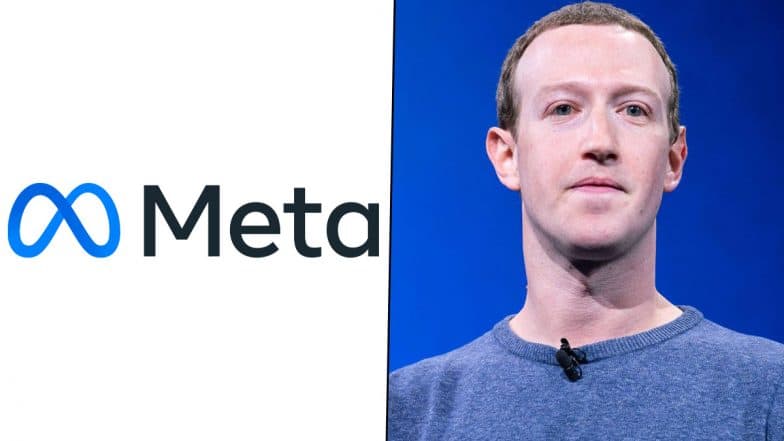
Meta Platforms began a sweeping workforce reorganisation today, May 20, laying off approximately 8,000 employees, which represents nearly 10 per cent of its global workforce. In an internal operational strategy, employees across impacted regions - including the United States and Great Britain - were instructed to work from home as notification emails were dispatched in regional waves synchronised to local time zones.
The corporate downsizing is part of an aggressive restructuring designed to pivot resources away from traditional engineering roles and toward artificial intelligence infrastructure, highlighted by a projected capital expenditure of up to USD 145 billion this year. Meta Layoffs 2026: Internal Memo Details May 20 Restructuring and Job Cuts.
The AI Pivot and Flatter Corporate Structures
Before the cuts, Meta maintained a global headcount of nearly 78,000 employees. Alongside the 8,000 terminations, Meta is closing roughly 6,000 open, unfilled requisitions and eliminating multiple layers of middle management. It is reported that the first messages of layoffs were reported from Meta's Singapore hub. According to a report by Bloomberg, affected employees in Singapore received emails at 4 AM local time (1:30 am IST), with notifications being sent in waves, aligned to different time zones. According to an internal memo sent to staff by Chief People Officer Janelle Gale, the organisation will simultaneously reassign 7,000 remaining employees into newly formed, AI-focused engineering divisions. The engineering and product development departments are expected to sustain the highest percentage of headcount reductions.
"We're now at the stage where many orgs can operate with a flatter structure with smaller teams of pods/cohorts that can move faster and with more ownership," Gale wrote in the memo, noting that team structures are being built around "AI native design principles".
Internal Surveillance Tools and Dropping Morale
The official announcement follows weeks of internal anxiety after early details of the restructuring leaked to the press. Employee morale at the social media giant has reportedly dropped to historic lows, with staff members describing an atmosphere of high stress. Compounding internal resistance, employee friction intensified following the implementation of an internal diagnostic system called the Model Capability Initiative. The software tracks employee mouse movements and keystrokes on corporate laptops to collect data aimed at training autonomous AI systems. More than 1,000 Meta employees recently signed an internal petition opposing the mandatory tracking.
The mandate for employees to work from home on the day of the layoffs was viewed by staff as an intentional logistical strategy to minimise workplace disruption, eliminating potential group protests or visible emotional distress within corporate corridors.
A Structural Shift Across the Technology Sector
Meta's massive headcount reduction mirrors a systemic pattern developing across the broader technology and entertainment industries. In the weeks preceding Meta's announcement, Cisco Systems terminated 4,000 employees, while industry peers Microsoft, Amazon, Disney, and semiconductor manufacturer ASML implemented similar job-reduction or voluntary buyout programs. In April, enterprise software firm Oracle downsized an estimated 20,000 to 30,000 roles internationally utilizing a similar early-morning email notification system. Industry analysts suggest that the persistent wave of workforce volatility indicates a fundamental realignment of tech operations rather than a temporary economic downturn.
"The workforce volatility sweeping the technology sector is not a temporary macroeconomic correction, but a permanent structural decoupling of enterprise productivity from linear headcount," said Dipal Dutta, CEO of research firm RedoQ. "The integration of generative intelligence and autonomous agentic workflows has effectively commoditised routine software engineering, frontline customer operations, and deterministic data management. Consequently, the traditional tech playbook predicated on scaling human capital to drive organisational growth has collapsed." Meta Layoffs 2026: Employees Packed Free Snacks, Drinks and Chargers Ahead of 8,000 Job Cuts, Ex-Worker Recalls ‘Doomsday’ Mood.
Dutta noted that the standard for professional longevity within technology firms has fundamentally shifted away from task execution speed toward high-level cognitive infrastructure. "True professional resilience no longer resides in the capacity to write isolated code blocks, but in the capability to orchestrate complex, probabilistic systems," Dutta added. "To achieve career immunity, the modern technologist must transform from a specialised executor into a systemic conductor."
(The above story first appeared on LatestLY on May 20, 2026 11:02 AM IST. For more news and updates on politics, world, sports, entertainment and lifestyle, log on to our website latestly.com).