Nvidia CEO Jensen Huang Claims AGI Has Already Been Achieved Lex Fridman During Podcast Discussion
Nvidia CEO Jensen Huang stated that Artificial General Intelligence (AGI) has already been achieved, citing the ability of AI agents to manage high-value enterprises. While acknowledging the success of platforms like OpenClaw, Huang noted that AI cannot yet replicate the complexity of major corporations like Nvidia.

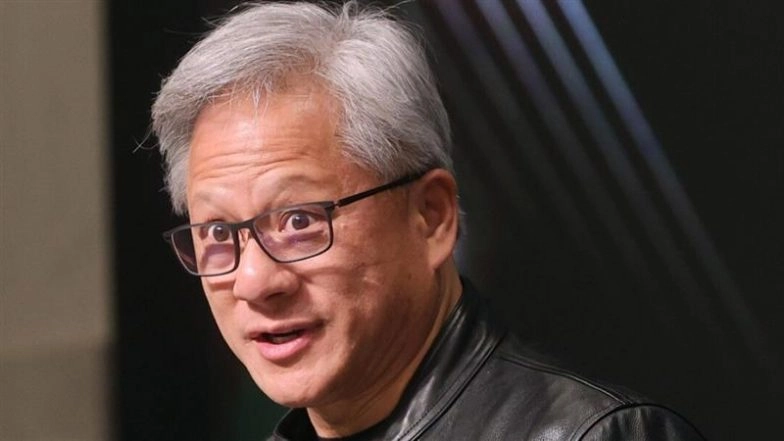
Mumbai, March 25: Nvidia CEO Jensen Huang has suggested that Artificial General Intelligence (AGI) is no longer a future milestone but a present reality. Speaking on the Lex Fridman Podcast, the head of the world’s leading AI chipmaker argued that AI systems have reached a level of capability where they can autonomously manage complex, high-value tasks. While many industry experts have traditionally placed the arrival of AGI, AI that matches or exceeds human cognitive abilities, between five and 10 years away, Huang’s assessment indicates a significant shift in the perceived timeline of the technology.
The discussion centered on a specific definition of AGI: a system capable of starting, growing, and running a company valued at over USD 1 billion (INR 84.3 billion). When asked how far the industry remains from such a feat, Huang responded, "I think it’s now. I think we’ve achieved AGI." This statement has sparked intense debate within the tech community regarding the current boundaries of autonomous software agents. Google DeepMind CEO Demis Hassabis Predicts AGI Within 5 to 8 Years, Hails 'Golden Era' of Science at India AI Impact Summit 2026.
NVIDIA CEO Jensen Huang The Rise of Autonomous AI Agents
To support his claim, Huang pointed to the rapid evolution of open-source platforms like OpenClaw, which allow for the creation of sophisticated AI agents. He noted that these digital entities are increasingly capable of launching social applications or "digital influencers" that achieve instant, viral success. This shift suggests that AI is moving beyond being a simple tool for human use and toward becoming an independent operator in the digital economy.
However, the Nvidia chief offered a tempered view of these autonomous capabilities. He clarified that while AI can manage specific high-value successes, it is not yet at a stage where it could replicate a massive, multi-faceted corporation. "The odds of 100,000 of those agents building Nvidia is 0%," Huang stated, highlighting that while individual AGI-like milestones are being hit, the scale of human institutional building remains distinct.
Defining AGI and its Global Implications
Unlike narrow AI, which is designed for specific tasks like playing chess or generating text, AGI represents a machine with the ability to understand, learn, and apply knowledge across any domain, much like a human being. The pursuit of this "general" intelligence has moved from theoretical computer science to a matter of global policy. The transition toward systems that can act without human oversight has prompted calls for international regulation to manage potential risks.
The United Nations Council of Presidents of the General Assembly (UNCPGA) previously released a report urging global coordination to manage the "perils of AGI." The council warned that while the technology could accelerate breakthroughs in public health and science, its ability to execute actions beyond human intervention could pose threats to critical infrastructure and global security.
Calls for International Oversight
As the capabilities of AI continue to accelerate, leading figures in the field are advocating for structured governance. Demis Hassabis, CEO of Google DeepMind, has proposed the creation of a UN-like umbrella organisation to oversee the development of AGI. Such a body would be tasked with ensuring that the transition to human-level intelligence remains safe and beneficial for society. AI Will Replace Most Programmers in Next Year, AGI and Superintelligence Will Surpass Smartest Humans in 5 Years: Former Google CEO Eric Schmidt (Watch Video).
The debate over whether AGI is truly "here" often depends on the metrics used to measure it. While Huang views the current capacity for autonomous enterprise as a sign of achievement, others argue that true AGI requires a deeper level of reasoning and consciousness that remains elusive. Regardless of the definition, the rapid deployment of autonomous agents is forcing a re-evaluation of how businesses and governments prepare for an AI-driven future.
(The above story first appeared on LatestLY on Mar 25, 2026 10:14 AM IST. For more news and updates on politics, world, sports, entertainment and lifestyle, log on to our website latestly.com).