Salesforce CEO Marc Benioff Rejects ‘AI Scapegoat’ Narrative Amid Silicon Valley Layoffs
Salesforce CEO Marc Benioff argues that blaming AI for tech layoffs is a "lazy" narrative. While Salesforce held engineer hiring flat due to AI efficiency, it increased its sales force by 20% to meet rising demand. Benioff insists that financial commitments and over-hiring, not just AI, drive current industry shifts.

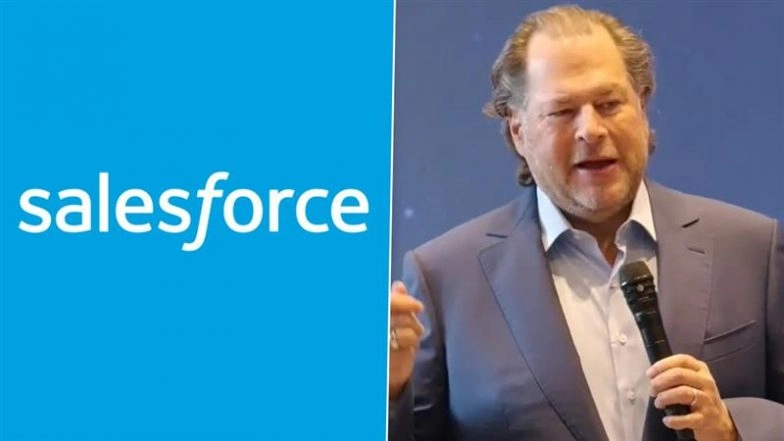
Salesforce CEO Marc Benioff has publicly challenged the prevailing narrative that artificial intelligence is the primary driver behind the current wave of mass layoffs across Silicon Valley. Speaking at The Future Live this week, Benioff argued that industry observers and fellow executives are misinterpreting the shift in the tech workforce. While Salesforce approaches USD 50 billion in revenue, the CEO stated that blaming AI for job cuts is often a "lazy way out" for companies addressing deeper structural or financial issues.
Benioff’s comments arrive as the tech sector undergoes a volatile period of restructuring. While many firms have cited AI integration as a reason for downsizing, Salesforce has adopted a targeted "rebalancing" strategy. This approach involves freezing technical hiring in some departments while aggressively expanding the sales force to meet what Benioff describes as unprecedented market demand across all business segments. Salesforce Relying on AI Coding Tools To Handle Work, Stopped Hiring New Engineers in FY2026: CEO Marc Benioff.
Distinguishing AI Shifts from Financial Realities
According to Benioff, the current employment landscape in tech is being shaped by three distinct factors rather than a single AI-driven "wipeout." He identified these as uncontrolled operational costs, significant financial commitments to AI data centres, and genuine AI-driven efficiency gains. He cautioned that treating these separate issues as one cohesive story creates a misleading picture of the industry’s health.
For many CEOs, pinning workforce reductions solely on automation masks the reality of over-hiring during previous years or the need to reallocate capital toward expensive infrastructure. Benioff suggested that while AI does change the "capacity" needed in certain roles, it is not the sole culprit for the broader contraction seen in Silicon Valley’s headcount over the past year.
Salesforce’s Internal Strategy: More Sales, Fewer Engineers
The rebalancing at Salesforce provides a blueprint for how the company views the future of AI-augmented work. Benioff revealed that the company held engineer hiring flat during the last fiscal year. This decision was made because AI coding agents provided existing teams with enough added capacity to handle the workload. Similarly, the service department saw a slight trimming of headcount as AI agents began absorbing routine customer interactions.
However, the company has not stopped hiring overall. In a move that runs counter to the general trend of tech contraction, Salesforce increased its count of account executives by nearly 20%. Benioff attributed this to a surge in demand from small, medium, and large-scale customers, necessitating a larger human sales force to manage complex client relationships that AI cannot yet navigate.
The Future of White-Collar Employment
Despite concerns regarding a "white-collar wipeout," Benioff remains optimistic about the role of humans in the AI era. He argued that the tech industry is currently telling the "wrong story" about AI and jobs. In his view, AI is a tool that enhances human productivity rather than a force that renders entire professions obsolete. Salesforce CEO Marc Benioff Dismisses Block Layoffs as Company-Specific Issues Rather Than AI-Driven Industry Trend.
As Salesforce moves toward its USD 50 billion revenue milestone, the company’s strategy suggests that the real shift in the workforce will be a move away from manual technical tasks toward relationship-driven roles. By leveraging AI for backend processes and coding, Benioff believes companies can focus more resources on growth and customer-facing operations, provided they avoid using technology as a scapegoat for broader management decisions.
(The above story first appeared on LatestLY on Apr 04, 2026 09:26 PM IST. For more news and updates on politics, world, sports, entertainment and lifestyle, log on to our website latestly.com).