DNA Had One Rule. Bacteria Didn’t Get the Memo
Every cell in every organism on Earth copies DNA the same way.

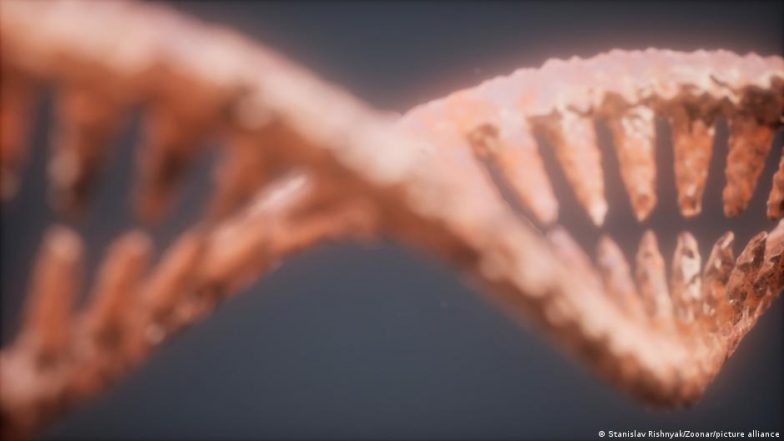
Every cell in every organism on Earth copies DNA the same way. Except one bacterial protein — quietly doing something scientists had never seen before.Your DNA has never been created from scratch.
Think of it like a recipe — passed down from parent to child over countless generations, all the way back 4 billion years to the earliest life on Earth. With tweaks and changes accumulating along the way, but always copied from something that already existed.
That's the one rule that has held the entire time: to make DNA, you need existing genetic material to copy from.
Scientists just found a protein that breaks this rule.
A mechanism nobody has seen before
"It was quite a surprise!" Alex Gao, a biochemist at Stanford University and senior author of the study, told DW.
His team had been investigating how bacteria protect themselves from viruses when they identified something unexpected: a protein called Drt3b that builds DNA without anything to copy from. It uses its own shape as a mold to snap the right building blocks into place.
"We didn't believe it until we saw the cryo-EM structure [...] That was the moment it really clicked for us," he said — referring to cryo-electron microscopy, a technique that images molecules at near-atomic resolution.
The findings were published in the journal Science in April.
So how does it actually work?
DRT3 — the full system studied by Gao's team — works in two steps.
DNA is double-stranded: think of it like a zipper, with two sides that fit together.
One side is built in a familiar way, with a protein called Drt3a using a small piece of genetic material as a template to build one strand.
The other side is where things get strange. A second protein, Drt3b, needs to build the other side of that zipper — but does so without a template. Instead, specific parts of the protein itself act as the guide, locking onto the right DNA building blocks or "nucleotides" one by one until the strand is complete. And that's what we didn't think was possible — at least not like this.
Other proteins have done something similar before — but only in short fragments, like writing a sentence. Drt3b writes a whole paragraph. It's the first known protein to produce a long, sequence-specific strand of DNA using nothing but its own structure as a guide.
Why does it matter?
"The research is groundbreaking," says Philip Kranzusch, a biochemist at Harvard Medical School who was not involved in the study.
That’s because scientists have been studying DNA since the 1950s and bacteria have been quietly doing something they never imagined was possible. Which raises the question: what else are we missing?
There's also a practical angle. If scientists could engineer Drt3b to produce other DNA sequences, it might one day work as a tool for building custom DNA molecules — without needing a template to copy from.
But we're not there yet. "We do not yet know if it can be reprogrammed or engineered in a useful way," Rafael Pinilla-Redondo, an assistant professor at the Section of Microbiology at the University of Copenhagen, told DW.
So does this break the rules of biology?
The discovery has sparked debate around what is called the "central dogma of biology" — the idea that genetic information flows from DNA to RNA to protein, but never from protein back into DNA. If a protein can write a DNA sequence, does that break the rule?
"No, I would not say the central dogma has been broken," says Pinilla-Redondo. What the study shows is a protein helping to build a short, repetitive DNA sequence in a very specific context — not proteins generally rewriting genetic code. "The exciting part is not that the rules of biology have collapsed. It is that evolution has found a very unexpected way to build a DNA molecule," he said.
But what does the DNA actually do?
Scientists don't fully know yet.
The leading hypothesis is that the DNA acts as a kind of molecular sponge — soaking up essential components of the attacking virus and neutralizing it. But Gao is careful about how firmly he holds that idea. "That's currently our leading hypothesis, but we're certainly open to alternative models," he said.
Pinilla-Redondo agrees the mechanism is still far from understood. "Is the DNA a decoy, a signal, a scaffold, or a toxic molecule? That is the key mystery," he said.
Is this the next CRISPR?
CRISPR — the molecular scissors that allow scientists to cut and edit DNA with unprecedented precision — was itself first discovered as a quirky bacterial defense system. It has since transformed medicine, including the first approved gene therapyfor sickle cell disease in 2023.
Sounds familiar, right? But will it be a similar story with DRT3?
Probably not — at least not yet. "CRISPR is a once-in-a-generation breakthrough that revolutionized biotechnology," says Gao. "While it is early to predict applications of DRT3, we are most excited about DRT3 for expanding our understanding of the mechanisms of DNA synthesis."
A glimpse into microbial dark matter
"The field of bacterial immunity is exploding," says Pinilla-Redondo. Experimental research on these bacterial defense systems has only just begun — and the diversity of mechanisms being uncovered is striking, with multiple research groups around the world independently making similar findings.
For Alex Gao's team, this discovery is less an ending than a beginning. Bacteria have spent billions of years fighting viruses, quietly evolving molecular tricks that we're only beginning to discover. How many more are out there?
Gao concludes: "It points to a vast reservoir of uncharacterized biology within microbial 'dark matter,' where fundamental mechanisms likely remain undiscovered."
Edited by: Frank Lee
(The above story first appeared on LatestLY on Jun 01, 2026 11:30 AM IST. For more news and updates on politics, world, sports, entertainment and lifestyle, log on to our website latestly.com).