ISRO 2026-27 Roadmap: 27 Space Missions Planned, Focus on Gaganyaan Human Spaceflight and Reusable NGLV Technology
The surge in planned activity follows a period of mixed results for the agency. After the failure of the PSLV-C62 mission and a previous setback in May 2025, the 2026-27 manifest represents a strategic effort to restore momentum. By doubling its mission targets, ISRO aims to demonstrate the reliability of its diverse launch fleet.

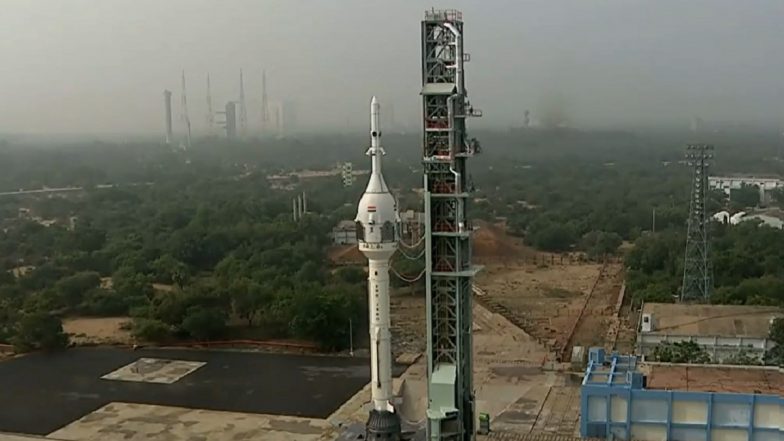
The Indian Space Research Organisation (ISRO) has unveiled an ambitious roadmap for the 2026-27 financial year, scheduling 27 space missions as it pivots toward human spaceflight and reusable technology. According to the Department of Space’s latest annual report released on April 29, the agenda includes four critical Gaganyaan-related missions and a significant ramp-up in Small Satellite Launch Vehicle (SSLV) operations. This increased manifest marks a decisive push to double the mission count compared to the previous fiscal year, despite recent technical setbacks.
Focus on Gaganyaan and Human Spaceflight
The primary objective for the current fiscal year is the commencement of uncrewed flights under the Gaganyaan programme. ISRO confirmed that the human-rated version of the Launch Vehicle Mark-3 (HLVM3) has been fully qualified and is prepared for its inaugural uncrewed mission. This flight will test the integrated systems required to safely transport Indian astronauts, known as "Gaganyatris," into orbit.
To support these missions, ISRO has finalised a global network of ground stations. Terrestrial links are now active between the Mission Control Centre in Bengaluru, the recovery centre in Delhi, and various naval stations. Internationally, the agency has secured support from the Swedish Space Corporation and executed a license for a ground station on the Cocos (Keeling) Islands in Australia to ensure continuous tracking during crewed and uncrewed phases. UFO Researcher David Wilcock Said ‘Scientists Are Going Missing’ on Livestream 48 Hours Before Death.
ISRO Advances in Launch Technology
Beyond human spaceflight, ISRO is diversifying its launch capabilities and propulsion systems. The 2026-27 calendar includes:
- Five SSLV missions: Aimed at capturing the growing commercial small-satellite market.
- Three Earth Observation missions: To enhance national monitoring and imaging capabilities.
- Communication and Navigation launches: Two missions dedicated to bolstering India’s sovereign satellite network.
The agency has also formally initiated the development of the Next Generation Launch Vehicle (NGLV). This project focuses on reusable technology to reduce the cost of access to space. Research is currently underway on advanced propulsion methods, including LOX-Methane, semi-cryogenic, and electric propulsion systems.
Space Medicine and Collaborative Infrastructure
Recognising the physiological challenges of space travel, ISRO has partnered with the Sree Chitra Tirunal Institute for Medical Sciences and Technology. This collaboration focuses on space medicine, covering radiation biology, behavioural health, and the development of crew medical kits. The goal is to establish a framework for long-term human health in a microgravity environment. NASA Nuclear Engineer Joshua LeBlanc Found Dead in Burned Tesla After Disappearance in Huntsville, Investigation Underway.
The report highlights that India’s space ecosystem has matured significantly, now involving 450 industrial partners and over 130 academic institutions. This collaborative network is currently managing approximately 2,000 research and development activities, ranging from space robotics and docking technologies to a proposed lunar sample return mission and quantum communication.
(The above story first appeared on LatestLY on May 02, 2026 08:51 AM IST. For more news and updates on politics, world, sports, entertainment and lifestyle, log on to our website latestly.com).