A Look at What States Are Redistricting Ahead of the Midterm Elections
Republicans have gained an advantage in a national congressional redistricting battle among states ahead of the midterm elections


Republicans have opened up an advantage in a national redistricting battle among states after court rulings that weakened federal Voting Rights Act protections for minorities and invalidated a key Democratic redistricting effort.
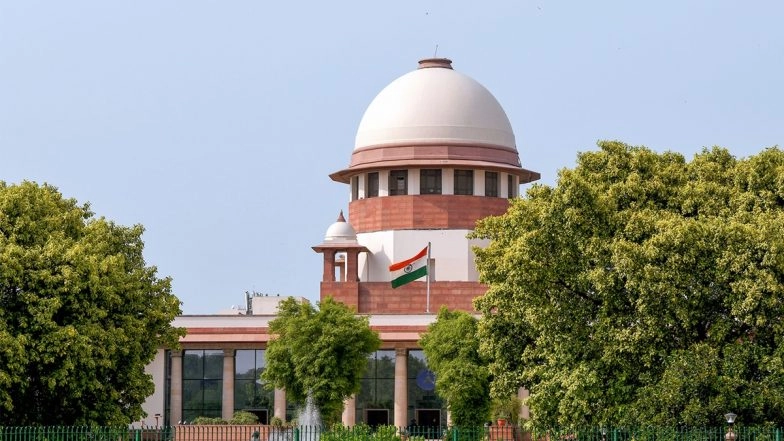
A recent U.S. Supreme Court ruling that struck down a Black-majority congressional district in Louisiana as an illegal racial gerrymander has provided grounds for Republicans in several Southern states to try to eliminate House districts with large minority populations that have elected Democrats.
Meanwhile, a Virginia Supreme Court ruling invalidated a voter-approved congressional map that Democrats had been counting on to deliver as many as four additional U.S. House seats. The court said Democratic lawmakers had violated the state constitution when placing the proposal on the ballot.
Also Read | Netflix's New NFL Footprint Takes Shape Through 2029.
Legislative voting districts typically are redrawn based on census data after the start of each decade. But an unusual spate of mid-decade redistricting broke out after President Donald Trump urged Texas Republicans last year to reshape U.S. House districts to give the party an edge in the midterm elections. Democrats in California countered with their own political gerrymandering. More states followed.
So far, Republicans believe they could win up to 15 additional seats from new districts in Texas, Alabama, Florida, Missouri, North Carolina, Ohio and Tennessee. Democrats, meanwhile, think they could gain up to six seats from new districts in California and Utah. But those tallies presume past voting patterns hold in November. Historically, the president's party tends to lose seats in the midterms.
Democrats need to gain just a few seats in November to wrest control of the House from Republicans, which would give them greater power to oppose Trump.
Also Read | Tech Carries Wall Street to Records, Even as Most Stocks Fall After Discouraging Inflation Data.
Where new House districts are proposed
Lawmakers in at least a couple states still are considering plans for new U.S. House maps ahead of the November elections.
Louisiana
Current map: two Democrats, four Republicans
New map: Republican lawmakers have proposed a new U.S. House map that could help them win an additional seat in response to an April 29 Supreme Court ruling striking down a majority-Black congressional district. Republican Gov. Jeff Landry postponed the May congressional primary to either July 15 or a date to be determined by lawmakers.
Challenges: Lawsuits assert Landry lacked authority to suspend the primary elections.
South Carolina
Current map: one Democrat, six Republicans
New map: Republican state House members have proposed a new U.S. House map that could give the GOP a better chance at winning an additional seat.
Challenges: The House voted to allow redistricting to be considered after their regular work session ends May 14, but the resolution failed to get the needed two-thirds majority in the Senate.
Where new House districts are in place
New U.S. House districts are in place in nine states. Seven took up redistricting voluntarily, one was required to by its state constitution and another did so under court order.
Texas
Current map: 13 Democrats, 25 Republicans
New map: Republican Gov. Greg Abbott signed a revised House map into law last August that could help Republicans win five additional seats.
Challenges: The U.S. Supreme Court in December cleared the way for the new districts to be used in this year’s elections. It has since overturned a lower-court ruling that blocked the new map because it was “racially gerrymandered.”
California
Current map: 43 Democrats, nine Republicans
New map: Voters in November approved revised House districts drawn by the Democratic-led Legislature that could help Democrats win five additional seats.
Challenges: The U.S. Supreme Court in February allowed the new districts to be used in this year’s elections. It denied an appeal from Republicans and the Department of Justice, which claimed the districts impermissibly favor Hispanic voters.
Missouri
Current map: two Democrats, six Republicans
New map: Republican Gov. Mike Kehoe signed a revised House map into law last September that could help Republicans win an additional seat by reshaping a Democratic-held district based in Kansas City.
Challenges: The Missouri Supreme Court ruled May 12 that the new map is in effect as election officials work to determine whether a referendum petition seeking a statewide vote complies with constitutional criteria and contains enough valid petition signatures. The court has rejected claims that the new districts are not compact and that mid-decade redistricting is illegal.
North Carolina
Current map: four Democrats, 10 Republicans
New map: The Republican-led General Assembly gave final approval in October to revised districts that could help Republicans win an additional seat.
Challenges: A federal court panel in November denied a request to block the revised districts from being used in the midterm elections.
Ohio
Current map: five Democrats, 10 Republicans
New map: A bipartisan panel composed primarily of Republicans voted in October to approve revised House districts that improve Republicans’ chances of winning two additional seats.
Challenges: None. The state constitution required new districts before the 2026 election, because Republicans had approved the prior map without sufficient Democratic support after the last census.
Utah
Current map: no Democrats, four Republicans
New map: A judge in November imposed revised House districts that could help Democrats win a seat. The court ruled that lawmakers had circumvented anti-gerrymandering standards passed by voters when adopting the prior map.
Challenges: A federal court panel and the state Supreme Court, in February, each rejected Republican challenges to the judicial map selection.
Florida
Current map: eight Democrats, 20 Republicans
New map: Republican Gov. Ron DeSantis announced on May 4 that he had signed revised U.S. House districts that improve the GOP’s chances of winning four additional seats.
Challenges: Court challenges contend the new map violates a state constitution provision prohibiting districts from being drawn with intent to favor or disfavor a political party.
Tennessee
Current map: one Democrat, eight Republicans
New map: Republican Gov. Bill Lee signed new U.S. House districts May 7 that improve the GOP's chances of winning an additional seat by carving up the lone Democratic-held seat, a Black-majority district that includes Memphis.
Challenges: Court challenges contend the new districts were drawn with a racially discriminatory purpose, disenfranchise voters this year and were not proper under Lee's special session proclamation.
Alabama
Current map: two Democrats, five Republicans
New map: The U.S. Supreme Court on May 11 cleared the state to switch to U.S. House districts passed in 2023 by Republican state lawmakers that could improve the GOP's chances of winning an additional seat.
Challenges: Attorneys who originally challenged the 2023 plan have asked a lower court to again block it from being used.
(The above story first appeared on LatestLY on May 14, 2026 01:40 AM IST. For more news and updates on politics, world, sports, entertainment and lifestyle, log on to our website latestly.com).