8th Pay Commission: How a New 5-Level Fitment Formula Could Transform Government Salaries
As central government employees await official recommendations for the 8th Pay Commission, a prominent railway union has proposed a multi-tiered salary revision formula. The Indian Railway Technical Supervisors' Association (IRTSA) submitted a "five-fitment-factor" proposal designed to balance salary growth across different employment tiers, potentially raising base salaries by over 300% to 400% for senior-level positions.

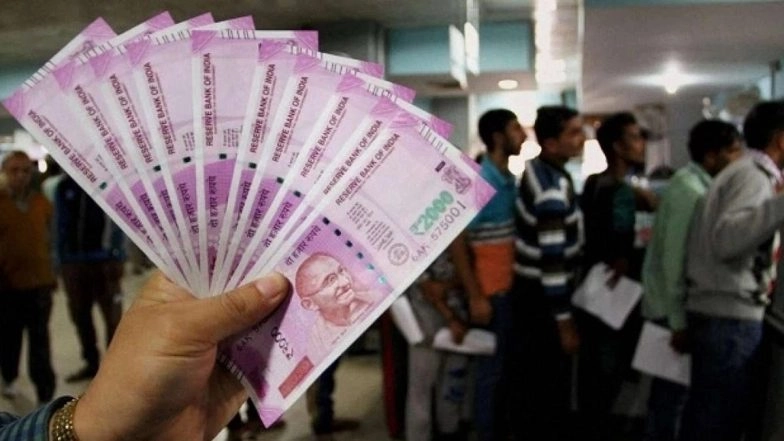
As central government employees await official recommendations for the 8th Pay Commission, a prominent railway union has proposed a multi-tiered salary revision formula. The Indian Railway Technical Supervisors' Association (IRTSA) submitted a "five-fitment-factor" proposal designed to balance salary growth across different employment tiers, potentially raising base salaries by over 300% to 400% for senior-level positions. The upcoming commission's decisions will impact more than 1.1 crore beneficiaries, including active central government employees, pensioners, and their families.
The Five-Fitment-Factor Proposal
A fitment factor serves as the standardized mathematical multiplier used by the Central Pay Commission to revise basic pay scales and pension structures. To calculate a revised salary under this system, an employee's current basic pay is multiplied directly by the designated fitment factor. 8th Pay Commission Salary Calculator: Check Level 6 Basic Pay and Possible Arrears Under Different Fitment Factors.
While the previous 7th Central Pay Commission implemented a uniform fitment factor of 2.57 across all levels, the IRTSA has proposed a graduated structure. Under this system, the multiplier increases alongside an employee's pay matrix level:
- Pay Levels 1 to 5: 2.92
- Pay Levels 6 to 8: 3.50
- Pay Levels 9 to 12: 3.80
- Pay Levels 13 to 16: 4.09
- Pay Levels 17 to 18: 4.38
Union representatives argue that shifting away from a uniform multiplier ensures more equitable, balanced financial adjustments for lower, middle, and senior-management personnel.
Projected Salary Shifts
The application of varying fitment factors would result in distinct structural changes across different government pay brackets. 8th Pay Commission Consultant Recruitment 2026: Eligibility, Salary and Vacancy Details.
For entry-level staff within Levels 1 to 5 earning a baseline basic pay of INR 10,000, the proposed 2.92 multiplier would elevate their revised basic pay to INR 29,200. Mid-level employees under Levels 6 to 8 with a current basic pay of INR 40,000 would transition to a revised salary of INR 1,40,000 using the 3.50 factor.
The adjustments scale upward for senior designations. An employee in Levels 13 to 16 currently earning a basic pay of INR 1,00,000 would see their base income increase to INR 4,09,000 under the 4.09 multiplier. At the highest operational tier, Levels 17 to 18, a current basic pay of INR 2,20,000 would rise to INR 9,63,600 when processed through the proposed 4.38 factor.
Context and Government Stance
The implementation of fitment factors gained widespread administrative traction during the 6th and 7th Pay Commissions to streamline pay revisions across various ministries. Central Pay Commissions are typically established every decade to review and modify the pay, allowances, and benefits of government personnel.
Despite the highly structured proposals submitted by employee unions, the final implementation of the 8th Pay Commission remains subject to government approval. Reports indicate that federal authorities may not accept several of the steep upward adjustments demanded by worker coalitions, introducing a layer of administrative uncertainty regarding the final scale of the impending salary revisions.
(The above story first appeared on LatestLY on May 31, 2026 08:17 PM IST. For more news and updates on politics, world, sports, entertainment and lifestyle, log on to our website latestly.com).