Operation Sindoor 1st Anniversary: 6 Pillars of the Anti-Terror Strike in Pakistan
One year ago today, India executed Operation Sindoor, a high-precision cross-border counter-terrorism operation that signaled a fundamental shift in the country's security doctrine. Conducted over a concentrated 88-hour window, the strike targeted terror infrastructure deep within Pakistan.

- Read in
- हिंदी
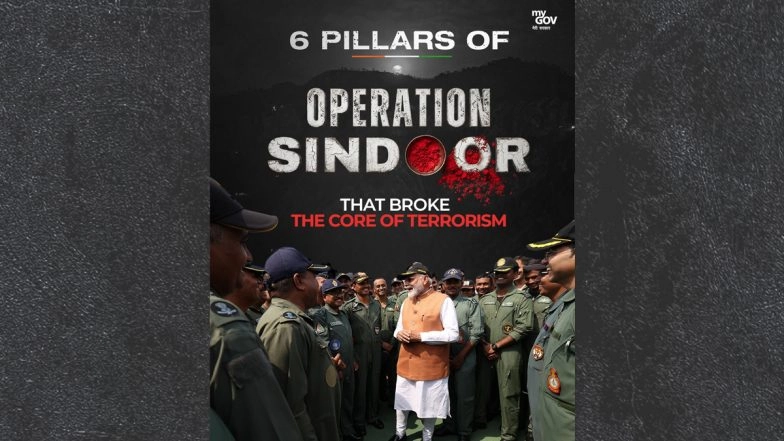
One year ago today, India executed Operation Sindoor, a high-precision cross-border counter-terrorism operation that signaled a fundamental shift in the country's security doctrine. Conducted over a concentrated 88-hour window, the strike targeted terror infrastructure deep within Pakistan. Marking the first anniversary, defense analysts and government officials are reflecting on the six strategic pillars that defined the mission: precision execution, intelligence integration, indigenous technology, political resolve, diplomatic maneuvering, and national unity.
Precision Over Escalation: The 88-Hour Mission
The hallmark of Operation Sindoor was its "enter, finish, and exit" strategy. Designed to minimize the risk of a full-scale conventional war, the operation lasted exactly 88 hours. Despite the high-stakes environment of striking a nuclear-armed neighbor, the Indian Armed Forces achieved their objectives with zero civilian casualties. This disciplined execution allowed India to maintain the moral high ground while demonstrating a capability for "controlled warfare"-the ability to inflict heavy costs on an adversary and withdraw on its own terms.
Operation Sindoor Defined India’s Unity and Decisive Anti-Terror Stand
A year ago, Operation Sindoor stood as a defining moment of clarity and resolve. In a time that tested the nation, India responded with precision, purpose and unity, delivering a decisive stand against terrorism.
What continues to stand out is the approach. Deliberate,… pic.twitter.com/sbb6KJd1FT
— MyGovIndia (@mygovindia) May 7, 2026
Dismantling Terror Hubs and High-Value Targets
The operation focused on the structural dismantling of terror networks. Precision strikes neutralized key hubs belonging to Lashkar-e-Taiba (LeT), Jaish-e-Mohammed (JeM), and Hizbul Mujahideen. Official reports indicate that over 100 terrorists were eliminated, including senior operatives linked to historic grievances such as the 1999 IC-814 hijacking and the 2019 Pulwama attack. By successfully hitting these targets, India effectively challenged the long-standing narrative of nuclear blackmail used by non-state actors and their sponsors.
Over 100 Terrorists Killed, Including Pulwama and IC-814 Conspirators
Operation Sindoor struck at the heart of terror networks operating from Pakistan.
Key hubs of Lashkar-e-Taiba, Jaish-e-Mohammed and Hizbul Mujahideen were dismantled. Over 100 terrorists were eliminated, including those linked to the IC-814 hijacking and Pulwama attack. The… pic.twitter.com/bNSKpoQ6za
— MyGovIndia (@mygovindia) May 7, 2026
Strategic Air Dominance and Domestic Stability
In a significant display of aerial prowess, India simultaneously targeted assets at or near eleven Pakistani airbases. Of these, nine specific targets were selected for maximum tactical impact to paralyze the adversary's immediate response capabilities. Notably, the operation was managed with near-zero disruption to domestic life in India, showcasing a sophisticated level of operational balance that protected the home front while projecting power abroad. PM Narendra Modi Changes Display Picture on X to ‘Operation Sindoor’ on Anniversary of Military Operation.
The Rise of Indigenous Defense Systems
Operation Sindoor served as a real-world validation of the 'Aatmanirbhar Bharat' (Self-Reliant India) initiative in the defense sector. The mission relied heavily on indigenous technology, from design to final deployment. The seamless coordination between the Army, Navy, and Air Force was facilitated by Indian-made communication systems and hardware, marking a transition away from a historical reliance on foreign defense imports during active conflicts.
Op Sindoor Highlighted India’s Advanced Indigenous Defence Power
From design to deployment, India leads with its own strength.
Operation Sindoor highlighted the power of indigenous defence systems and seamless coordination across forces.
This is Aatmanirbhar Bharat in action.#OperationSindoor pic.twitter.com/oOdZk3WCDj
— MyGovIndia (@mygovindia) May 7, 2026
Political Mandate and the Indus Red Line
A major shift in policy was the decisive political will exercised at the highest levels of government. Under Prime Minister Narendra Modi, the Indian military was granted full operational freedom, moving past the era of diplomatic "dossiers" in favor of kinetic action. In a significant move that redefined bilateral relations, India placed the Indus Waters Treaty in abeyance during the operation—a move that established a clear "red line" and signaled that water sharing and cross-border terrorism could no longer coexist.
PM Modi Gave Armed Forces Full Freedom for Counter Strikes
Decisive political will shaped every step of Operation Sindoor.
Under PM @narendramodi, India moved from dossiers to decisive strikes, with the armed forces given full operational freedom. By placing the Indus Waters Treaty in abeyance, India drew a clear red line against… pic.twitter.com/kliLIgUs4n
— MyGovIndia (@mygovindia) May 7, 2026
A Multidimensional National Effort
The final pillar of the operation was the total integration of national resources. The Indian Space Research Organisation (ISRO) operated 10 satellites 24/7 to provide real-time reconnaissance. Simultaneously, Indian tech startups provided critical software and hardware support, while Members of Parliament engaged in a global diplomatic offensive to counter narratives in 32 different countries. This unified approach demonstrated that modern warfare is as much about information and technological sovereignty as it is about boots on the ground. One Year After Op Sindoor, India Keeps Gates of Dams on Indus Shut, Maintains Position on 'unjust' Treaty.
India’s Unity and Resolve Were Reflected in Op Sindoor
Operation Sindoor reflected the strength of a united nation.
ISRO operated 10 satellites round the clock, startups emerged as force multipliers in modern warfare, and Indian MPs countered narratives across 32 countries. Every sector and institution is aligned towards one… pic.twitter.com/Bo4sXNxkAD
— MyGovIndia (@mygovindia) May 7, 2026
As the nation marks this first anniversary, Operation Sindoor stands as more than just a military milestone; it represents a definitive shift in India's strategic posture. By successfully synchronizing indigenous technology, political courage, and military precision, India demonstrated a new capability to manage escalation while securing its borders. One year later, the legacy of the operation continues to influence regional security dynamics, serving as a blueprint for how "New India" intends to protect its sovereignty through a policy of proactive deterrence and collective national resolve.
(The above story first appeared on LatestLY on May 07, 2026 10:52 AM IST. For more news and updates on politics, world, sports, entertainment and lifestyle, log on to our website latestly.com).