Shab-e-Barat 2026 Date in India: When Is the Night of Forgiveness and Why Is It Observed?
Shab-e-Barat 2026 will be observed on Tuesday, February 3, in India as the "Night of Forgiveness." Millions of Muslims shall engage in night vigils, seeking mercy and divine blessings before Ramadan. Traditions include visiting ancestral graves, offering voluntary prayers, and fasting. The night marks a spiritual period when destinies are decreed.

- Read in
- हिंदी
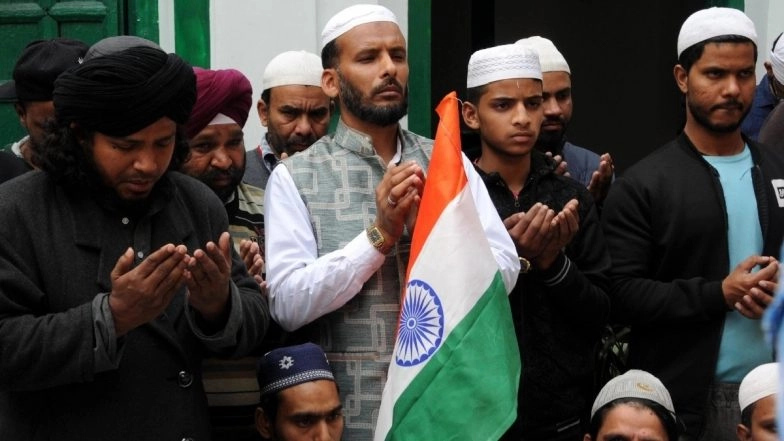
Mumbai, February 2: Muslims in India will observe Shab-e-Barat 2026 on Tuesday, February 3, marking one of the most spiritually significant dates on the Islamic calendar. Known as the "Night of Forgiveness" or Laylatul Bara’at, the occasion falls on the 15th night of the month of Sha’ban (Shaban). From silent prayers in mosques to the tradition of visiting ancestral graves, the night serves as a final spiritual gateway before the holy month of Ramadan begins in approximately two weeks.
Shab-e-Barat Meaning and Significance
The name Shab-e-Barat is derived from the Persian word Shab (night) and the Arabic word Barat (salvation or forgiveness). In Islamic tradition, it is believed that on this night, the "Doors of Mercy" are opened wide.
Believers hold that the Almighty descends to the lowest heaven during this period to ask: "Is there anyone seeking forgiveness so that I may forgive them? Is there anyone seeking sustenance so that I may provide for them?" Many also believe this is the night when the destinies of all individuals, including their life span and provisions, are decreed for the coming year.
Shab-e-Barat 2026 Date in India
In India, the Islamic month of Sha’ban commenced on January 21, with Shab-e-Barat observed on the 15th of the month. While this corresponds to February 4 on the Gregorian calendar, the Islamic day actually begins at Maghrib (sunset) rather than midnight. Consequently, the observance of Shab-e-Barat begins on the evening of February 3, as soon as the sun goes down.
Shab-e-Barat Key Rituals: Prayers, Fasting, and Charity
While the night is not a mandatory religious festival, its observance is deeply rooted in cultural and spiritual practice. Key rituals include:
Night Vigils (Qiyam-ul-Layl): Many spend the entire night in Ibadah (worship), offering Nawafil (voluntary prayers) and reciting the Holy Quran.
Graveyard Visits: A central tradition involves visiting cemeteries to pray for the souls of departed loved ones, a practice believed to have been performed by Prophet Muhammad (PBUH) at the Al-Baqi cemetery in Medina.
Charity and Fasting: Distributing sweets and food to the poor is common. Many Muslims also observe a voluntary fast on the day following the night (February 3) to gain spiritual merit.
Historical Roots and Regional Names
Historically, the night gained prominence as a period of reflection and preparation for Ramadan. While it is not explicitly mentioned in the Quran, several hadiths (prophetic traditions) highlight the merit of the 15th of Sha’ban.
The festival is known by various names globally:
- Berat Kandili in Turkey.
- Nisfu Sya'ban in Indonesia and Malaysia.
- Cheragh-e-Barat in parts of Central Asia.
- Laylatul Bara’at in the Arab world.
Significance for Different Communities
For Sunni Muslims, the night is primarily a time for individual repentance and seeking blessings. For Shia Muslims (specifically the Twelvers), the 15th of Sha’ban also holds immense importance as the birth anniversary of Imam Muhammad al-Mahdi, the 12th Imam, which is celebrated with lights and festive gatherings in countries like Iran and parts of Iraq. Long Weekends in February 2026: Which States Have Long Weekend Holidays in February? Check RBI Schedule and Long Weekend Guide Here.
In South Asia, the night is also famous for the preparation of traditional desserts like halwa, which is shared among neighbors and relatives to foster community bonds.
(The above story first appeared on LatestLY on Feb 02, 2026 09:44 AM IST. For more news and updates on politics, world, sports, entertainment and lifestyle, log on to our website latestly.com).