Why US-Iran Talks Failed
US-Iran talks in Islamabad ended without agreement, with Iran blaming “unreasonable” US demands and Washington accusing Tehran of rejecting nuclear commitments. Led by JD Vance, the US delegation presented a final offer, but key differences over nuclear assurances and ongoing conflict pressures led to a deadlock, dimming prospects for a near-term resolution.

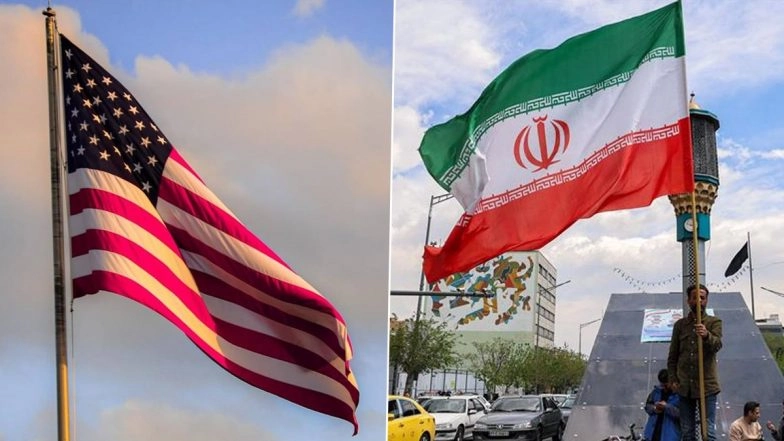
Talks between Iran and the United States aimed at ending the ongoing Middle East conflict ended without agreement on Sunday, April 12, with both sides blaming each other for the deadlock. Iranian officials said “unreasonable demands” from Washington prevented progress, while US Vice President JD Vance said Tehran had failed to accept key conditions, including commitments related to nuclear weapons.
According to Iran’s state broadcaster IRIB, the Iranian delegation held 21 hours of continuous and intensive discussions in Islamabad, Pakistan, in an effort to secure a deal. The report said Iranian negotiators put forward several proposals to advance the talks but accused the US side of making demands that hindered any agreement. “The negotiations ended” without progress due to the American position, the statement said. US-Iran Talks in Pakistan: JD Vance Says Talks With Iran Ended After 21 Hours Without Reaching Agreement (Watch Video).
Why the US-Iran Talks Failed
The collapse of the negotiations appears to centre on fundamental differences between the two sides:
- Nuclear Commitments: The US demanded explicit assurances that Iran would not pursue nuclear weapons or related capabilities.
- Scope of Demands: Iran described the US conditions as “unreasonable,” suggesting disagreements over the extent and verification of commitments.
- Trust Deficit: The lack of direct engagement for over a decade contributed to limited common ground.
- Ongoing Conflict Pressure: Continued military tensions reduced the space for compromise during negotiations.
With both sides maintaining firm positions, prospects for a near-term agreement remain uncertain.
US Says Iran Rejected Key Conditions
Speaking after the talks, JD Vance said the US delegation had presented what he described as its “final and best offer” before leaving Islamabad.
He stated that Washington’s core demand was a clear and verifiable commitment from Iran not to pursue nuclear weapons or develop the capability to produce them quickly. “The simple fact is that we need to see an affirmative commitment,” Vance said, adding that the lack of agreement was “bad news for Iran much more than” for the United States.
He also noted that the US had clearly communicated its “red lines” during the negotiations. US and Iran in Direct Negotiations on War's Fragile Ceasefire.
High-Level Talks Mark Rare Direct Engagement
The discussions marked the first direct meeting between US and Iranian officials in more than a decade, and the highest-level contact since the 1979 Islamic Revolution.
The US delegation was led by JD Vance, alongside envoy Steve Witkoff and Jared Kushner. The Iranian side was headed by Parliamentary Speaker Mohammad Baqer Qalibaf and Foreign Minister Seyed Abbas Araghchi. Vance said he remained in close contact with US President Donald Trump throughout the negotiations.
The talks were held against the backdrop of an escalating conflict involving the US, Israel, and Iran. The war began on February 28 following joint US and Israeli strikes on Iran, which reportedly killed senior leadership figures including Supreme Leader Ali Khamenei.
Iran responded with attacks on Israel and US military bases in the Gulf region. Subsequent exchanges of strikes continued until a two-week ceasefire was announced earlier this week by Donald Trump. Thousands of people have been killed across the region since the conflict began.
(The above story first appeared on LatestLY on Apr 12, 2026 09:34 AM IST. For more news and updates on politics, world, sports, entertainment and lifestyle, log on to our website latestly.com).