













 Quickly
 Socially
 Trending
 Crypto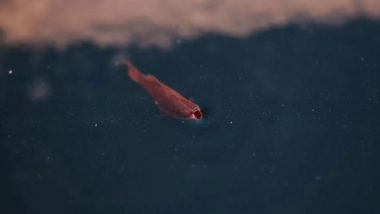
Texas [US], October 20 (ANI): Trinidadian killifish grow larger brains in response to a high-competition environment, enhancing their fitness and survival rates, according to a recent study.
The findings of the study were published in the journal Ecology Letters by scientists at The University of Texas at Arlington.
The study, led by biology Professor Matthew Walsh and Kaitlyn Howell ('22 PhD, Biology), examined the connection between brain size and fitness when killifish are found in their native habitats and when they are transplanted from sites with predators to high-competition sites that lack predators.
During a 30-day experiment near Arima, Trinidad, the researchers determined that when a fish is transplanted from a low- to a high-competition environment, there is a strong relationship between larger brain size and faster growth. That growth demonstrates the increased ability to forage for food, giving killifish a greater chance at survival.
Also Read | Rishi Sunak or Penny Mordaunt or Boris Johnson: Who Can Be New UK PM After Liz Truss' Exit?.
Furthermore, killifish from high-competition sites that remained in their native habitat for the duration of the experiment did not exhibit any change in brain size. The transplanted fish that persisted until the end of the experiment exhibited a much larger brain size than those fish that were not observed again.
"Scientists have known about large differences in vertebrate brain size for more than 100 years, and there are many hypotheses about why the vertebrate brain evolves," Walsh said. "This study highlights the important role that competition may play."
The study provides some of the first experimental evidence for which factors could be driving brain-size variation.
Howell said the experiment was prompted by the observation that killifish in sites without predators have larger brains than others.
"We knew there were differences in brain size between these two populations of fish, but we didn't know why," Howell said. "These results provide experimental support that larger brains can be adaptive and increase fitness in environments that are characterized by high population densities, low resources and intense competition." (ANI)
(The above story is verified and authored by ANI staff, ANI is South Asia's leading multimedia news agency with over 100 bureaus in India, South Asia and across the globe. ANI brings the latest news on Politics and Current Affairs in India & around the World, Sports, Health, Fitness, Entertainment, & News. The views appearing in the above post do not reflect the opinions of LatestLY)
 Share Now
 Google Trends



 Live Bot