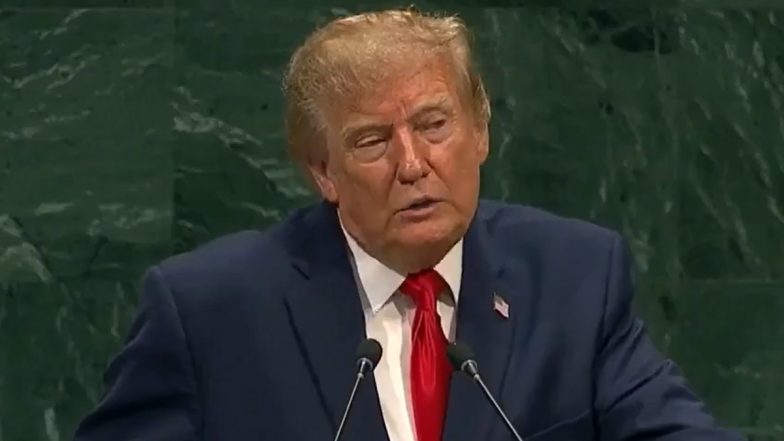
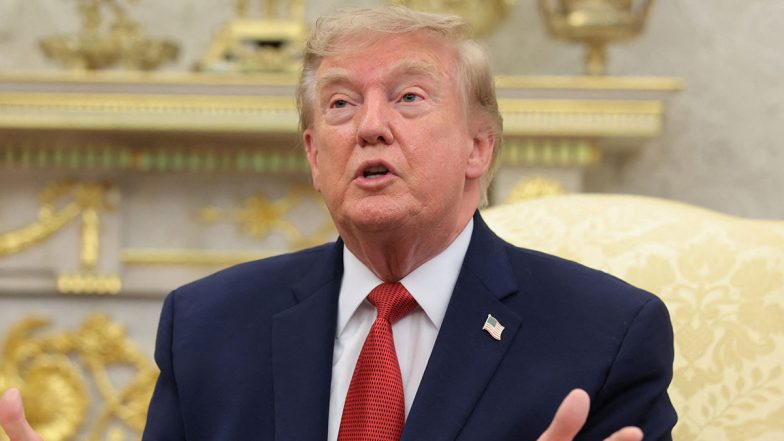
Donald Trump’s Special Envoy Steve Witkoff Confirms Pakistan Acting As Intermediary Between US and Iran
Steve Witkoff, the U.S. Special Envoy to the Middle East, has confirmed that Pakistan is currently serving as a primary intermediary between the United States and Iran. The announcement comes amid heightened regional tensions and signals a strategic reliance on Islamabad to bridge the long-standing diplomatic chasm between Washington and Tehran.

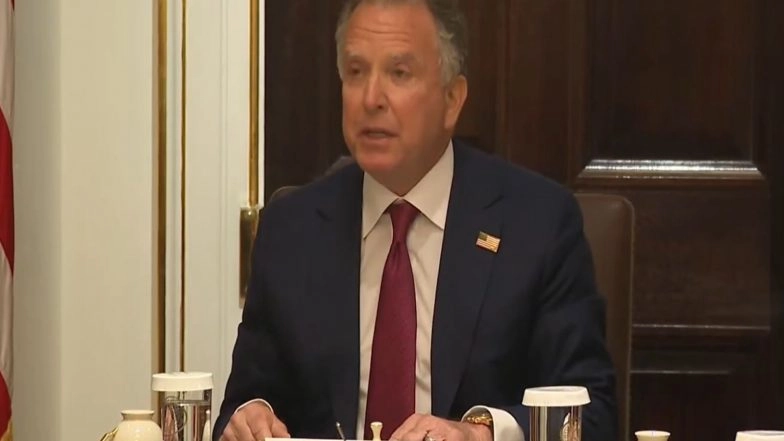
Washington, DC, March 26: United States Special Envoy to the Middle East Steve Witkoff said on Thursday that 15-point action list that forms the framework for a peace deal given to Iran has been circulated through the Pakistani government and if a deal happens, "it will be great for the country of Iran, for the entire region and the world at large". He made the remarks during a White House Cabinet meeting on Thursday in the presence of US President Donald Trump.
"We have, along with your foreign policy team, presented a 15-point action list that forms the framework for a peace deal. This has been circulated through the Pakistani government, acting as the mediator and this has resulted in strong and positive messaging and talks, as you just indicated to the press," Witkoff said. ‘Better Get Serious Soon, Before It Is Too Late’: Donald Trump Warns Time Running Out As Iran Issues 5-Point Plan.
"But these are sensitive diplomatic discussions, and you have directed us to maintain confidentiality on the specific terms and not negotiate through the news media, as others do. We will see where things lead, and if we can convince Iran that this is the inflection point with no good alternatives for them, other than more death and destruction," he added.
Iran has responded negatively to the American proposal aimed at ending the ongoing conflict insisting that any cessation of hostilities will only occur on Tehran's "own terms and timeline," a senior political-security official told state broadcaster Press TV on Wednesday. It has termed the proposal one-sided and excessive. 'No One Wants Iran’s Top Job, Fears Being Killed by US': Donald Trump Says Tehran ‘Afraid’ but Ready to Negotiate Deal.
Witkoff lauded Trump and said the policy of "peace through strength" is the most effective tool for a diplomatic resolution. "We have strong signs that this is a possibility and if a deal happens, it will be great for the country of Iran, for the entire region and the world at large. Your policy of peace through strength is the most effective tool for a diplomatic resolution here, just as this policy was an effective tool in each and every one of all of the other conflicts you settled in your first year," he said. He said Iran is looking for an off-ramp "following your powerful threat on Saturday".
"Your indications that you are willing to listen to peace proposals have been well received instructed us that your preference is always peace and that we should make that our priority. We have delivered that message, along with the 15 points for peace. Finally, we have told Iran one last thing. Don't miscalculate again," he said.
Iran said earlier that it will end the war when it decides to do so and when its own conditions are met," the official told Press TV, emphasising Tehran's resolve to continue its defence and inflict "heavy blows" on the enemy until its demands are fulfilled.
According to the official, Washington has been pursuing negotiations through various diplomatic channels, putting forward proposals that Tehran views as "excessive" and disconnected from the reality of America's failure on the battlefield. Tehran has categorized the latest overture, which was delivered via a friendly regional intermediary, as a ploy to heighten tensions.
The official outlined five specific conditions under which Iran would agree to end the war. These include "a complete halt to "aggression and assassinations by the enemy"; the establishment of concrete mechanisms to ensure that the war is not reimposed on the Islamic Republic; guaranteed and clearly defined payment of war damages and reparations; the conclusion of the war across all fronts and for all resistance groups involved throughout the region and international recognition and guarantees regarding Iran's sovereign right to exercise authority over the Strait of Hormuz.
The official also told Press TV that these stipulations are in addition to demands previously presented by Tehran during the second round of negotiations in Geneva, which took place just days before the US and Israel carried out strikes on February 28. "No negotiations will be held prior to that," the official stressed, reiterating that the continuation of Iran's defensive operations will persist until the outlined conditions are met.
"The end of the war will occur when Iran decides it should end, not when Trump envisions its conclusion," the official further told Press TV. The conflict between Israel and the United States on one side and Iran on the other started on February 28 and has caused disruptions in energy supply.
(The above story is verified and authored by ANI staff, ANI is South Asia's leading multimedia news agency with over 100 bureaus in India, South Asia and across the globe. ANI brings the latest news on Politics and Current Affairs in India & around the World, Sports, Health, Fitness, Entertainment, & News. The views appearing in the above post do not reflect the opinions of LatestLY)