India Republic Day 2026: An Essay
Explore the complete story of India’s Republic Day 2026. From the 'Purna Swaraj' pledge to the Constitution, learn why Jan 26 defines our democracy. This guide covers Kartavya Path parade details, Flag Code protocols, and the vital difference between flag hoisting and unfurling. A perfect read to celebrate the spirit of the sovereign!

Every year on January 26th, the tricolour unfurls across the nation, marking not just a date on the calendar, but the defining moment when an ancient civilisation formally re-emerged as a modern, sovereign Republic. While Independence Day (August 15) celebrates the end of colonial rule, Republic Day (Gana Tantra Divas) celebrates the beginning of self-governance. It is the day the people of India stopped being "subjects" of the British Crown and became "citizens" of the Republic of India.
The choice of January 26 is deeply rooted in India's struggle for freedom. It harkens back to the winter of 1929, when the Indian National Congress, frustrated by the British offer of mere "dominion status," met on the banks of the river Ravi in Lahore. In a historic resolution, they declared "Purna Swaraj" (Total Independence) as their ultimate goal. They urged Indians to celebrate January 26, 1930, as the first "Independence Day," and millions took a pledge of freedom on that day.
For the next 17 years, January 26 was celebrated as the symbol of resistance. When actual independence arrived on August 15, 1947, the country was still legally a dominion under the British Commonwealth, governed by the colonial Government of India Act, 1935. To truly honour the pledge of 1930, the founding fathers waited two and a half years to enact the new Constitution. On January 26, 1950, that wait ended. The Constitution of India—the longest written constitution in the world—came into force, replacing the colonial act and establishing the Rule of Law as the supreme power of the land.
Thus, Republic Day is a celebration of the Indian soul finding its voice through the text of the Constitution, guaranteeing Justice, Liberty, Equality, and Fraternity to all its people.
India Republic Day Essay: The Journey to the Constitution
The path to the Republic was paved with intellectual rigour and democratic debate.
The Constituent Assembly: When India gained political independence in 1947, the immediate task was to draft a document that could unite a diverse subcontinent. A Constituent Assembly was formed, consisting of 299 members from across the political and social spectrum.
Drafting Committee: Led by Dr. B.R. Ambedkar, the "Father of the Indian Constitution," this committee undertook the monumental task of synthesising the best democratic practices from around the world (US, UK, Ireland, France, etc.) while tailoring them to India's unique ethos.
The Timeline: The process took precisely 2 years, 11 months, and 18 days. The members debated everything from fundamental rights to the federal structure, ensuring every word was weighed. Why India Celebrates Republic Day on January 26.
Adoption vs. Enforcement of the Constitution of India
There is often confusion between two key dates:
November 26, 1949 (Constitution Day): The Assembly adopted the Constitution. The text was finalised and signed.
January 26, 1950 (Republic Day): The Constitution came into force. The date was deliberately chosen to align with the 20th anniversary of the Purna Swaraj declaration.
On this day, Dr. Rajendra Prasad took the oath as the first President of India, replacing the British Monarch as the ceremonial head of state.
Importance and Significance of India's Republic Day:
Republic Day serves as an annual audit of the nation's democratic health.
Supremacy of the Law: It reinforces that in India, the Constitution is King. No individual, government, or institution is above the law.
Sovereignty: It signalled the end of any external authority. The Head of State (President) is elected by the people's representatives, not determined by lineage.
Democratic Values: It is a reminder of the "Social Contract" between the state and the citizen. The state guarantees rights (Speech, Faith, Equality), and in return, the citizen pledges duties to uphold the integrity of the nation.
How India's Republic Day is Celebrated:
The celebrations are a spectacular blend of military might, cultural diversity, and patriotic fervour.
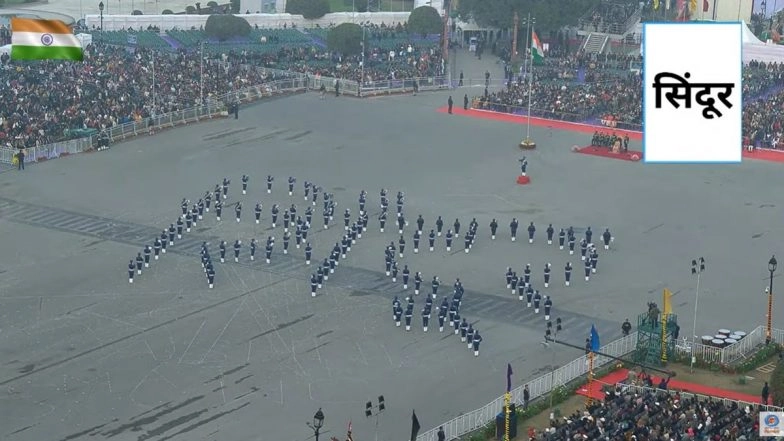
The Main Event: Kartavya Path (New Delhi): Formerly known as Rajpath, the Kartavya Path hosts the grand parade, presided over by the President of India. Republic Day Parade 2026 Time: When and Where To Watch Grand Parade on January 26.
Arrival & Wreath Laying: The Prime Minister pays homage to fallen soldiers at the National War Memorial.
Flag Unfurling: The President unfurls the National Flag, followed by the National Anthem and a booming 21-gun salute. Who Will Unfurl the Flag on Republic Day 2026? Know What the Constitutional Tradition Is.
The Republic Day Parade: Military Strength: Regiments of the Army, Navy, and Air Force march in perfect synchronisation. State-of-the-art assets like the Arjun Tank, BrahMos missiles, and Rafale jets are displayed. India Republic Day Parade 2026 Live Streaming: When and Where To Watch.
Cultural Tableaux: Elaborate floats from different states and ministries showcase India's diverse culture, geography, and government achievements.
Daredevils: The motorcycle stunts by the Corps of Signals and the grand flypast by the Indian Air Force are crowd favourites.
The Chief Guest for India Republic Day: Inviting a foreign Head of State is a diplomatic tradition. It signals strategic partnerships and friendship. (Note: For 2026, the invited Chief Guests are the President of the European Council, Antonio Costa, and the President of the European Commission, Ursula von der Leyen). Republic Day 2026: From Emmanuel Macron to Jair Bolsonaro and Cyril Ramaphosa, List of All Chief Guests Who Attended R-Day Parade in the Last Decade.
Awards and Honours Given on the Republic Day of India:
Padma Awards: Announced on the eve of Republic Day, these are among the highest civilian honours (Padma Vibhushan, Padma Bhushan, Padma Shri).
Gallantry Awards: During the parade, awards like the Param Vir Chakra and Ashok Chakra are presented to soldiers (or their kin) for supreme acts of bravery.
Beating Retreat Ceremony: The festivities conclude on January 29 at Vijay Chowk. This musical ceremony features bands from all three military wings. It traces its roots to an ancient military custom where troops ceased fighting at sunset and returned to camp. The ceremony ends with the lowering of the flags.
Republic Day of India: FAQ: Flag Code, Protocols, and Trivia
Q1: What is the Flag Code of India?
A: The Flag Code of India, 2002 (amended in 2021) governs the display of the Tiranga.
Material: Cotton, polyester, wool, silk, or khadi.
Timing: Under "Har Ghar Tiranga," the flag can be flown day and night if in the open or on a house.
Position: The Saffron band must always be on top. The flag should never touch the ground or water.
Disposal: Damaged flags must be destroyed privately and with dignity, preferably by burning.
Q2: What is the difference between Flag Hoisting (Aug 15) and Unfurling (Jan 26)?
A: Independence Day (Hoisting): The flag is pulled from the bottom to the top. This symbolises the rise of a new nation.
Republic Day (Unfurling): The flag is tied at the top. The President pulls a string to open (unfurl) it. This symbolises that the nation is already free and we are renewing our pledge to it. Republic Day 2026: How Is Republic Day Different From Independence Day?
Q3: Why does the President lead Republic Day and the PM lead Independence Day?
A: On Aug 15, 1947, the Prime Minister (Head of Government) hoisted the flag because the President's office did not yet exist.
On Jan 26, 1950, the Constitution made the President the Constitutional Head of State. Thus, the President takes the salute on Republic Day.
Q4: What does the 21-Gun Salute mean?
A: It is a military honour. The salute is fired by 7 cannons of the 871 Field Regiment. They fire 3 rounds each. The firing is timed perfectly to start with the first note of the National Anthem and end exactly 52 seconds later with the last note.
Republic Day is more than a spectacle of parades and patriotic songs; it is a solemn checkpoint for the nation. It is a day to reflect on the vision of the Constituent Assembly, a vision of a sovereign, socialist, secular, and democratic republic. Happy Republic Day 2026: Wishes, Greetings, Patriotic Messages and Wallpapers To Celebrate Gantantra Diwas.
Sample: India Republic Day Wishes with Quote
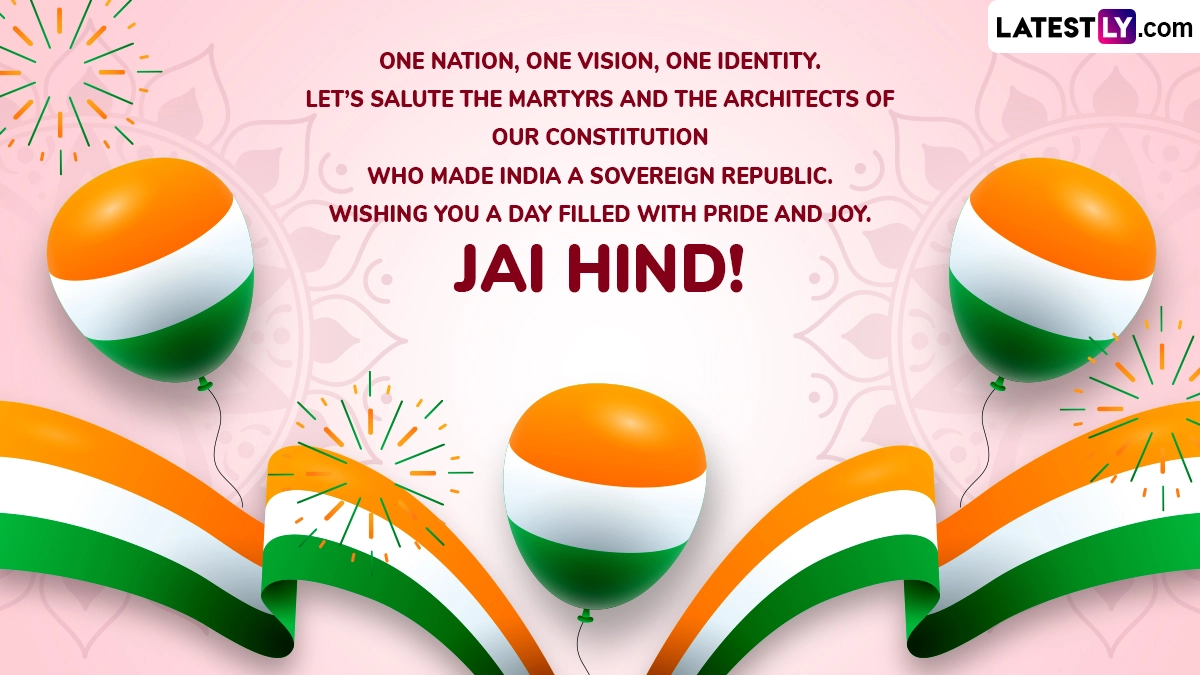
As we watch the tricolour flutter against the sky on January 26th, we celebrate not just the land we live on, but the values we live by. The day belongs to the people of India, who are the true custodians of the Constitution.
(The above story first appeared on LatestLY on Jan 25, 2026 03:10 PM IST. For more news and updates on politics, world, sports, entertainment and lifestyle, log on to our website latestly.com).