AI Saves Dog: Tech Entrepreneur Paul Conyngham Uses ChatGPT and AlphaFold To Create Custom mRNA Cancer Vaccine for His Rescue Dog 'Rosie'
Paul Conyngham used AI tools, including ChatGPT and AlphaFold, to design a personalised mRNA cancer vaccine for his rescue dog, Rosie. Collaborating with UNSW and University of Queensland researchers, he successfully shrunk her mast cell tumours by more than 50 per cent, offering a hopeful precedent for future personalised cancer therapies.

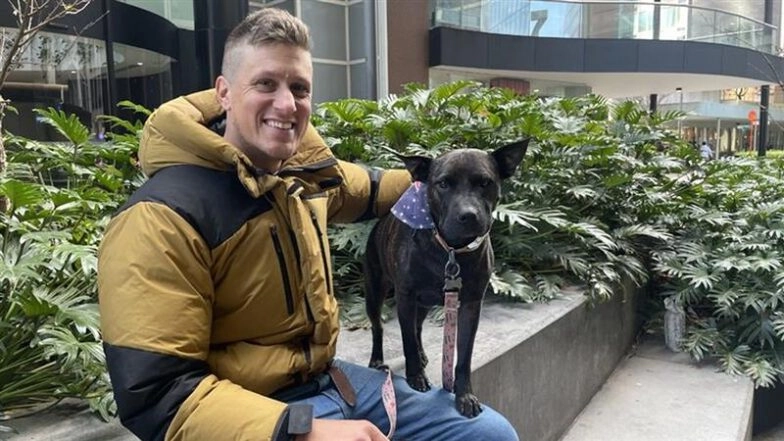
Sydney, March 15: An Australian technology entrepreneur has successfully utilised artificial intelligence and genomic sequencing to develop a custom mRNA cancer vaccine for his rescue dog, Rosie. After conventional treatments, including surgery and chemotherapy, failed to shrink the mast cell tumours, Paul Conyngham collaborated with academic researchers to design a bespoke therapeutic intervention that has significantly improved the dog’s health and reduced tumour size by more than half.
The project began as an unconventional effort to find alternative treatment options when the Staffordshire-Shar Pei cross was diagnosed with aggressive cancer in 2024. Leveraging his professional background in machine learning and data analysis, Mr Conyngham used tools like ChatGPT and AlphaFold to interpret genetic data and identify potential drug targets. This collaborative effort between a private citizen and established genomic centres has highlighted the potential for accessible, AI-assisted workflows in modern oncology. AI to Save Elephants: Indian Railways Launches AI-Enabled Intrusion Detection System to Prevent Train Accidents.
Bridging Technology and Veterinary Medicine
Mr Conyngham’s approach involved sequencing healthy and cancerous DNA to isolate specific mutations. By processing these findings through AI pipelines, he successfully designed a personalised mRNA formula. Researchers at the University of NSW (UNSW) Ramaciotti Centre for Genomics were initially reticent to engage with a direct-to-consumer request, but they were eventually impressed by the technical rigour and persistence shown by the dog owner.
The vaccine was synthesised by the UNSW RNA Institute, marking a significant first for a canine patient. Following the necessary ethical approvals to conduct experimental immunotherapy, the treatment was administered by veterinary specialists at the University of Queensland. Observations made over recent months confirm that the tumours have responded positively, providing the dog with an improved quality of life and higher energy levels.
Implications for Future Cancer Research
While the medical community cautions that this case represents a bespoke, non-scalable approach, the results have generated significant interest among researchers studying human cancer treatments. Experts note that as genomic sequencing costs decrease and AI-driven protein prediction tools continue to advance, such personalised strategies could eventually become more practical for human oncology. ChatGPT Saves 8 Hours of Government Employees: OpenAI President Greg Brockman Reacts to Pennsylvania Governor Josh Shapiro’s Post on Using AI for Work Efficiency.
The project demonstrates the power of "citizen science," where specialized AI tools enable individuals to contribute to complex scientific processes. While this vaccine is not currently a universal cure, it provides a compelling proof of concept for the rapid design and deployment of personalised immunotherapies. Mr Conyngham is now pursuing further research to understand why certain tumours responded to the treatment while others did not, continuing his efforts to manage Rosie’s condition.
(The above story first appeared on LatestLY on Mar 15, 2026 11:04 AM IST. For more news and updates on politics, world, sports, entertainment and lifestyle, log on to our website latestly.com).