Sam Altman Warns AI Could Trigger ‘World-Shaking Cyberattack’ This Year
OpenAI CEO Sam Altman has warned that advanced AI could enable a 'world-shaking cyberattack' as soon as this year. In a new policy blueprint, OpenAI outlined proposals including AI taxes, public wealth funds, and stronger safety measures, as concerns grow over the technology’s impact on jobs, security, and global systems.

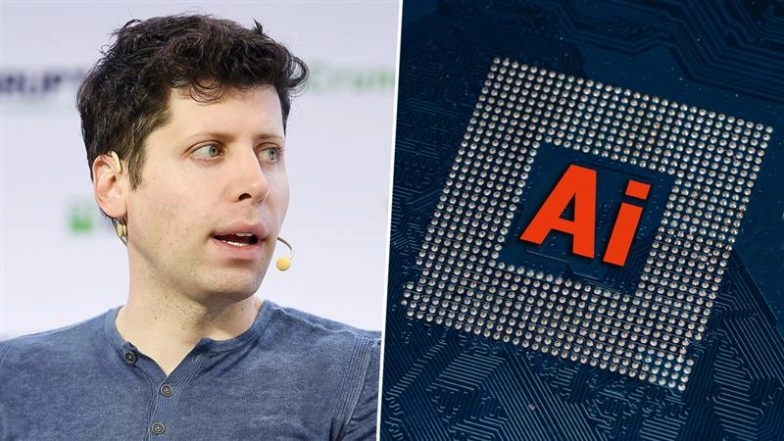
Sam Altman has warned that rapid advances in artificial intelligence could enable a “world-shaking cyberattack” as early as this year, underscoring growing concerns about the risks posed by increasingly powerful AI systems. The remarks come as OpenAI released a policy blueprint outlining how governments should prepare for the economic and security disruptions linked to AI.
In a recent interview, Altman said the pace of AI development is accelerating to a point where existing systems of governance and economic distribution may not be sufficient, calling for a new “social contract” comparable to major policy shifts seen in the early 20th century. OpenAI CEO Sam Altman Addresses ‘AI Washing’ and Corporate Layoffs at India AI Impact Summit 2026.
Warning of Cyber and Biological Risks
Altman identified cyberattacks and biological threats as the most immediate risks associated with advanced AI systems. He said it is “totally possible” that AI tools could be used to launch large-scale cyberattacks in the near term, potentially targeting critical infrastructure or institutions. At the same time, he warned that AI could lower barriers for malicious actors attempting to design harmful biological agents.
While noting that AI could also accelerate medical breakthroughs and disease cures, Altman said the dual-use nature of the technology makes safeguards urgent. India’s AI Opportunity Is Amazing: Sam Altman Hails Country as OpenAI’s Fastest Growing Market at India AI Impact Summit 2026.
Blueprint for Managing AI’s Impact
OpenAI’s 13-page policy document, titled Industrial Policy for the Intelligence Age, proposes a range of measures aimed at managing the societal impact of AI.
Among the key ideas is the creation of a public wealth fund that would give citizens a financial stake in AI-driven growth. The proposal also includes potential taxes on automated labour, reflecting concerns that AI could reduce traditional employment and shrink payroll-based tax revenues. The document frames these ideas as a starting point for policy discussions rather than fixed recommendations.
The blueprint suggests exploring a four-day workweek, allowing workers to benefit from productivity gains driven by AI. It also introduces the concept of a “right to AI,” arguing that access to AI tools should be treated as a basic utility similar to electricity or the internet.
These measures are intended to ensure broader participation in the benefits of AI, particularly for small businesses, schools, and underserved communities. The document also addresses more extreme scenarios, including the possibility of autonomous AI systems that are difficult to control or recall.
In such cases, OpenAI suggests coordinated responses involving governments and institutions to contain potential risks. It also proposes automatic safety net mechanisms that would trigger increased public support, such as unemployment benefits, if AI-driven job displacement crosses certain thresholds.
Altman acknowledged that multiple companies are developing advanced AI systems, and emphasised that responsibility for managing risks should not rest with a single entity. Analysts note that the blueprint also reflects an effort by OpenAI to shape future regulation and position itself as a proactive player in addressing AI-related challenges.
(The above story first appeared on LatestLY on Apr 06, 2026 08:41 PM IST. For more news and updates on politics, world, sports, entertainment and lifestyle, log on to our website latestly.com).