Saif Al-Islam Gaddafi Assassinated in Libya; Know How Unknown Assailants Killed Ex-Libyan Leader Muammar Gaddafi’s Son in Zintan
Saif al-Islam Gaddafi, son of late leader Muammar Gaddafi, was assassinated at his home in Zintan on February 3. Forensic reports confirmed he died of gunshot wounds after four masked gunmen disabled his security cameras. Once seen as a Western-educated reformer, he later became a symbol of his father's regime and Libya’s deep divisions.

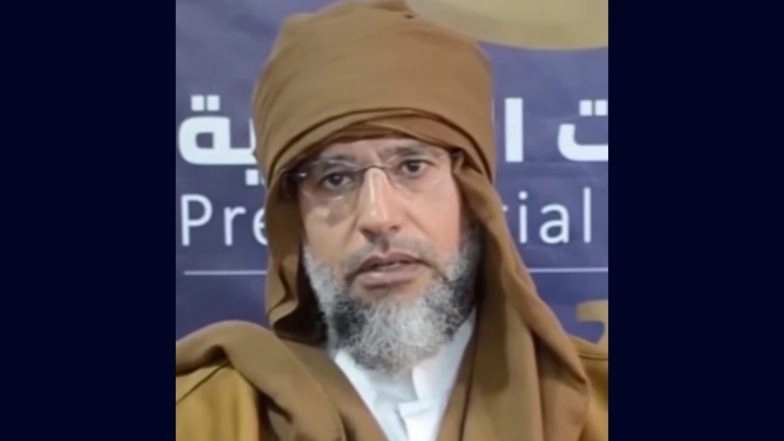
Mumbai, February 4: Saif al-Islam Gaddafi, the most prominent son and one-time heir apparent of the late Libyan leader Muammar Gaddafi, was killed at his residence in the western city of Zintan on Tuesday, February 3. The 53-year-old’s death was confirmed by his legal team and the Libyan Attorney General's Office, which stated that a forensic examination determined he died from multiple gunshot wounds.
The assassination marks a violent conclusion for a figure who remained a central, if reclusive, symbol of Libya's unresolved political divisions more than a decade after the 2011 revolution. Ordered in 2010, Delivered in 2026: Libyan Trader Finally Receives Nokia Phones After 16 Years, Video Goes Viral.
Details of the Attack on Saif al-Islam Gaddafi
According to statements from his political team and his lawyer, Khaled al-Zaidi, the attack occurred at approximately 2:30 AM local time. A "four-man commando unit" reportedly breached the residence after disabling surveillance cameras. Witness reports suggest a "direct confrontation" took place in the garden of the home before the gunmen opened fire and fled the scene. While the 444 Combat Brigade has denied any involvement, the Libyan Attorney General has launched a criminal investigation to identify the "masterminds" behind the operation. No group has yet claimed responsibility for the hit.
Who Was Saif al-Islam Gaddafi?
Saif al-Islam was the second son of Muammar Gaddafi and was long considered the reformist face of his father’s regime. Educated at the London School of Economics, he was fluent in English and instrumental in Libya's diplomatic re-engagement with the West in the early 2000s, helping negotiate the end of Libya's nuclear weapons program.
However, his reputation shifted during the 2011 Arab Spring. He famously appeared on state television warning of "rivers of blood" and vowed to fight to the "last bullet" to protect his father's rule. Following the fall of Tripoli, he was captured by Zintan-based militias while attempting to flee to Niger.
A Decade of Legal and Political Limbo
Saif al-Islam’s life after 2011 was defined by captivity and legal battles:
Death Sentence: In 2015, a Tripoli court sentenced him to death in absentia for war crimes.
ICC Charges: He remained under an International Criminal Court (ICC) arrest warrant for alleged crimes against humanity.
Release and Hiding: Released by the Zintan militia in 2017 under an amnesty law, he lived largely underground to avoid assassination.
Failed Comeback: In 2021, he registered as a presidential candidate, a move that contributed to the eventual collapse of the election process due to intense political deadlock. Libyan Army Chief Plane Crash: Libya's Army Chief of Staff and 7 Others Killed After Private Jet Crashes Near Turkey's Ankara.
Impact on Libya’s Future
Political analysts suggest that while Saif al-Islam’s public profile had receded, his "symbolic significance" was a major factor in Libya’s ongoing stalemate. His death removes a polarizing figure from the board but leaves a vacuum for his "Green Movement" supporters. Many fear the assassination could trigger fresh retaliatory violence or further delay the country’s long-stalled transition toward a unified government.
(The above story first appeared on LatestLY on Feb 04, 2026 05:26 PM IST. For more news and updates on politics, world, sports, entertainment and lifestyle, log on to our website latestly.com).