First Gay Rights Movement: Berlin's Wild 1920s Queer History
Before the Nazis took power, Berlin was a center of LGBTQ+ rights and queer culture, with research institutes, a flourishing nightlife and one of the earliest gay rights' movements.

Before the Nazis took power, Berlin was a center of LGBTQ+ rights and queer culture, with research institutes, a flourishing nightlife and one of the earliest gay rights' movements.Today, Berlin is largely seen as one of the world's most queer-friendly cities — and that was also the case roughly a century ago, before the National Socialists took power in the early 1930s.
In the 1920s, during the era known as the Weimar Republic in Germany, Berlin became not only a haven for queer nightlife but also one of the world's most important centers for early LGBTQ+ research, activism and community building, helping to shape modern thought about sexuality and gender.
Also Read | Business News | Best Cotton Fabric and Viscose Fabric Suppliers for Fashion Startups.
In 1871, Germany introduced Paragraph 175, which criminalized sexual acts between men. It was based on earlier Prussian legislation and enforced with varying intensity from 1872 through 1945. East Germany struck the law from the books in 1968, whereas West Germany reformed it in the late 60s and early 70s but didn't do away with it entirely until 1994.
The law's initial implementation caused pushback from activists, doctors and writers, among others, leading to one of the earliest visible gay rights movements in Europe.
Berlin, an urban center for queer life until the Nazis' rise to power
A central figure in that movement was Magnus Hirschfeld, a physician and sex researcher who argued that sexual orientation and gender identity were natural parts of human diversity rather than moral failings or crimes. In 1897, he founded the Scientific-Humanitarian Committee in Berlin, considered to be the first organization in the world dedicated to defending gay rights. One of the committee's main goals was to challenge Paragraph 175.
In 1919, Hirschfeld established the Institute for Sexual Science in Berlin, which combined research and education with patient care. The institute became internationally known for its unusually progressive work on sexuality, gender expression and what can now be understood as transgender identity. It offered counseling, kept extensive archives and promoted ideas that were far ahead of their time. It also challenged rigid male-female binaries.
In this atmosphere, many artists felt comfortable being open about their non-heterosexual identities.
"At the time, Berlin was certainly one of the most liberal cities in the world," Birgit Bosold, a long-term board member at Berlin's Gay Museum (Schwules Museum), told DW in an earlier interview.
There were plenty of clubs, publications and meeting places for gay, lesbian and gender-nonconforming people, despite the legal risks and prejudice that was still present.
Berlin's status as one of the most important urban centers of queer life in the early 20th century changed with the Nazi rise to power in 1933. On May 6 of that year, Hirschfeld's institute was raided and destroyed; its library and research archives were looted, and many of the books and documents were burned in Berlin's notorious Nazi book burning on May 10, 1933.
Today, visitors to Berlin can see a commemorative plaque at the former site of the institute.
Schöneberg and its queer history
Much like it is today, the western Berlin neighborhood of Schöneberg was a meeting place for artists and creatives. One of its notable Weimar-era venues was the cafe Dorian Gray, on Bülowstrasse, a well-known queer meeting place that was especially important in Berlin's lesbian social scene. Historical accounts describe it as a mixed venue, with some evenings geared toward women and others toward men. The venue hosted live music performances, costume balls and literary readings before it was closed by the Nazis.
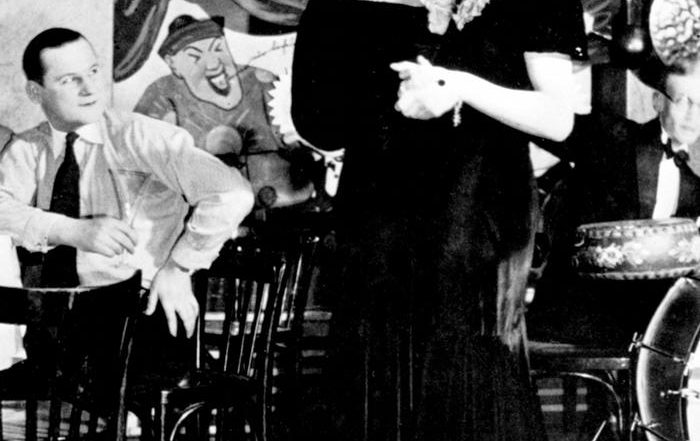
One of the most famous queer nightclubs of Weimar-era Berlin was Eldorado (seen in the title photo up top). It first opened in 1924 in Kantstrasse, in the nearby Charlottenburg neighborhood, before moving to several different locations over the years. More than just an entertainment venue, it was a meeting place for artists, writers, performers and Berlin's LGTBQ+ community, hosting drag performances and allowing social freedom behind its closed doors.
The club's atmosphere inspired many: Artist Otto Dix depicted scenes from Eldorado, while the famed German-born singer Marlene Dietrich reportedly performed there. British author Christopher Isherwood came to Berlin in the late 1920s and wrote his book "The Berlin Stories" after visiting venues like Eldorado during his trip — the book is based heavily on the bohemian, queer and political underbelly of 1920s Berlin.
The Nazis and Paragraph 175
Once in power, the Nazis put a brutal end to the Weimar-era culture of tolerance. They tightened legislation and arrested gay men: At least 50,000 sentences based on Paragraph 175 were handed down, and an estimated 5,000-15,000 of these men were sent to concentration camps, according to figures by the United States Holocaust Memorial Museum.
While Nazi persecution violently interrupted Berlin's vibrant queer life, the German capital gradually experienced a renaissance, becoming the center of queer culture it is today.
Edited: Cristina Burack
(The above story first appeared on LatestLY on Apr 11, 2026 12:50 PM IST. For more news and updates on politics, world, sports, entertainment and lifestyle, log on to our website latestly.com).