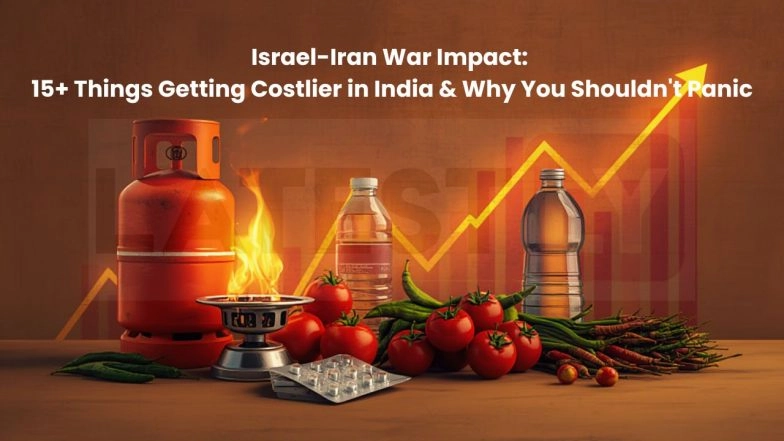
Israel-Iran War Impact: 15+ Things Getting Costlier in India & Why You Shouldn't Panic
As the Israel-Iran conflict intensifies, India faces a sharp rise in the cost of living. From a ₹60 hike in LPG to surging prices for edible oil, electronics, and even bottled water, here is the definitive list of what’s getting costlier and why you should avoid panic buying. Stay informed.

New Delhi: As the geopolitical situation in West Asia intensifies, the ripple effects are becoming increasingly visible across the Indian economy. India’s significant dependence on energy imports means that any disruption in the Strait of Hormuz, a vital artery for 90% of our LPG and a massive portion of our crude oil, directly impacts the cost of living. From the kitchen hearth to the digital marketplace, a "war tax" is being felt through rising costs and logistical delays.
However, it is crucial to stay grounded. While the government has invoked the Essential Commodities Act to manage supplies, much of the current "shortage" is being fueled by panic buying and unverified rumours. Official sources, including the Ministry of Petroleum and the PIB Fact Check unit, have urged citizens to remain vigilant against fake news. There is no need to hoard; India maintains a 12-to-16-week buffer stock, and domestic LPG production has already been ramped up by 25%. Staying calm and following official directives is our best defence against artificial scarcity. Also Read: Fuel Shortage Rumours: Why Buying Petrol in Bottles is Dangerous and Illegal.
Comprehensive List of Rising Costs (March 2026)
As of mid-March 2026, the Indian economy is grappling with "imported inflation" as global crude oil prices hover near $120 per barrel. The most immediate impact is a sharp rise in logistical and energy costs, which has triggered a domino effect across domestic retail sectors. While headline inflation had been trending at a benign 3.2% in February, the sudden surge in freight insurance and energy surcharges is now threatening to push the Consumer Price Index (CPI) toward the 5% mark. This transition from a "Goldilocks" economic phase to one of high volatility is evidenced by the record-low rupee (near ₹93) and a spike in safe-haven assets like gold, signalling a period of cautious spending and tightened household budgets for the foreseeable future. Here is the list of things getting costly in India.
Kitchen & Household Essentials:
LPG (Cooking Gas): Domestic 14.2-kg cylinders rose by ₹60 (now ~₹913). Commercial 19-kg cylinders jumped by ₹115. To prevent hoarding, the booking gap is now 25 days for urban and 45 days for rural areas.
Edible Oils: Retail prices for palm and sunflower oil have climbed by ₹15–₹20 per kg due to rising freight and insurance premiums.
Packaged Drinking Water: Polymer costs for bottles have surged; a ₹1–₹2 per bottle retail hike is imminent as summer demand peaks. Also Read: Bisleri, Aquafina, Kinley To Get Costlier? Iran-Israel Conflict May Push Up Bottled Water Prices in India as Packaging Costs Surge.
Cooking Alternatives & Lifestyle:
Induction Stoves & Cookware: Demand has exploded 30x, causing price hikes of ₹400–₹600 per unit and widespread stock depletions.
Eating Out: Many restaurants have added a 10–15% "Fuel Surcharge" or removed gas-intensive dishes to manage limited commercial LPG supplies.
Energy & Transportation:
Fuel & Airfare: While petrol/diesel remains buffered by the government, global Brent crude is near $120. International airfare is rising due to ATF costs and rerouting. Also Read: Petrol and Diesel Shortage in India Rumours Untrue; Hindustan Petroleum Assures Adequate Fuel Availability.
Electronics & Manufacturing:
Tech & Repairs: Disruptions in helium and bromine supplies, coupled with copper and aluminium at 4-year highs, are making new smartphones, laptops, and appliance repairs costlier.
Jewellery: Supply crunches in rough diamonds from the UAE and Israel are driving up finished jewellery prices.
Israel-Iran War Impact: 15+ Things Getting Costlier in India
| Category | Item | Impact Status | Why the Price is Increasing/May Increase |
| Energy | 1. Domestic LPG | Up ₹60 | Direct revision due to 90% import dependency on Gulf. |
| 2. Commercial LPG | Up ₹115 | Severe supply crunch; black market prices up to ₹4,000. | |
| 3. CNG & PNG | Rising | Diversion of natural gas to priority sectors like power. | |
| Kitchen Staples | 4. Edible Oils | Up ₹15–20/kg | Global rally in palm/soy oil; high insurance surcharges. |
| 5. Pulses (Dal) | Rising | Delayed shipments of Tur and Urad from Africa/Myanmar. | |
| 6. Dry Fruits | Up 20–30% | Supply halt for Saffron, Pistachios, and Mamra Almonds from Iran. | |
| 7. Fresh Onions | Rising | Indirect impact of higher diesel costs for transport. | |
| 8. Bottled Water | Up ₹1–2 | 50% jump in polymer (plastic) costs; high summer demand. | |
| Alternatives | 9. Induction Stoves | Up ₹400–600 | Panic buying (30x demand surge) as households flee LPG. |
| 10. Rice Cookers | Rising | Stock depletion due to a 4x surge in precautionary buying. | |
| Dining | 11. Restaurant Bills | 10–15% More | Scarcity of commercial gas is forcing a "Fuel Surcharge." |
| 12. Delivery Fees | Up ₹10–15 | A combination of fuel hikes and costlier plastic packaging. | |
| Electronics | 13. Smartphones | Up 5–10% | Scarcity of critical gases (Helium) and higher air freight. |
| 14. Laptops/TVs | Rising | Disruptions in copper and semiconductor supply chains. | |
| Agri/Luxury | 15. Fertilizers | High Pressure | Shortage of LNG feedstock for Urea and DAP plants. |
| 16. Gold Jewelry | Record Highs | Global "safe-haven" demand is driving prices to record levels. | |
| 17. Medicine (APIs) | Up 20–30% | Supply chain delays for raw materials like Paracetamol. |
Why are Prices Rising if India Have Enough Stocks
The common thread across these increases is the Strait of Hormuz. As this maritime chokepoint faces closure or high-risk status, the cost of war risk insurance and ocean freight has tripled.
For items like induction stoves and packaged water, the price hike is a combination of "Panic-Induced Demand" and "Petrochemical Costs." Bottles are made from oil-based polymers, and stoves are being bought as a "survival necessity" by millions at once, leading to artificial price hikes by retailers.
Frequently Asked Questions: India’s Economic Situation and Price Hikes Due to Israel-Iran War
In a climate of global uncertainty, clarity is our strongest defence against economic anxiety. While the Israel-Iran conflict has undeniably pressured global supply chains, understanding the mechanics of these price hikes helps differentiate between real market shifts and the artificial scarcity caused by fear.
The following FAQs address the most pressing concerns regarding your household budget, the safety of your supplies, and how to navigate the current influx of information.
Q1. Is there a genuine shortage of LPG (cooking gas) in India?
Ans: No. While global supply chains in the Strait of Hormuz are disrupted, the Government of India has confirmed that there is approximately a 12-to-16-week buffer stock of energy. The perceived "shortage" is largely due to panic booking and a rush in demand, rather than a lack of production. Refineries have already increased LPG production by 28% to meet this spike.
Q2. Why has the government increased the booking gap for LPG refills?
Ans: The gap has been temporarily extended to 25 days (from 21) under the Essential Commodities Act. This is a proactive measure to prevent hoarding and ensure that every household gets an equitable share. It ensures that "panic buyers" do not stock extra cylinders while others go without.
Q3. Will petrol and diesel prices double if the war continues?
Ans: While global crude has crossed the $100–$120 mark, the Indian government is using "strategic reserves" and diversifying imports—sourcing more from Russia and the US—to shield citizens from a massive price shock. Prices may fluctuate, but a "doubling" is unlikely due to these state-level interventions. Also Read: Petrol Price Reaching INR 500 per Litre Is Fake News.
Q4. Why are induction stoves and electric kettles suddenly so expensive?
Ans: This is a classic case of demand-pull inflation. As people fear an LPG crunch, millions are pivoting to electric cooking simultaneously. This 30x surge in demand has depleted stocks at major retailers like Amazon and Flipkart, allowing some sellers to hike prices. Supply is expected to stabilise as manufacturers ramp up production. Also Read: LPG Shortage Fears Trigger ‘Induction Rush’ Across India as Homes and Restaurants Scramble for Electric Cooking.
Q5. Is it true that edible oil and pulses will vanish from the shelves?
Ans: Absolutely not. India has sufficient domestic stocks. The price increase (₹15–₹20 per kg) is due to higher shipping and insurance costs for imports, not a total lack of supply. There is no need to buy months’ worth of oil or dal in advance.
Q6. What can I do as a responsible citizen during this crisis?
Ans: The most helpful thing you can do is buy only what you need. Refrain from "panic-stocking" and ignore unverified rumours on social media. Follow the official directives from the Ministry of Petroleum and the Ministry of Consumer Affairs to help maintain market stability.
While it is natural to feel concerned, it is highly inadvisable to hoard or panic-buy. Hoarding creates artificial shortages, driving prices higher for everyone and hurting the most vulnerable. The Government of India has assured that domestic fuel supplies are secure, and refineries are operating at full capacity.
Verify before you share: Do not fall for "limited stock" rumours on social media. Check the PIB Fact Check handles for authentic information. By buying only what we need and following official guidance, we ensure that supplies remain available for every Indian household.
(The above story first appeared on LatestLY on Mar 13, 2026 04:38 PM IST. For more news and updates on politics, world, sports, entertainment and lifestyle, log on to our website latestly.com).