Petrol Price in Delhi Today, March 27, 2026: Check Petrol and Diesel Rates in Delhi-NCR
Petrol prices in Delhi remain steady at INR 94.77 on March 27, supported by a significant cut in central excise duty to INR 3 per litre. While global crude stays near USD 100 per barrel due to West Asia tensions, government intervention has allowed OMCs to absorb costs, keeping retail rates unchanged for the third consecutive day.

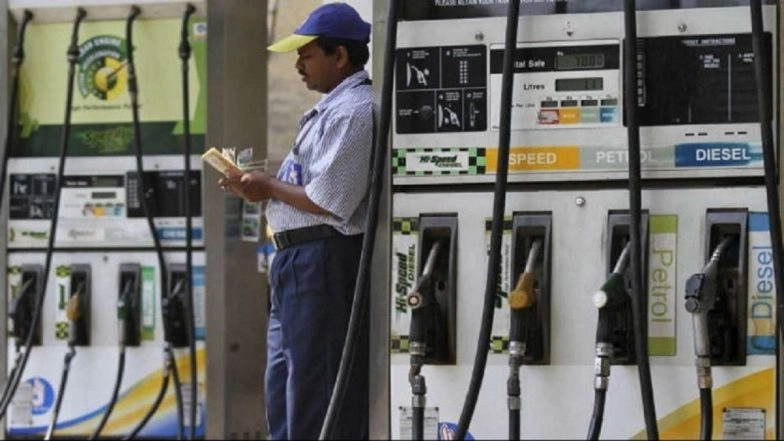
Mumbai, March 27: Petrol and diesel prices in the national capital remained unchanged for the third consecutive day on Friday, March 27, providing a measure of stability to consumers despite high volatility in global energy markets. In Delhi, petrol continues to retail at INR 94.77 per litre, while diesel is priced at INR 87.67 per litre. The price freeze at the pump comes as the Union Government announced a major reduction in central excise duties - slashing petrol duty to INR 3 per litre and diesel to zero- to help state-run oil marketing companies (OMCs) absorb the rising costs of imported crude oil.
Retail Prices in the National Capital Region
While the base retail rates have remained flat, there are minor variations across the broader National Capital Region (NCR) due to differing state-level Value Added Tax (VAT) structures. Petrol Price Today, March 27, 2026: Check Petrol Rates in Delhi, Mumbai, Chennai and Other Cities.
- Noida: Petrol is retailing at INR 94.74 and diesel at INR 87.81.
- Gurugram: Residents are paying INR 95.36 for petrol and INR 87.83 for diesel.
- Ghaziabad: Rates are closely aligned with Delhi, with petrol at INR 94.58 and diesel at INR 87.67.
State-run giants, including Indian Oil Corporation (IOCL), Bharat Petroleum (BPCL), and Hindustan Petroleum (HPCL), have not revised retail prices since the morning update at 6:00 AM. However, private retailer Nayara Energy recently implemented a standalone hike of INR 5 per litre for petrol and INR 3 for diesel to manage its own supply costs.
Government Intervention: Excise Duty Cuts
The stability in retail prices is largely attributed to a strategic move by the Ministry of Finance on March 26. Faced with Brent crude prices hovering near the USD 100 per barrel mark, the government reduced the special additional excise duty on petrol from INR 13 to INR 3 per litre. The duty on diesel was completely removed (brought to nil). This intervention is intended to cushion OMCs from the financial impact of the ongoing Middle East crisis and shipping disruptions in the Strait of Hormuz. By lowering the tax burden, the government has enabled these companies to keep retail prices steady for the public instead of passing on the global price surge to consumers.
Global Context and Market Drivers
The primary driver behind the current energy uncertainty is the escalating tension in West Asia, which has led to increased insurance costs for oil tankers and periodic blockades of key shipping lanes. Although crude oil prices saw a slight dip on Friday morning following reports of a possible extension to shipping deadlines, the market remains on edge. India, which imports approximately 88 per cent of its crude oil requirements, is particularly vulnerable to these fluctuations. The current policy of absorbing losses through tax cuts is viewed by analysts as a short-to-medium-term strategy to manage retail inflation, which the government aims to keep at a target of 4 per cent.
(The above story first appeared on LatestLY on Mar 27, 2026 12:01 PM IST. For more news and updates on politics, world, sports, entertainment and lifestyle, log on to our website latestly.com).