Petrol Price Today, March 29, 2026: Check Petrol Rates in Delhi, Mumbai, Chennai and Other Cities
Petrol and diesel prices in India remain steady this Sunday, March 29. Following an INR 10 excise duty cut, petrol is retailing at INR 94.77 in Delhi and INR 103.54 in Mumbai. Despite global crude oil hitting USD 112 per barrel due to West Asia tensions, government interventions and tax relief have shielded consumers from a major price spike.

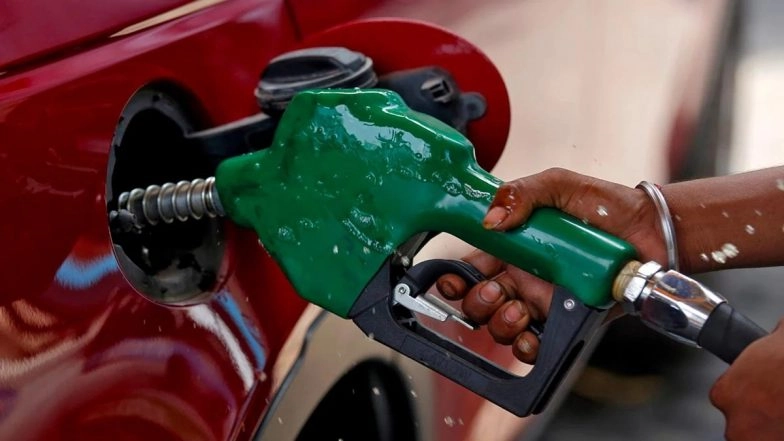
Mumbai, March 29: Retail petrol and diesel prices (petrol and diesel rates) across India remained unchanged on Sunday, March 29, providing a period of much-needed stability for consumers. This steady pricing follows a significant intervention by the central government, which recently slashed excise duty by INR 10 per litre on both fuels to counteract a dramatic spike in global crude oil costs. In the national capital, petrol continues to retail at INR 94.77 per litre, while diesel is priced at INR 87.67 per litre, as oil marketing companies (OMCs) move to absorb high international overheads.
Scroll down to check petrol prices today, March 29, in Delhi, Chennai, Mumbai, Kolkata, Lucknow, Pune, Bengaluru, Hyderabad, Jodhpur, Jaipur, Srinagar, Noida, Ghaziabad, Gurugram and Ahmedabad. Petrol Price Today, March 28, 2026: Check Petrol Rates in Delhi, Mumbai, Chennai and Other Cities.
City-Wise Breakdown of Petrol Rates
Fuel prices vary across the country due to state-level Value Added Tax (VAT), local cesses, and transportation logistics. As of 6:00 AM today, the rates in major metropolitan areas are as follows.
Petrol Rate Today, March 29, 2026
| City | Petrol Price (per Litre) |
| New Delhi | INR 94.77 |
| Mumbai | INR 103.54 |
| Chennai | INR 101.06 |
| Kolkata | INR 105.41 |
| Bengaluru | INR 102.96 |
| Hyderabad | INR 107.50 |
| Pune | INR 103.82 |
| Ahmedabad | INR 94.29 |
| Lucknow | INR 94.73 |
| Jaipur | INR 104.85 |
| Noida | INR 95.12 |
| Gurugram | INR 95.65 |
| Ghaziabad | INR 94.58 |
| Srinagar | INR 100.70 |
| Jodhpur | INR 104.59 |
The Global Crude Factor
The decision to hold domestic prices steady comes amid a volatile international market. Brent crude oil has surged toward USD 112 per barrel this month, driven primarily by escalating geopolitical tensions in West Asia and disruptions to supply routes through the Strait of Hormuz. While global prices have risen by over 40 per cent in some regions, the Indian government has utilised a combination of strategic reserves and the recent tax cuts to shield the domestic economy from an immediate inflationary shock. Union Home Minister Amit Shah recently stated that the government has made "very good arrangements" to ensure there is no fuel crisis or shortage despite the global energy crunch.
OMCs Absorb the Impact
Although the government reduced excise duties, consumers may not see a direct price drop at the pump. State-run OMCs - including Indian Oil Corporation (IOCL), Bharat Petroleum (BPCL), and Hindustan Petroleum (HPCL) - are currently using the INR 10 tax relief to offset their own massive "under-recoveries." Industry analysts estimate that without the current price freeze, petrol rates could have spiked by an additional INR 40 to INR 50 per litre. By holding the line, the government aims to keep transportation and logistics costs stable, which is critical for controlling the prices of essential commodities like food and medicines. How To Apply for MGL PNG Connection in Mumbai: A Step-by-Step Guide.
Market Outlook and Risks
As the 2025-26 financial year draws to a close, market participants are keeping a close watch on two key variables:
- The Rupee-Dollar Exchange Rate: As India imports nearly 90% of its crude oil, any further weakening of the Rupee against the U.S. Dollar will increase the import bill.
- Geopolitical De-escalation: Any sign of peace talks in the Middle East could lead to a cooling of crude prices, potentially allowing for retail price reductions in the upcoming quarter.
For now, experts advise vehicle owners to expect continued stability in the short term, though private fuel retailers may continue to charge a slight premium over the rates offered by state-run stations.
(The above story first appeared on LatestLY on Mar 29, 2026 08:54 AM IST. For more news and updates on politics, world, sports, entertainment and lifestyle, log on to our website latestly.com).