Gudi Padwa Rangoli and Ugadi Muggulu Designs
Celebrate the Hindu New Year with vibrant Gudi Padwa and Ugadi Rangoli designs. Discover traditional motifs like the Gudi, Kalash, and Muggulu patterns. Our guide offers creative ideas using marigolds and mango leaves to bring prosperity and festive joy to your home. Perfect for a colorful start!

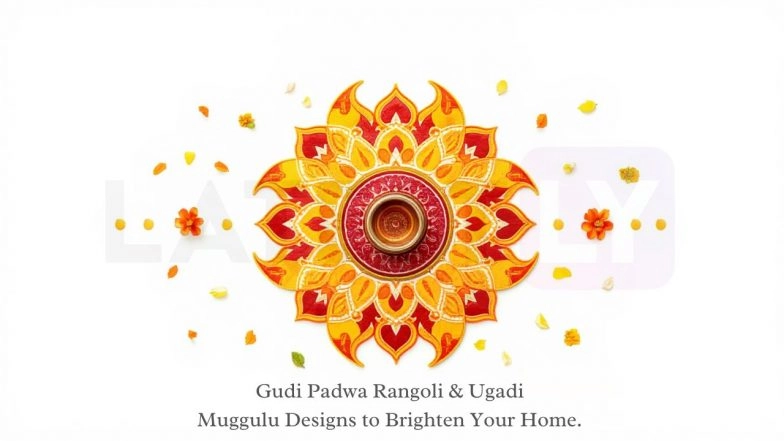
As the warm breeze of spring sweeps across the Indian subcontinent, it heralds not just a change in season but also the arrival of the Hindu New Year. Known as Gudi Padwa in Maharashtra and Ugadi (or Yugadi) in Karnataka, Andhra Pradesh, and Telangana, this auspicious day, falling on the first day of the Chaitra month, is a time of profound joy, spiritual renewal, and vibrant celebration.
While the rituals and special dishes might differ by region, one unifying element that transcends geographical boundaries is the creation of breathtaking Rangoli designs at the entrance of every home. More than just decoration, these colourful floor arts are a prerequisite for inviting the deities of prosperity, wealth, and health into the household for the year ahead. Also Read: March 19, 2026 Festival Calendar: Timings for Gudi Padwa, Ugadi, Navreh and Ghatasthapana.
Here is a guide to designing Rangoli that captures the unique spirit and traditional significance of both Gudi Padwa and Ugadi.
The Spirit of Gudi Padwa (Maharashtra)
For Maharashtrians, Gudi Padwa symbolises victory, the creation of the universe by Lord Brahma, and the return of Lord Rama to Ayodhya. The defining symbol of this day is the Gudi, a long bamboo staff draped in a bright silk cloth, topped with neem leaves, a garland of flowers, and an inverted copper or silver pot.
Rangoli Designs for Gudi Padwa:
The Gudi Motif: This is the most popular choice. Draw a stylised representation of the Gudi as the central element. Ensure the copper pot (Kalash) is prominent at the top.
Sanskar Bharati Style: Gudi Padwa Rangolis are often made using the Sanskar Bharati technique, a method using three or five fingers to create smooth, flowing, circular or semi-circular patterns around a central motif.
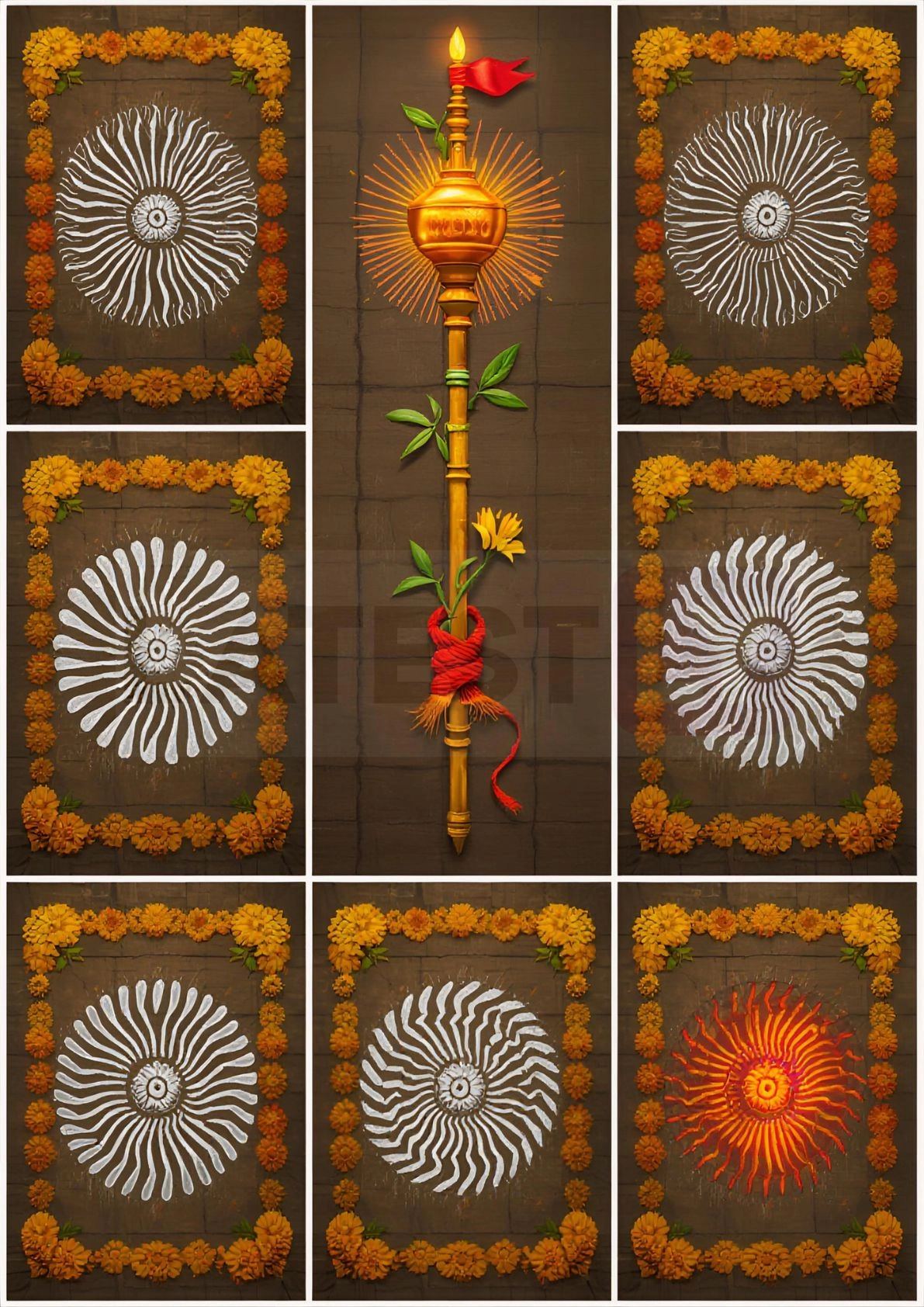
Marigold Borders: The colours of spring, yellow and orange, are essential. Frame your central Gudi or Kalash with thick borders of traditional marigold flowers or designs mimicking them.
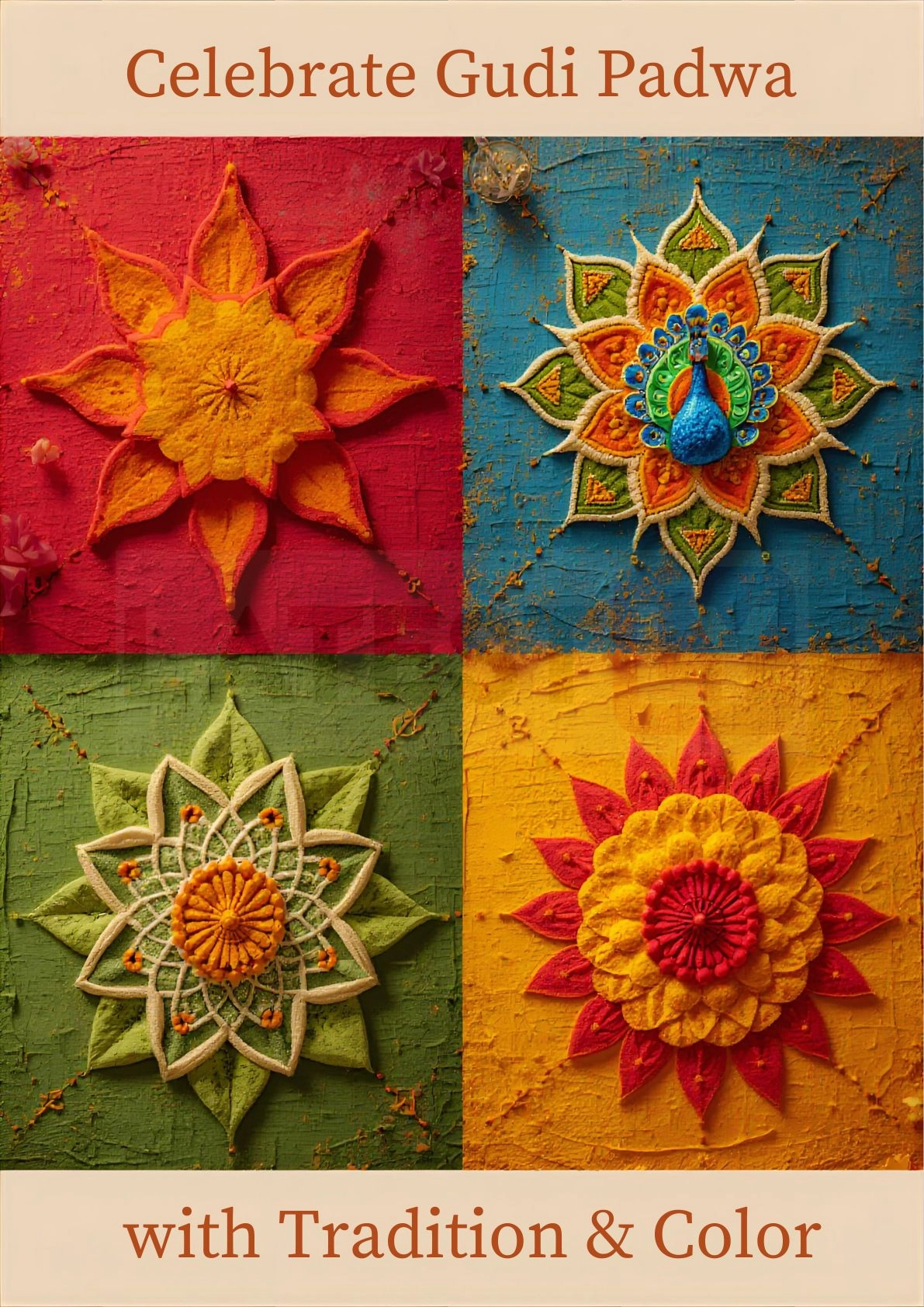
The Soul of Ugadi (South India)
Ugadi, derived from the Sanskrit Yuga Adi (beginning of a new age), emphasises the cyclical nature of life. The day is famous for Ugadi Pachadi, a symbolic dish combining six tastes (bitter, sweet, sour, salty, tangy, and spicy) to remind one to accept all life’s experiences—joy and sorrow—with equanimity.
Rangoli Designs (Muggulu) for Ugadi:
Chukkala Muggulu (Dot Designs): In Andhra Pradesh and Telangana, symmetry is key. These designs begin with a grid of dots (chukkalu) that are subsequently joined by precise lines to create complex geometric stars, flowers, or labyrinthine patterns.
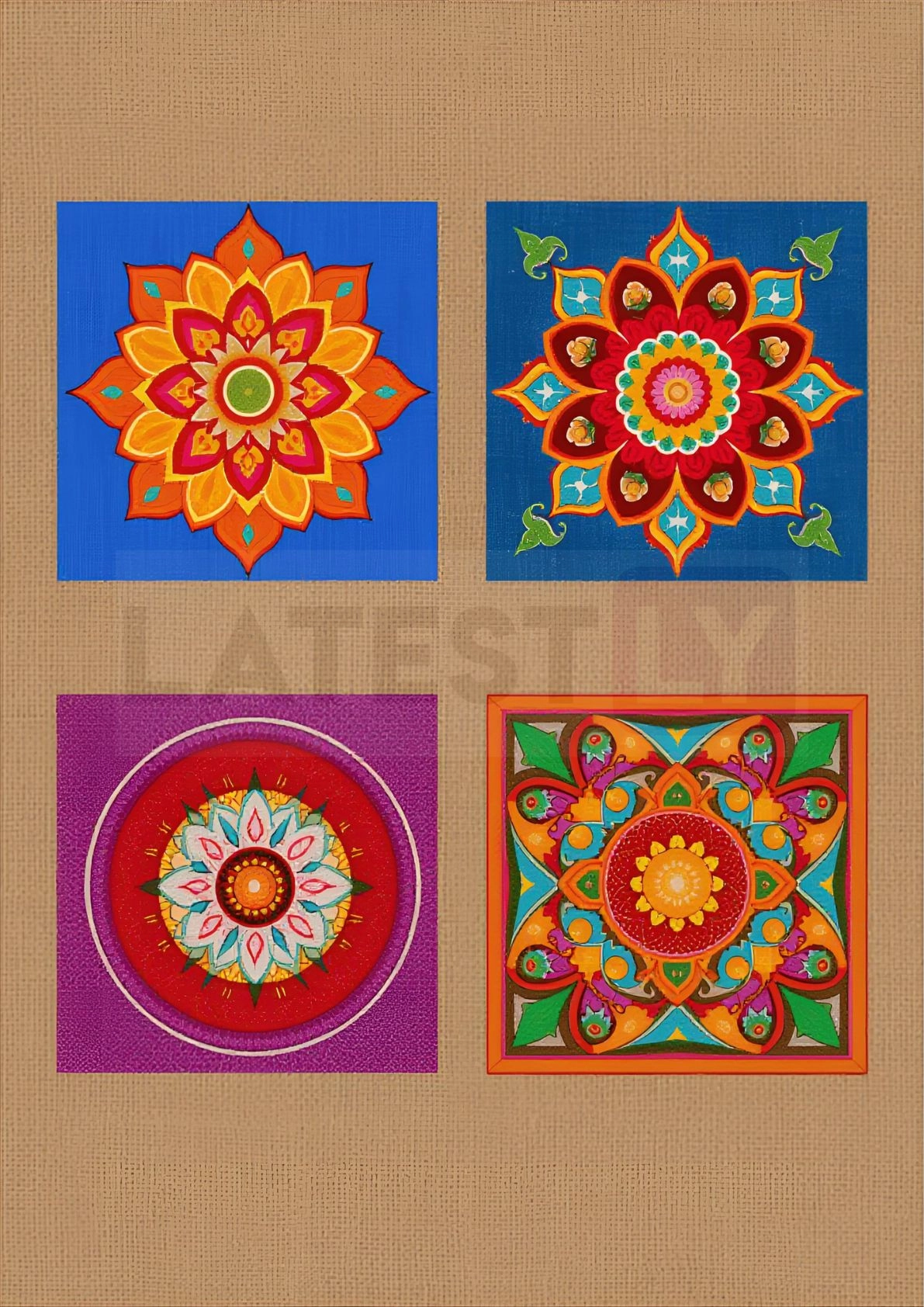
The Floral Kalash: A central Kalash (representing abundance) flanked by mango leaves (representing immortality) and lotus flowers is a very common motif.
Peacock Elegance: The peacock is a symbol of grace and new beginnings. Create a grand design of a peacock with its plumage fanned out, filling the feathers with complex circular mandala patterns.
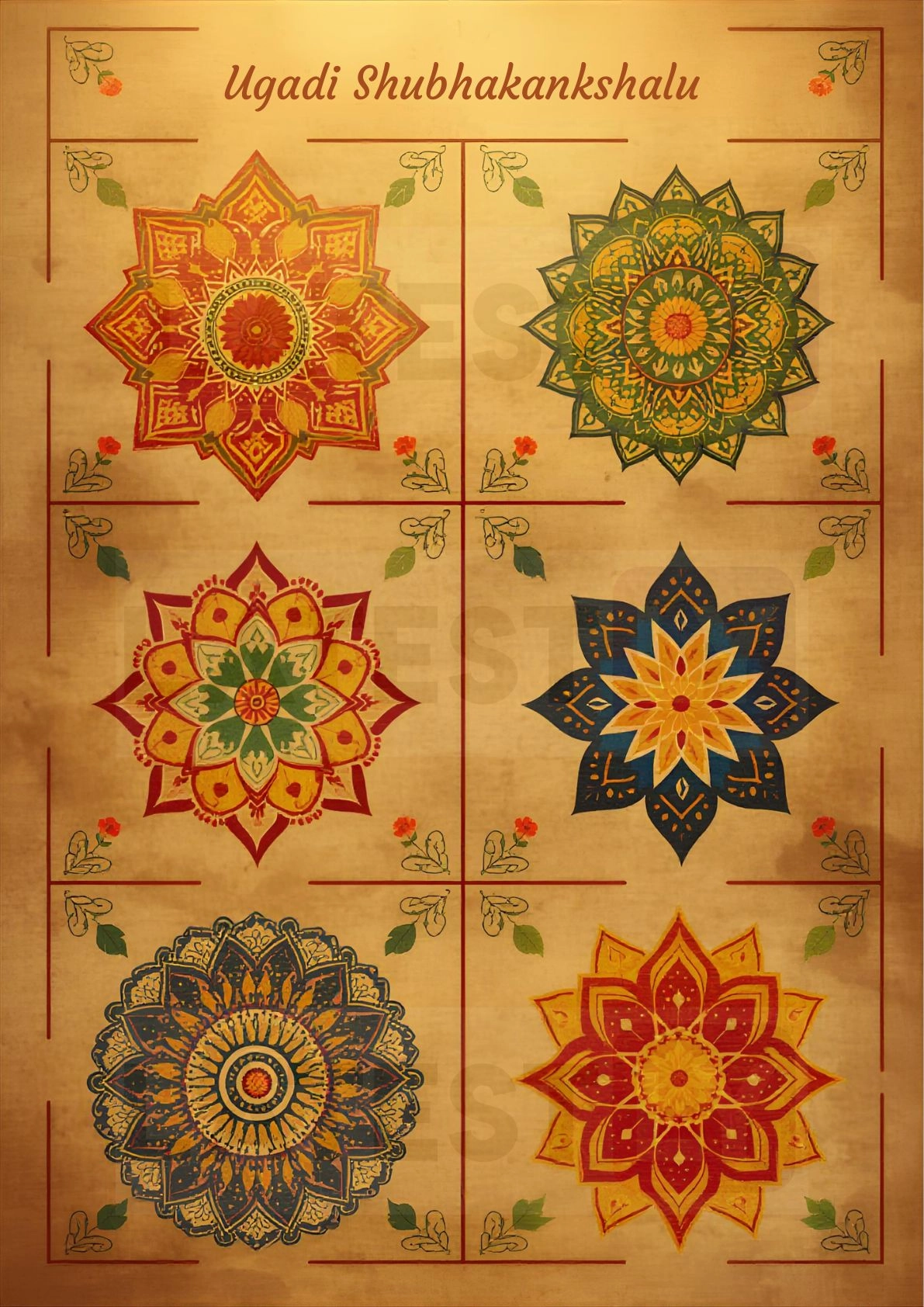
Unifying Themes of Gudi Padwa and Ugadi and Colours
Despite the regional flavour, certain motifs are common to both festivals:
- Mango Leaves: Torans (door hangings) of fresh mango leaves are essential for both festivals. Incorporate the shape of mango leaves into the borders of your Rangoli.
- The Kalash: The pot of abundance is a universal symbol of the New Year.
- Diyas (Lamps): Lighting a lamp signifies the victory of light over darkness. Draw small lamps within your Rangoli or place real diyas around the finished design in the evening.
Colours to Use in Rangoli and Muggulu:
- Green: Representing nature, harvest, and the bittersweet neem leaves.
- Yellow & Orange: For joy, prosperity, and the warmth of the spring sun.
- Deep Red/Kumkum: Signifying sanctity and good luck.
Practical Tips for a Flawless Rangoli and Muggulu
- Preparation: Clean the area thoroughly. If the floor is dark stone, the colours will appear more vibrant.
- Symmetry: For beginners, a simple floral design or a symmetric Chukkala Muggulu is easier than a portrait or a Gudi motif.
- Thickness: Ensure the chalk line or white powder border is clear and distinct before filling in the colours.
- Use Natural Elements: In modern celebrations, many combine colored powder with fresh flower petals (marigold, rose, jasmine) to add texture and fragrance.
By dedicating time to create a beautiful Rangoli, you are not just decorating your home; you are participating in a centuries-old tradition that celebrates resilience, gratitude, and the hopeful promise of a new beginning.
(The above story first appeared on LatestLY on Mar 19, 2026 09:32 AM IST. For more news and updates on politics, world, sports, entertainment and lifestyle, log on to our website latestly.com).