Labour Day 2026 Date, History and Significance: Why India Celebrates Workers’ Day on May 1
India observes International Labour Day on May 1, 2026, marking the global struggle for fair labor conditions. First celebrated in India in 1923, the day honours the historic eight-hour workday movement. Today, it remains a vital public holiday for reflecting on worker dignity, social security, and evolving labor rights within the modern gig and informal economies.

- Read in
- हिंदी
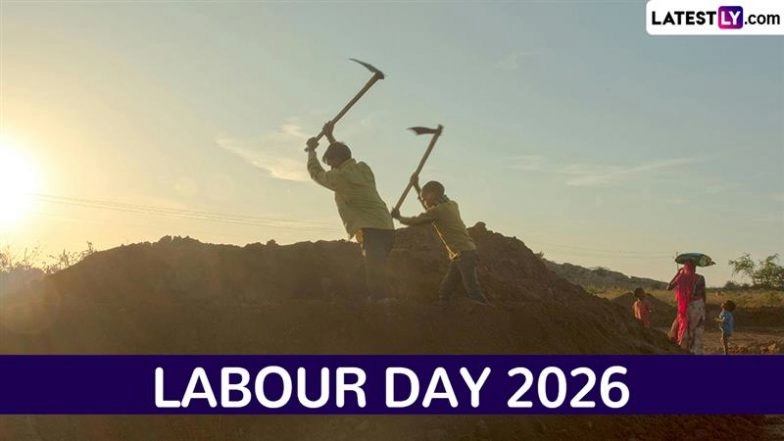
As India prepares to mark International Labour Day 2026 (Labor Day-May Day) on Friday, May 1, the occasion serves as both a public holiday and a moment of reflection on the history of labour rights. Known locally as Antrarashtriya Shramik Divas, Kamgar Din or Uzhaipalar Dhinam, the day is observed across the country to honour the contributions of the workforce and the historic struggle for fair working conditions, most notably the transition to an eight-hour workday.
While May Day has ancient roots in Europe as a seasonal festival, its modern association with labour began in the United States during the late 19th century. In 1886, workers across the US launched a massive strike to demand a shift from grueling 16-hour workdays to a standard eight-hour day. New Labour Codes in India: Key Changes To Leave, Salary and Working Hours Explained.
The movement reached a turning point during the "Haymarket Affair" in Chicago in May 1886, where a peaceful protest for labour rights turned violent. In the aftermath, the incident became a rallying cry for the global labour movement. In 1889, the International Socialist Congress in Paris designated May 1 as a day of international unity and solidarity for workers to commemorate these sacrifices.
How the Labour Movement Came to India
India’s formal association with this global observance began nearly four decades after the Haymarket protests. The first Labour Day celebration in India was organized in Chennai (then Madras) on May 1, 1923, by the Labour Kisan Party of Hindustan.
The event was spearheaded by the leader Malayapuram Singaravelu Chettiar. During the inaugural celebrations, which included the hoisting of the red flag, he urged the government to declare May 1 a national holiday. Since that milestone, the day has become an annual fixture on the Indian calendar, marked by trade union rallies, cultural events, and government-led programs aimed at recognizing the dignity of labour. PF and Gratuity Set To Rise Under Labour Codes, Here’s What It Means for Salaries.
Labour Day 2026 Theme
There is no singular, globally mandated "theme" for International Workers' Day (May 1), as it is a historical day of commemoration and solidarity rather than a sponsored event with a set annual agenda.
However, many organizations and labor movements often rally around key issues each year. For 2026, the global conversation is heavily influenced by the focus of the International Labour Organization (ILO), which has designated "A Healthy Psychosocial Working Environment" as the theme for the World Day for Safety and Health at Work, observed annually on April 28—just days before Labour Day.
Labour Day Significance
In the contemporary landscape, Labour Day remains a relevant platform for discussing the evolution of workplace rights. While the historical focus was on securing basic hours, today's labour discourse in India often centers on the rights of workers in the informal and gig economies, the importance of social security, and the necessity of work-life balance in an increasingly digitized professional world.
For many across India, May 1 serves as a symbolic day of rest. While it is a gazetted public holiday in many states, it is also a time when trade associations and civil society groups host seminars and parades to address modern employment challenges, ensuring that the legacy of the 1923 movement continues to influence current labour policy and advocacy.
(The above story first appeared on LatestLY on Apr 30, 2026 08:10 AM IST. For more news and updates on politics, world, sports, entertainment and lifestyle, log on to our website latestly.com).