Lyrid Meteor Shower 2026 Peaks Today: When, Where and How To Watch the ‘Shooting Stars’ Across the UK and the World
The 2026 Lyrid meteor shower peaks tonight, April 22, offering viewers 15-20 meteors per hour. Ideal dark skies are expected as the crescent moon sets early. Best seen from the UK and Northern Hemisphere between midnight and dawn, the Lyrids are known for fast, bright 'fireballs' originating from Comet Thatcher’s ancient debris trail.

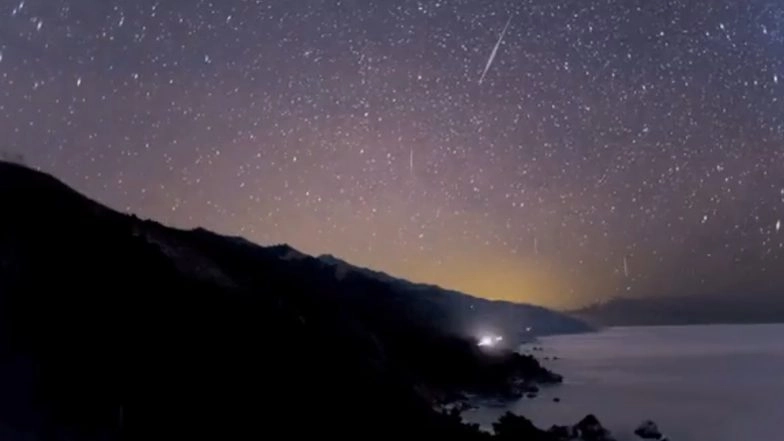
Stargazers across the United Kingdom and the Northern Hemisphere are in for a celestial treat tonight, April 22, as the Lyrid meteor shower reaches its annual peak. Astronomers are predicting ideal viewing conditions this year, thanks to a waxing crescent moon that will set shortly after midnight, leaving behind the dark, moonless skies necessary to spot the faint streaks of light. Under peak conditions, observers can expect to see between 15 and 20 meteors per hour, with the possibility of bright "fireballs" occasionally illuminating the sky.
Peak Timing and Visibility of Lyrid Meteor Shower 2026
While the Lyrids are active from mid-April through the end of the month, the primary peak occurs during the overnight hours of Tuesday, April 21, into the early morning of Wednesday, April 22. For viewers in the UK and Europe, the highest frequency of meteors is expected between midnight and dawn. Lyrid Meteor Shower 2026: When and Where To Watch in India; Best Time for Delhi, Mumbai, Bengaluru.
The shower is named after the constellation Lyra, from which the meteors appear to radiate. This "radiant point" will rise in the northeast before midnight and climb high into the sky by 4:00 AM. While the meteors originate near the bright star Vega, experts suggest looking slightly away from the radiant, as meteors in this area often appear longer and more dramatic.
How to Watch: Tips for the Best Experience of 'Shooting Stars'
No specialised equipment like telescopes or binoculars is required to enjoy the show, as meteors move too fast for such optics. To maximise your chances of spotting the "shooting stars", follow these professional tips:
- Seek Dark Skies: Travel away from city lights to a rural area or a local park with a clear view of the horizon.
- Be Patient: It takes roughly 20 to 30 minutes for human eyes to fully adjust to the dark. Avoid looking at phone screens during this time, as the blue light will reset your night vision.
- Dress Warmly: April nights can be deceptively cold, especially during the predawn hours. Bring a blanket or a reclining lawn chair so you can look straight up comfortably.
Scientific Background and History of the Lyrid Meteor Shower
The Lyrid meteor shower is one of the oldest recorded celestial events, with Chinese astronomical texts documenting sightings as far back as 687 B.C. The shower occurs annually when Earth passes through the debris trail left by Comet C/1861 G1 (Thatcher). This long-period comet orbits the sun approximately every 415 years and is not expected to return to the inner solar system until the year 2276. As these tiny fragments of comet dust - often no larger than a grain of sand - hit Earth's atmosphere at speeds of 110,000 miles per hour, they vaporise, creating the glowing trails we see from the ground. While the Lyrids are generally modest in frequency, they are famous for rare "outbursts" that can produce up to 100 meteors per hour, though such events are difficult to predict.
While the Northern Hemisphere offers the best vantage point due to the high altitude of the Lyra constellation, the shower is also visible in parts of the Southern Hemisphere at a lower rate. If local weather remains clear, tonight's display will provide a spectacular lead-in to the next major astronomical event: the Eta Aquarids, which are set to peak in early May.
(The above story first appeared on LatestLY on Apr 22, 2026 07:43 AM IST. For more news and updates on politics, world, sports, entertainment and lifestyle, log on to our website latestly.com).