US-India Trade Deal: Donald Trump Slashes Reciprocal Tariffs to 18% After Call With PM Narendra Modi, Says ‘He Agreed To Stop Buying Russian Oil’
Today, February 2, US President Donald Trump announced a historic trade deal with PM Narendra Modi, lowering the US reciprocal tariff on Indian goods from 25 per cent to 18 per cent. In exchange, India agreed to stop purchasing Russian oil, buy over USD 500 billion in US energy and goods, and move toward zero tariffs on American products.

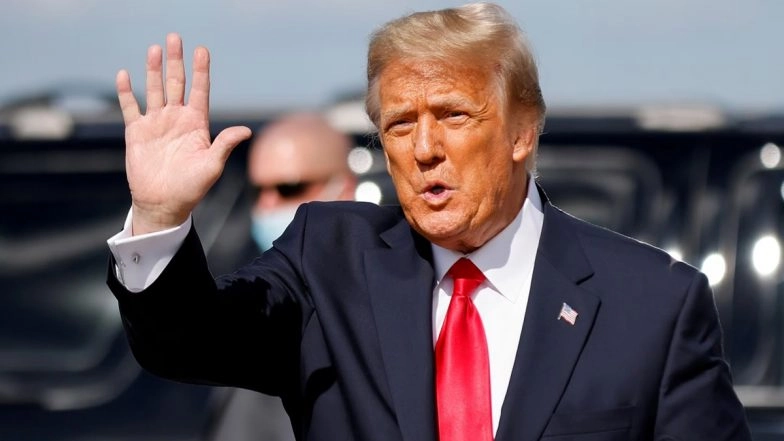
New Delhi, February 2: In a significant shift for global trade relations, US President Donald Trump announced today, February 2, that the United States has reached a landmark trade agreement with India. Following a high-stakes telephone conversation with Prime Minister Narendra Modi, Trump confirmed that the United States will reduce its reciprocal tariff on Indian goods from 25 per cent to 18 per cent, effective immediately.
The deal, described by the President as a gesture of "friendship and respect," marks a cooling of tensions after a year characterized by aggressive duty hikes and complex geopolitical negotiations. Donald Trump Speaks With PM Narendra Modi Over Phone Ahead of EAM S Jaishankar’s US Visit.
India Greed To Stop Buying Russian Oil, Says US President Donald Trump
The Terms of US-India Trade Deal: Tariffs, Energy, and Russian Oil
The agreement centers on a strategic trade-off involving energy security and military conflict. According to a statement posted by President Trump on Truth Social, India has agreed to stop purchasing Russian crude oil - a major point of contention for the White House throughout 2025.
In exchange for the tariff reduction to 18 per cent, New Delhi has committed to:
Purchasing US Energy: India will significantly increase imports of American energy, technology, agricultural products, and coal, with a commitment exceeding USD 500 billion.
Alternative Oil Sources: Prime Minister Modi reportedly agreed to pivot oil procurement toward the United States and potentially Venezuela to help "end the war in Ukraine".
Market Access: India has pledged to move toward "zero" tariffs and non-tariff barriers on American products in the future.
PM Narendra Modi Confirms Trade Deal With US, Says 'Made in India Products Will Now Have a Reduced Tariff of 18%'
Wonderful to speak with my dear friend President Trump today. Delighted that Made in India products will now have a reduced tariff of 18%. Big thanks to President Trump on behalf of the 1.4 billion people of India for this wonderful announcement.
When two large economies and the…
— Narendra Modi (@narendramodi) February 2, 2026
Ending the '50 Per Cent Tariff' Era
The deal arrives as a massive relief for Indian exporters who had been struggling under a cumulative tariff burden that reached as high as 50 per cent in late 2025. Those duties were a combination of a 25 per cent "reciprocal tariff" introduced earlier that year and an additional 25 per cent penal levy specifically linked to India's continued energy trade with Moscow.
By lowering the primary rate to 18 per cent and addressing the Russian oil dispute, the new deal effectively unblocks stalled negotiations that had previously sparked concerns of a prolonged trade war between the world's two largest democracies. Donald Trump Shares ‘Newsmakers of the Year 2025’ Poster Featuring Himself and PM Narendra Modi (See Pic).
Geopolitical Implications
The timing of the announcement is seen as a major diplomatic win for both leaders. For President Trump, the deal aligns with his "America First" agenda by securing a massive USD 500 billion commitment to "Buy American." For Prime Minister Modi, the agreement secures vital market access for Indian manufacturing and IT sectors while navigating the delicate balance of India's strategic autonomy.
US Ambassador to India Sergio Gor, who confirmed the call earlier today, noted that the relationship is entering a "stronger" phase. Analysts suggest that the pivot away from Russian oil could significantly alter the dynamics of the conflict in Ukraine, as one of Russia's largest energy buyers shifts its supply chain westward.
What's Next for Exporters?
While the 18 per cent tariff cap is effective immediately, industry experts are awaiting the formal text of the agreement to understand which specific sectors - such as steel, aluminum, or textiles - will see the most immediate benefit. Official confirmation from India’s Ministry of External Affairs is expected later tonight as External Affairs Minister S Jaishankar arrives in the United States for follow-up high-level meetings.
(The above story first appeared on LatestLY on Feb 02, 2026 11:13 PM IST. For more news and updates on politics, world, sports, entertainment and lifestyle, log on to our website latestly.com).