‘Super’ El Nino Warning: Global Weather Patterns at Risk As Pacific Warms, India’s Monsoon Could Be Disrupted
A developing El Nino in the Pacific could intensify into a rare 'super El Nino' in 2026, according to global forecasts. Scientists warn it may disrupt weather patterns worldwide, including India’s monsoon, and trigger extreme events like floods and droughts. Rising ocean temperatures and new research highlight potential long-term climate impacts.

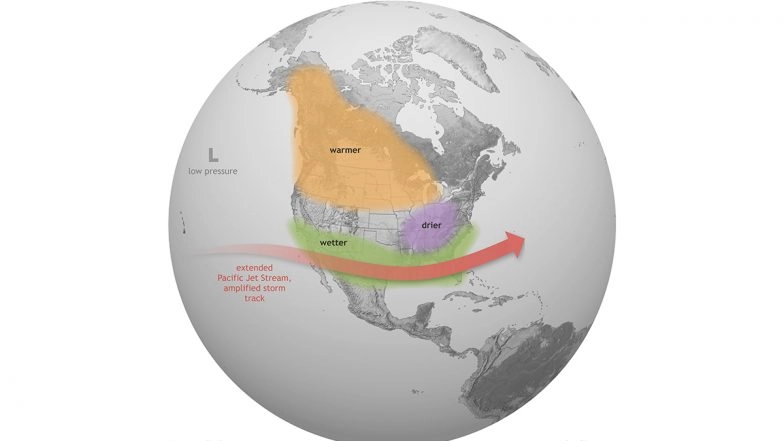
A developing El Nino in the Pacific Ocean could intensify into a rare “super El Nino” later in 2026, with forecasts indicating it may become one of the strongest such events in more than a century. Climate agencies warn the phenomenon is likely to disrupt global weather systems, including India’s monsoon patterns, and increase the risk of extreme events.
Recent projections from the European Centre for Medium-Range Weather Forecasts and the National Oceanic and Atmospheric Administration suggest the event could develop by mid-year and persist through the end of 2026, with a high probability of strengthening in the coming months. March Breaks Temperature Records as Forecasters Predict Strong El Nino.
What Is El Nino?
El Niño is the warm phase of the El Nino Southern Oscillation, a recurring climate pattern in the equatorial Pacific Ocean. It occurs when trade winds weaken, allowing warm surface waters to accumulate in the eastern and central Pacific.
This warming alters atmospheric circulation, influencing weather patterns across the globe. In India, El Nino is typically associated with weaker southwest monsoon rainfall and changes in seasonal precipitation patterns. ‘Super’ El Nino 2026: India Braces for Record-Breaking Heat and Monsoon Deficit.
Forecast Signals Point to a Strong Event
According to NOAA’s latest update, there is a 62% chance of El Nino developing between June and August 2026, with probabilities rising above 70% for July-September and 80% for August-October.
Ocean observations show a steady increase in sea surface temperatures (SSTs) across the Pacific, with anomalies already building in key regions. Forecast models indicate that SST anomalies could exceed 2°C above average, well above the 0.5°C threshold used to define an El Nino, raising the possibility of a “super” event.
Scientists note that the current warming trend follows the rapid weakening of recent La Nina conditions earlier this year.
Potential for Global Weather Disruptions
A super El Nino can significantly amplify the impacts of a typical event. Meteorologists warn it could trigger extreme weather, including floods, droughts, and shifts in storm tracks across multiple regions.
In India and South Asia, such conditions may affect agricultural cycles by disrupting the monsoon. Other regions, including East Africa, South America, and Australia, could also experience pronounced changes in rainfall and temperature patterns.
New research published in Nature Communications links super El Nino events to broader “climate regime shifts”, abrupt and lasting changes in the climate system.
The study suggests these shifts can alter soil moisture, ocean temperatures, and atmospheric conditions across large areas, with potential long-term consequences for ecosystems and livelihoods. Regions such as central South Asia, the western Amazon, and central Australia are particularly vulnerable to such changes.
Lessons From Past Super El Nino Events
Historically, super El Nino events have had far-reaching impacts. The 2015–16 event led to record global temperatures, widespread coral bleaching, and severe droughts in several regions. Earlier events in 1997-98 and 1982-83 also triggered major disruptions, highlighting the scale of potential impacts when ocean warming intensifies beyond typical levels.
Climate experts say the coming months will be critical in determining whether the current El Nino develops into a super event. While uncertainties remain, the strengthening signals in ocean temperatures and atmospheric conditions are being closely monitored. Authorities and policymakers are expected to track developments closely, particularly in regions vulnerable to weather extremes, as preparations may be needed to mitigate potential impacts.
(The above story first appeared on LatestLY on Apr 10, 2026 09:25 AM IST. For more news and updates on politics, world, sports, entertainment and lifestyle, log on to our website latestly.com).