What Is Liberation Day? Here’s Everything You Need To Know About US President Donald Trump’s Tariff Announcements on April 2
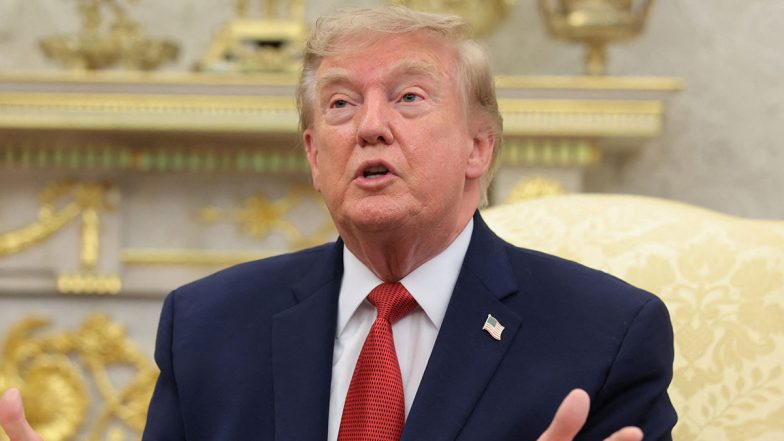
In a bid to free the US from its reliance on foreign goods, President Donald Trump is set to unveil a set of tariffs on April 2, which he has called "Liberation Day."

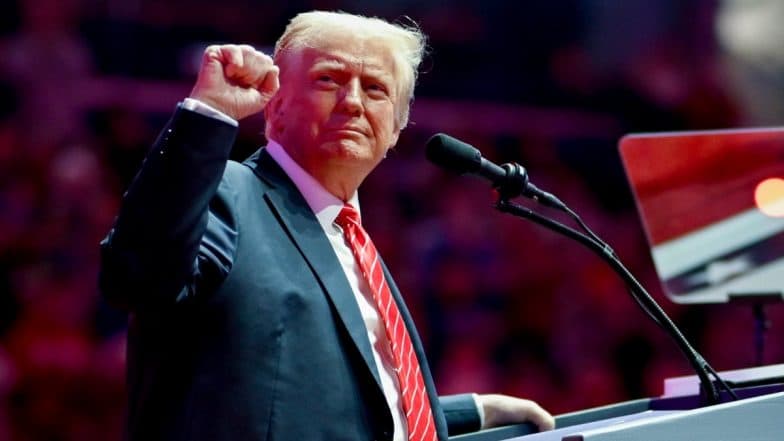
Washington, DC, April 1: In a bid to free the US from its reliance on foreign goods, President Donald Trump is set to unveil a set of tariffs on April 2, which he has called "Liberation Day." The president has promised that these tariffs will level the playing field, targeting countries that impose taxes on American imports. This move comes as part of his broader strategy to reduce trade deficits and protect US industries from foreign competition.
As Trump prepares to announce these sweeping trade actions, many details remain unclear about the scope and scale of the tariffs. The White House has indicated that reciprocal tariffs will be applied across a range of US trading partners, with varying rates. Let's know what "Liberation Day" means and what you can expect from this highly anticipated announcement. Trump Tariffs: India at Risk Along With Other Emerging Economies Due to Trump Administration's Impending Reciprocity Plans, Says Fitch Report.
What is Liberation Day?
"Liberation Day," as President Donald Trump dubbed it, refers to the day he plans to roll out a set of reciprocal tariffs on imports from countries that impose duties on American goods. Set for April 2, this day symbolises Trump's push to free the US from what he perceives as unfair trade practices by other nations. The tariffs, intended to level the playing field, aim to reduce America's reliance on foreign products, protect domestic industries, and generate additional revenue.
This move aims to protect US industries, bring manufacturing jobs back to the country, and ultimately reduce the trade deficit by making foreign goods more expensive and less competitive in the US market. However, the full impact of these tariffs remains uncertain, as the exact details of the implementation are yet to be fully disclosed. Donald Trump’s Auto Tariffs To Have Minimal Impact on India’s Automobile Sector, Says GTRI.
What Can You Expect?
On April 2, you can expect a significant escalation in trade tensions as President Trump unveils his much-anticipated set of tariffs. While the specific details remain unclear, the tariffs will likely target a broad spectrum of countries that the US has trade imbalances with, such as China, the European Union, Mexico, and Canada. These "reciprocal" tariffs are designed to match or exceed the tariffs that these nations impose on US goods. The impact could be felt across various sectors, with industries such as automobiles, steel, and aluminum potentially seeing the most immediate effects.
Trump's administration has suggested that these new tariffs could raise up to $600 billion annually, with rates possibly averaging around 20%. In addition to the general reciprocal tariffs, you can expect some targeted levies on specific products. For instance, Trump has already hinted at imposing 25% tariffs on auto imports, which are set to begin on April 3, alongside further taxes on car parts. There's also a possibility of new tariffs on other key sectors, including pharmaceuticals, semiconductors, and copper.
These actions could disrupt global supply chains, leading to higher costs for US consumers and businesses. The uncertainty surrounding these new measures has already begun to rattle financial markets, and the potential for retaliatory tariffs from affected countries adds another layer of complexity to the trade landscape. The full scope of these changes will depend on the president’s final decisions on April 2.
(The above story first appeared on LatestLY on Apr 01, 2025 01:26 PM IST. For more news and updates on politics, world, sports, entertainment and lifestyle, log on to our website latestly.com).