













 Quickly
 Socially
 Trending
 Crypto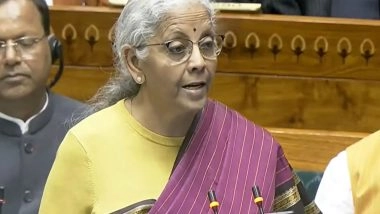
New Delhi [India], February 1 (ANI): Finance Minister Nirmala Sitharaman on Sunday announced the launch of India Semiconductor Mission (ISM) 2.0, with a Rs 40,000 crore outlay, aiming to boost the country's semiconductor ecosystem.
This initiative focuses on producing equipment and materials, designing full-stack Indian intellectual property, and strengthening supply chains
Also Read | Budget 2026 Highlights: Odisha, Kerala, Andhra Pradesh and Tamil Nadu to Get Dedicated Rare Earth Corridors.
While presenting the Union Budget 2026, the Finance Minister stated that the new mission will focus on industry-led research and training centres to develop technology and a skilled workforce.
Sitharaman also highlighted the success of the Electronics Components Manufacturing Scheme, launched in April 2025 with an outlay of Rs 22,919 crore. She stated that the scheme has already received investment commitments double the targets.
"India's semiconductor mission, 1.0 expanded India's semiconductor sector capabilities. Building on this, we launch ISM 2.0 to produce equipment and materials, develop full-stack Indian IP, and strengthen supply chains. We will also focus on industry-led research and training centers to develop technology and a skilled workforce. The Electronics Components Manufacturing Scheme launched in April 2025 with an outlay of Rs 22,919 crores already has investment commitments at double the targets. We propose to increase the outlay to Rs 40,000 crore to capitalise on this momentum," Sitharaman said.
Earlier, the Ministry of Electronics and Information Technology (MeitY) announced a new plan to expand artificial intelligence training to 500 universities nationwide. This initiative aims to create a talent pipeline for the industry by providing a specialised course curriculum and training opportunities for students. The program follows a model used in the semiconductor sector, where students at 315 universities are already designing chips.
During a press conference, Union Minister Ashwini Vaishnaw noted that the industry is finalising the curriculum to ensure students receive training that meets market needs. This expansion is a key part of the upcoming AI Mission 2.0, which the government expects to launch in the next five to six months as the first phase of the current mission concludes.
The government also plans to announce major research programs during the summit to make the national AI strategy more comprehensive. This strategy focuses on a common compute stack to make technology access more equitable for everyone. This approach builds on prior digital programs, including UPI, DigiLocker, and the 5G rollout.
"You have seen in the case of semiconductors, where 315 universities now have complete staff and students are designing chips, students are shaping the chips. We will have a similar model now, industry is finalising the course curriculum," the minister said.
"Apart from that, we will also take up major research programs, which we will announce in the AI summit. So, that way our program is very comprehensive, and one more thing which I wanted to share with you is the world is taking note of our common compute," he added.
The second phase of the AI mission will focus on scaling these efforts. The ministry is looking for feedback from stakeholders on how to implement these programs on a larger scale. The goal is to maintain the momentum of technology democratisation and ensure India remains a leader in global AI development. (ANI)
(The above story is verified and authored by ANI staff, ANI is South Asia's leading multimedia news agency with over 100 bureaus in India, South Asia and across the globe. ANI brings the latest news on Politics and Current Affairs in India & around the World, Sports, Health, Fitness, Entertainment, & News. The views appearing in the above post do not reflect the opinions of LatestLY)
 Share Now
 Google Trends



 Live Bot