Coronavirus Outbreak: Donald Trump, Irish PM Leo Varadkar Greet Each Other With 'Namaste' Amid COVID-19 Fears
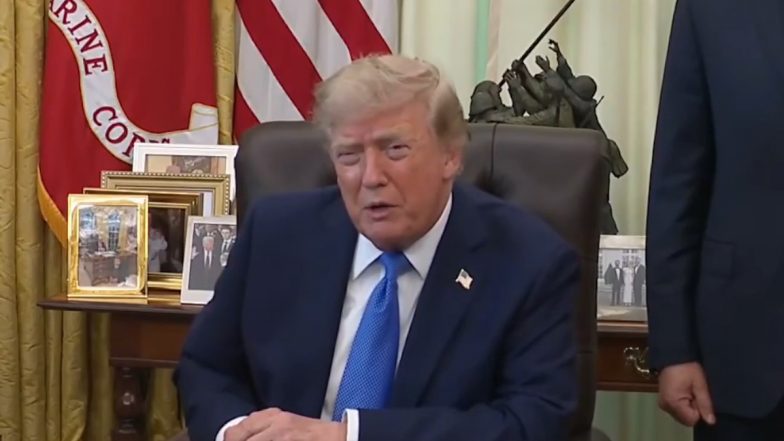
US President Donald Trump and visiting Irish Prime Minister Leo Varadkar greeted each other in the traditional Indian way of 'namaste' at the White House here on Thursday, which they said was necessary in the current times of coronavirus.

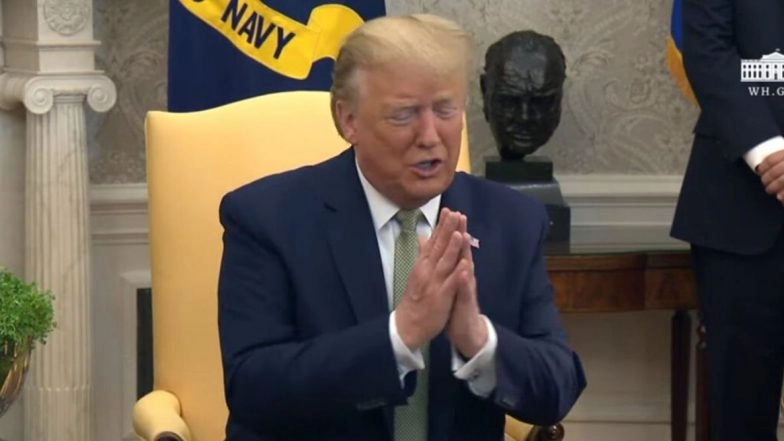
Washington, March 13: US President Donald Trump and visiting Irish Prime Minister Leo Varadkar greeted each other in the traditional Indian way of 'namaste' at the White House here on Thursday, which they said was necessary in the current times of coronavirus. Trump and Varadkar, who is of Indian-origin, joined their palms in the 'namaste' pose when reporters asked them in the Oval Office as to how they greeted each other.
"We did not shake hands today. We looked at each other and said what we are going to do. You know, sort of a weird feeling," Trump told reporters in the Oval Office of the White House along with Varadkar. When another reporter asked if they shook hands, Varadkar joined his hands in the 'namaste' pose, showing the reporters how he greeted the president. Trump too joined in with the 'namaste' pose. Coronavirus Outbreak: White House Says 'No Need for COVID-19 Test for Donald Trump' After He Met Brazilian President Jair Bolsonaro's Communications Chief.
Watch ANI video:
#WATCH US President Donald Trump: We (him&PM of Ireland) didn't shake hands today&we looked at each other&said what are we going to do?Sort of a weird feeling. We did this (joined hands). I just got back from India&I didn't shake any hands there. It was easy. #CoronaVirusPandemic pic.twitter.com/5uTSKTf7bO
— ANI (@ANI) March 13, 2020
"I just got back from India. And I did not shake any hands there. And it's very easy because they go like this," Trump said as he showed reporters the 'namaste' pose for the second time in quick succession. Trump also showed the Japanese way of greeting -- the bowing of the head. "They (India and Japan) were ahead of the curve," he remarked, even as he said bowing and 'namaste' gave him a strange feeling.
"I have never been a big hand-shaker, you probably heard. But once you become a politician, shaking hands is very normal. It's a very strange feeling when people walk up and say 'hi'," he said. "It almost feels impersonal or feels like you're being rude, but we just can't afford to think like that for the next few weeks," Varadkar told reporters.
The World Health Organisation on Thursday said coronavirus "is a controllable pandemic". The number of COVID-19 cases in the world stands at 125,293, with over 4,600 deaths.
(The above story is verified and authored by Press Trust of India (PTI) staff. PTI, India’s premier news agency, employs more than 400 journalists and 500 stringers to cover almost every district and small town in India.. The views appearing in the above post do not reflect the opinions of LatestLY)