











 Quickly
 Socially
 Trending
 Crypto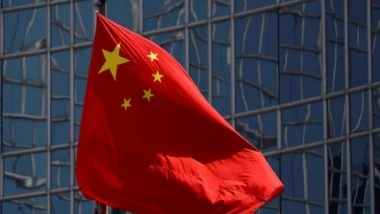
Taipei [Taiwan], May 13 (ANI): Liberal democracies in the Asia-Pacific, including Taiwan, must strengthen their individual and collective resilience as the world faces a new Cold War shaped by intensifying rivalry between the US and China, a leading international affairs expert said in Taipei on Sunday, Taipei Times reported.
Robin Niblett, distinguished fellow at Chatham House and senior adviser at the Centre for Strategic and International Studies, said the emerging global divide is not merely geopolitical, but spans military, technological, and ideological spheres.
Speaking at a forum hosted by the Taiwan-based Centre for Asia-Pacific Resilience and Innovation, Niblett warned that the US-China contest is deepening and poses heightened security challenges for the region.
In his keynote speech at the event, themed "Building Resilience on Shaky Ground in the Asia Pacific," Niblett described China as seeking to break out of the "first island chain" through heavy naval investment, increased nuclear capability, and intensified efforts to control the South China Sea.
"If China wants to be economically secure as the world's largest exporter, it wants to break out of the first island chain," he said.
Niblett also pointed to the dual-use nature of Chinese innovation, stressing that "technology is critical to economic growth and central to the Chinese Communist Party's (CCP) 'military-civil fusion,' which uses technology to bolster its military capabilities."
He said the competition reflects a broader ideological struggle between top-down authoritarianism and bottom-up democracy. "The CCP is afraid the US would undermine its leadership by spreading democracy," he added.
According to Niblett, the Russia-Ukraine war catalysed the current phase of the US-China rivalry. "The US-China contest really became a Cold War because of Russia's full-scale invasion of Ukraine," he said, arguing that China's alignment with Moscow further alarmed democracies in the Asia-Pacific, reported Taipei Times.
He said the Biden administration had begun "knitting together" its allies, with the G7 acting as a steering committee for unifying Atlantic and Pacific allies. However, he warned that the Cold War has entered "a new chapter" with US President Donald Trump's return to power.
"The fundamental difference between Biden and the current president is that Trump does not believe in alliances," Niblett said.
"Trump views allies as countries to take advantage of, because he believes they rely on the US consumer market and the US military for security, but the US needs to 'negotiate with its rivals.'"
Niblett said China has since stepped up its "gray zone" activities, including military drills around Taiwan and broader regional naval movements. Meanwhile, the Taipei Times reported that Asia-Pacific nations fear the impact of Trump's "me first" approach on economies that depend on open global markets.
Faced with these risks, Niblett urged liberal democracies to boost individual resilience, especially in defence, energy, and hybrid security, and forge stronger economic ties among themselves.
"Asia-Pacific democracies must increase defence spending and be innovative in their defence strategies, enhance hybrid resilience against 'gray zone' warfare, and bolster their energy and economic resilience," he said.
He stressed that regional players must "become more resilient collectively," deepen integration with ASEAN, keep ties with the EU, and pursue closer business links with G7 countries and partners such as Australia.
"Taiwan's future lies with the other liberal democracies that rely on America for their security," he said.
Niblett concluded by urging Asia-Pacific democracies to prepare for future engagement with Washington. "Liberal democracies in the Asia-Pacific region must also be very thoughtful about how to reset relationships with the US," he said. (ANI)
(The above story is verified and authored by ANI staff, ANI is South Asia's leading multimedia news agency with over 100 bureaus in India, South Asia and across the globe. ANI brings the latest news on Politics and Current Affairs in India & around the World, Sports, Health, Fitness, Entertainment, & News. The views appearing in the above post do not reflect the opinions of LatestLY)
 Share Now
 Google Trends



 Live Bot