
World News | India-Nepal Ties to Get Stronger Under New Government: Outgoing Nepalese Environment Minister Madhav Chaulagain
Get latest articles and stories on World at LatestLY. Speaking to ANI from Kathmandu, Chaulagain said the incoming leadership would likely receive support from neighbouring countries, including India, to navigate the evolving geopolitical environment and strengthen regional cooperation.

By Vishu Adhana
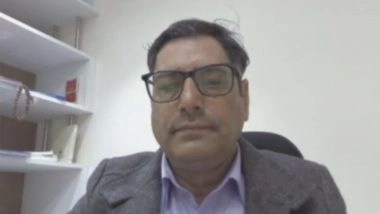
New Delhi [India], March 10 (ANI): India-Nepal relations are expected to grow stronger under the new government in Kathmandu, said the outgoing Environment Minister Madhav Chaulagain on Tuesday, while emphasising that the new leadership understands the sensitivity of the bilateral partnership and the importance of deep-rooted people-to-people ties between the two neighbours.
Also Read | Nikko Natividad, Gil Cuerva, Arron Villaflor and Ron Angeles: The Big 4 Viral Video Scandal Explained.
Speaking to ANI from Kathmandu, Chaulagain said the incoming leadership would likely receive support from neighbouring countries, including India, to navigate the evolving geopolitical environment and strengthen regional cooperation.
His remarks come as Nepal witnesses a political shift following the sweeping victory of the Rastriya Swatantra Party (RSP) in the general elections, paving the way for rapper-turned-politician Balendra Shah, popularly known as Balen, to become the country's next Prime Minister.
Madhav Chaulagain is a part of the Nepal interim cabinet led by led by former Chief Justice Sushila Karki, which was formed following the Gen-Z led protests in September 2025 that toppled the K P Sharma Oli government.
On Nepal's ties with India under new government, Chaulagain said the relationship would continue to remain strong under the new leadership.
"Nepal shares a nearly 1,500-kilometre border with India and the ties between the two countries are rooted in deep cultural and people-to-people connections. The new leadership understands this sensitivity," he said.
"I believe relations between Nepal and India will become stronger. Stability in the government will also help strengthen cooperation in areas such as trade, connectivity and development," he added.
The snap polls were held six months after deadly youth-led protests toppled the government in September 2025. According to election authorities, the RSP has secured 125 out of 165 seats decided through direct voting, though vote counting is still underway and is expected to conclude by Tuesday evening local time.
Chaulagain said the election result reflects a growing public demand for political change, with voters increasingly frustrated with governance failures and the long dominance of traditional political elites.
"People actually wanted change and that change has come legitimately through the ballot. Many were initially surprised by the scale of the result, but it clearly reflects the public mandate for transformation," he said.
He noted that the rise of young leaders, including Balen Shah, indicates a shift in Nepal's political culture, where voters are increasingly placing their faith in leaders who come from diverse professional backgrounds rather than traditional party structures.
According to Chaulagain, many of the newly elected leaders represent a generation that is more globally exposed, technologically aware and eager to position Nepal as a competitive economy.
"The new leaders are coming from different sectors - social activism, entrepreneurship, business and even entertainment. They were not traditional politicians but people who built credibility in their respective fields. That is why voters see them as agents of change," he said.
On the domestic front, Chaulagain said the new government would face immediate pressure to address issues related to governance, corruption and economic development, which were among the key factors behind the public anger against previous administrations.
"People want good governance, faster service delivery and transparency in decision-making. There has been frustration over corruption cases and delays in major reforms. The new government will have to address these concerns quickly," he said.
He also noted that bringing together many first-time lawmakers and leaders from different professional backgrounds could pose an initial challenge for the new administration, as many of them lack parliamentary experience.
"Many of the new parliamentarians are young and new to politics. Building coordination among them and working through the institutional and bureaucratic system may take time. But if they succeed, it could lead to significant reforms," he said.
Chaulagain added that the government would also need to accelerate long-delayed infrastructure and development projects and introduce legal and administrative reforms to improve governance mechanisms. (ANI)
(The above story is verified and authored by ANI staff, ANI is South Asia's leading multimedia news agency with over 100 bureaus in India, South Asia and across the globe. ANI brings the latest news on Politics and Current Affairs in India & around the World, Sports, Health, Fitness, Entertainment, & News. The views appearing in the above post do not reflect the opinions of LatestLY)