
World News | Tibetan Politician Urges Youth to Protect Culture Amid Chinese Sinicization Efforts
Get latest articles and stories on World at LatestLY. Dolma Tsering Teykhang, the Deputy Speaker of the Tibetan Government-in-Exile, highlighted the importance of preserving Tibetan culture, language, and religion at a political gathering in McLeod Ganj, especially encouraging the younger generation to safeguard Tibet's unique cultural heritage.

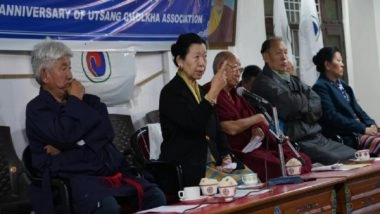
McLeod Ganj, (Himachal Pradesh) [India], March 17 (ANI): Dolma Tsering Teykhang, the Deputy Speaker of the Tibetan Government-in-Exile, highlighted the importance of preserving Tibetan culture, language, and religion at a political gathering in McLeod Ganj, especially encouraging the younger generation to safeguard Tibet's unique cultural heritage.
According to information provided by the Central Tibetan Administration (CTA), Dolma pointed out China's coercive tactics, such as forcing Tibetan children into colonial-style boarding schools, as part of its sinicization campaign.
She called for greater Tibetan self-sufficiency and reduced dependence on the CTA while encouraging public contributions to support the CTA in fostering young Tibetans across various fields of expertise.
Dolma discussed the current situation in Tibet, explaining China's efforts to replace the name 'Tibet' with 'Xizang' as part of its Sinicization strategy.
She also highlighted the growing number of Chinese tourists in Tibet, referred to as 'red tourism,' and the negative effects it has on the daily lives of Tibetans.
She further discussed the suppression of Tibetan cultural and religious practices and the ongoing efforts to weaken Tibetan identity through state-controlled education and media, all of which are part of China's broader campaign to diminish Tibet's heritage and autonomy.
The Tibet-China issue centres around Tibet's political status and its relationship with China. Tibet was a self-governing region with its own culture, religion, and political system until 1950, when China invaded and claimed it as part of its territory.
In 1959, a Tibetan uprising was crushed by Chinese forces, and the Dalai Lama, Tibet's spiritual leader, fled to India.
Since then, Tibet has been governed by China, but many Tibetans, including the Dalai Lama, seek greater autonomy or independence, citing cultural and religious suppression under Chinese rule.
China maintains that Tibet is an integral part of its territory, arguing that historical ties justify its control. The issue remains sensitive, with ongoing protests and international attention, as Tibetans continue to call for the preservation of their cultural and religious identity amidst China's policies of assimilation and modernization. (ANI)
(The above story is verified and authored by ANI staff, ANI is South Asia's leading multimedia news agency with over 100 bureaus in India, South Asia and across the globe. ANI brings the latest news on Politics and Current Affairs in India & around the World, Sports, Health, Fitness, Entertainment, & News. The views appearing in the above post do not reflect the opinions of LatestLY)