‘The Running Man’ Movie Review: Glen Powell Takes On a Totalitarian System in Edgar Wright’s Thrilling Stephen King Adaptation (LatestLY Exclusive)
Edgar Wright’s The Running Man, starring Glen Powell and Josh Brolin, reimagines Stephen King’s dystopian tale for today’s America. A slick, politically charged thriller with great performances and sharp action, it mirrors our world a little too closely — even if its safe ending pulls some punches.


The Running Man Movie Review: Sometimes I wonder if the tyrants of the world - or the narcissistic billionaire overlords - watch dystopian movies, take notes, and then go out to recreate the same world in real life. Stephen King’s The Running Man was published in 1982, set in an America of 2025 where corporate hegemony had completely taken over the country. The poor had grown poorer, their rights trampled upon, while the rich few continued to hoard more, and nearly everyone was obsessed with reality shows. ‘The Running Man’: Before Edgar Wright’s Dystopian Thriller, Every Stephen King Movie and Show That Came Out in 2025 and How They Fared With Fans.
In 1987, the story was turned into a film starring the formidable Arnold Schwarzenegger (which gets a couple of knowing nods here), taking a more cheesy, fantastical approach. Now, Edgar Wright’s version of The Running Man, also set in 2025, realigns the story with the darkness of King’s novel. And though it unfolds in a supposed dystopian future, what we see feels disturbingly close to the reality around us.
‘The Running Man’ Movie Review - The Plot
Here, The Running Man is the nation’s most popular reality show - a brutal contest where participants branded as society’s 'liabilities' are sent across the country to survive for a month while being hunted by an elite force known as the Hunters. The show is one of many dangerous reality shows run by the Network, a corporate conglomerate that controls most of America’s media - though this one is by far the deadliest.
We meet Ben Richards (Glen Powell), an unemployed blue-collar worker furious about his joblessness, his financial instability, and his inability to provide for his wife (Jayme Lawson) and their ailing infant daughter. When he can’t afford the medicine his child needs, Ben signs up for one of the Network’s reality shows.
Watch the Trailer of 'The Running Man':
Dan Killian (Josh Brolin), the megalomaniac producer of The Running Man, spots potential in Ben’s quiet rage and convinces him to join the show — promising fame, money, and redemption. Desperate, Ben agrees, and what follows is a relentless survival game that takes him across a decaying America, dodging the Hunters with nothing but instinct, grit, and a few unexpected allies.
‘The Running Man’ Movie Review - Edgar Wright's Best Or His Weakest?
The Running Man feels like Edgar Wright at his most commercial. It’s certainly his most expensive project - reportedly budgeted at USD 110 million, surpassing Scott Pilgrim vs the World’s USD 85 million (a flop on release, but a cult hit now). Yet the signature Wright-isms that defined his early work - the tight edits, sharp tonal shifts, and rhythmic storytelling of Hot Fuzz or Scott Pilgrim - feel dialled down. You still get the needle drops, the dark humour, and the slick action, but the film doesn’t entirely stand out as a quintessential Wright creation.
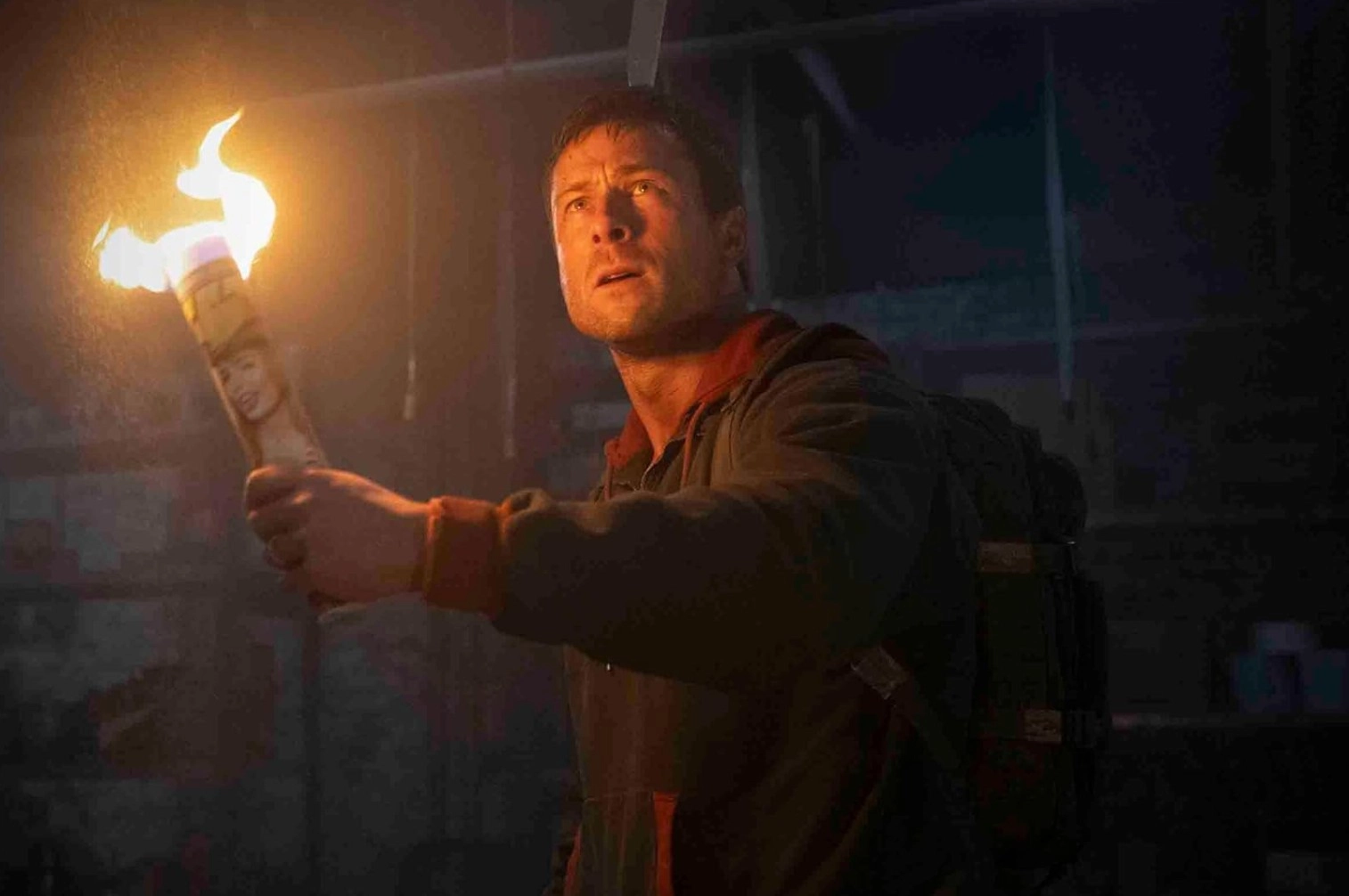
It also lacks the razor-sharp precision of his earlier works. There are noticeable lulls - not because of pacing, but because the screenplay doesn’t carry the emotional weight it needs. A couple of character deaths, for instance, feel surprisingly throwaway; you’re unsure what to make of them or what they were meant to add.
‘The Running Man’ Movie Review - Hits Too Close to Reality?
That said, I didn’t mind the ride. Like many filmmakers before him, Wright uses the story’s political commentary to mirror America’s current social climate. This version, more grounded and grittier than the 1987 film (are they in the same universe, though?), raises the stakes for a protagonist who doesn’t want to be a hero - just a desperate man trying to survive for his family.

The dystopian setting feels unnervingly plausible. This isn’t Blade Runner’s neon gloom - not yet - but the people here are already broken. The cars don’t fly yet; they’re all self-driving. Reality shows like The Kardashians (parodied here as Americanos) still dominate screens. The future’s big leap isn’t technology - it’s moral decay. People cheer televised killings without flinching, and really, are we that far off when there are audiences already applauding genocide or immigration raids?
The Network’s propaganda runs on familiar machinery - fake news, deepfakes, and selective editing that turn killers into martyrs and victims into villains. There are moments when it’s genuinely hard to tell whether the film is set in a dystopian future or simply showing us the world as it is.
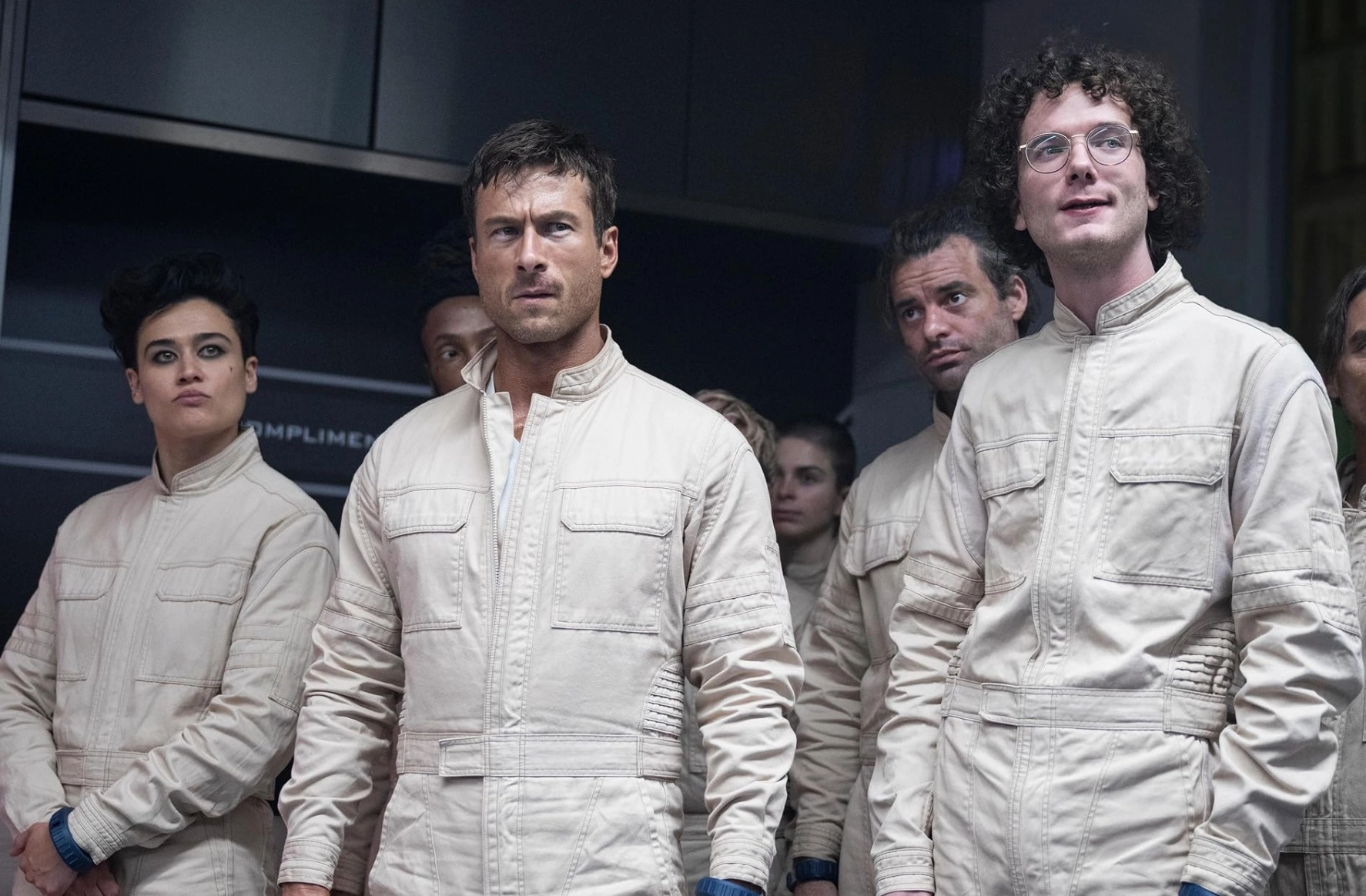
The question, though, is whether The Running Man adds anything new when real life already feels dystopian enough. The 1987 version’s world felt outlandish then; now it almost feels like reportage.
There are a couple of standout action sequences, the best being an ambush in a rundown hotel. It works as both a tense set piece and a showcase of Ben’s resourcefulness. However, I am not very sure why Glen Powell has to be only in a towel in that scene, apart from the gratuitousness of it all - after a point, the towel falls off. Indian audiences, however, won’t see much; the Censor Board has blurred out the 'naughty bits' everywhere.

There’s also a hilariously twisted Michael Cera subplot that channels Home Alone-style chaos - a small burst of classic Wright mischief in the middle of all the darkness.
‘The Running Man’ Movie Review - The Performances
Glen Powell is terrific, bringing intensity and desperation to Ben without resorting to action-hero swagger. His frustration feels real, his quiet moments land hard. It might be premature to call him Tom Cruise’s successor, but he’s clearly aiming for that space - and doing well.
Josh Brolin is excellent as the manipulative producer, perfectly embodying the sinister charisma of a man who plays God with his contestants. Colman Domingo, as the vain host, is flamboyant and unforgettable - he chews every scene he’s in.

The supporting cast, though, doesn’t leave much of a mark. William H Macy only appears in two, and Emilia Jones’s late introduction - meant to contrast Ben’s poverty with her privilege - feels underdeveloped despite its narrative importance. Her inclusion adds little to the dramatic heft of the story, especially as the film rushes toward its finale. Stephen King Birthday Special: From Shawshank Redemption to IT, 5 Best Movie Adaptations Based on Celebrated Horror Author's Novels.

The climactic showdown aboard the Network’s aircraft, where Ben faces off against the Hunters and their leader McCone (Lee Pace), is thrilling, even if it doesn’t quite match the tension of the hotel fight. The ending, however, feels too neat - almost playful, as if Wright didn’t want to end on too bleak a note. It deviates from King’s novel in a way that’s subversive but a little too convenient. There’s a pointed jab at how media manipulates reality, but the film stops short of fully exploring how Ben’s rebellion sparks public outrage.
‘The Running Man’ Movie Review - Final Thoughts
The Running Man is Edgar Wright’s most mainstream film to date - a politically charged action thriller that reflects our present more than it predicts the future, with Glen Powell leading from the front. But while it’s engrossing, it doesn’t quite hit as hard as it should. For all its ambition, it plays things safely convenient in places - not Wright’s best showing, but a strong one nonetheless.
(The opinions expressed in the above article are of the author and do not reflect the stand or position of LatestLY.)
(The above story first appeared on LatestLY on Nov 14, 2025 09:01 AM IST. For more news and updates on politics, world, sports, entertainment and lifestyle, log on to our website latestly.com).