Asteroid 2024 YR4 To Hit Earth’s Moon in 2032? All About the 200-Foot Celestial Body That May Strike Moon, Creating Visible Flash
A newly discovered asteroid, designated 2024 YR4, has emerged as a significant subject of study for astronomers after data suggested it has a small but notable chance of striking the Moon in May 2032. Current projections from NASA and international space agencies place the probability of a lunar impact at approximately 1 in 25, or 4%. While these odds are relatively high in astronomical terms, they are expected to shift as more tracking data becomes available over the next eight years.

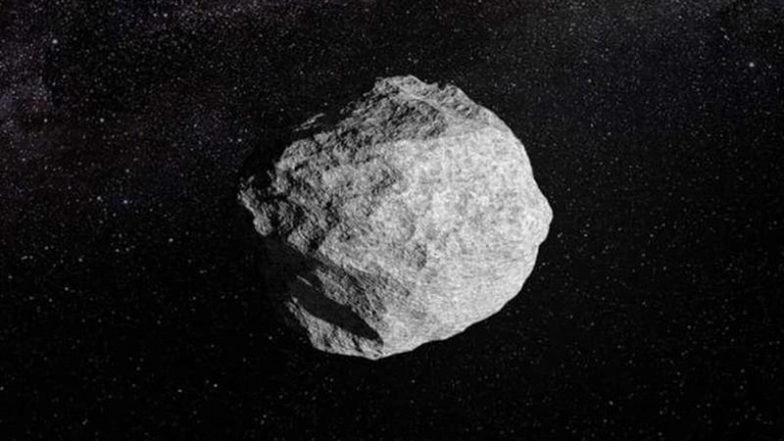
Mumbai, February 6: A newly discovered asteroid, designated 2024 YR4, has emerged as a significant subject of study for astronomers after data suggested it has a small but notable chance of striking the Moon in May 2032. While most near-Earth objects of this size typically pose a theoretical threat to our planet, orbital calculations indicate that this particular space rock, estimated to be roughly 200 feet (60 metres) wide, is more likely to impact the lunar surface. If the collision occurs, scientists believe the energy released could create a bright flash visible to the naked eye or through small telescopes on Earth.
Current projections from NASA and international space agencies place the probability of a lunar impact at approximately 1 in 25, or 4%. While these odds are relatively high in astronomical terms, they are expected to shift as more tracking data becomes available over the next eight years. The asteroid was first detected in late 2024, and researchers have since been refining its trajectory to determine whether it will pass safely by the Earth-Moon system or make history as a rare witnessed impact event. Sun Solar Flare: NASA Monitors Most Intense ‘X4.2’ Class Eruption on February 4; Radio Communications, Electric Power Grids, Spacecraft and Astronauts at Risk.
Asteroid 2024 YR4 May Hit Earth’s Moon: The Scale of the Potential Impact
At roughly 200 feet in diameter, 2024 YR4 is comparable in size to the object that caused the 1908 Tunguska event in Siberia. Because the Moon lacks an atmosphere to burn up incoming debris, an asteroid of this size would hit the surface at full speed, likely traveling at tens of thousands of miles per hour.
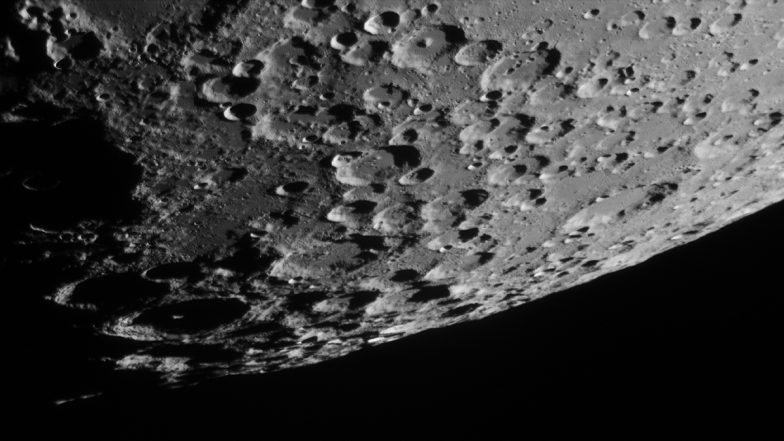
Experts estimate that the resulting explosion would produce a new crater and a significant thermal flash. Depending on where the impact happens, specifically if it occurs on the "dark" side of the Moon currently facing Earth, it could appear as a momentary, star-like spark to observers below. Is Viral Video of Asteroid Hitting Moon Real or Fake? Fact Check Debunks CGI Footage Showing Space Rock Crashing on Lunar Surface.
Why the Moon is the Target
The asteroid’s orbit brings it into a narrow corridor where the Moon's gravitational pull could intercept it. While the Earth is a larger target, the specific geometry of 2024 YR4’s path in May 2032 currently points toward a lunar encounter.
Initial fears of an Earth impact have largely been dismissed by latest tracking data. However, astronomers remain vigilant because even a slight shift in the asteroid's path due to solar radiation pressure or gravitational "keyholes" could alter the outcome.
Monitoring and Future Observations
The asteroid is currently being monitored by the Center for Near-Earth Object Studies (CNEOS). Because the predicted encounter is still years away, the asteroid will periodically become difficult to see as it moves further from Earth, before becoming brighter again as it nears its 2032 flyby.
Every time the asteroid is spotted, new data points are added to the orbital model. In most cases involving such "low-probability" events, further observations eventually show that the asteroid will miss its target entirely.
Should the impact occur, it would provide a rare opportunity for planetary scientists to observe the formation of a lunar crater in real-time. Missions currently orbiting the Moon, such as NASA’s Lunar Reconnaissance Orbiter (LRO), would be used to photograph the "before and after" of the impact site.
This data would help researchers better understand how the Moon’s surface, or regolith, reacts to high-velocity impacts, providing critical safety information for future human habitats planned under the Artemis program.
(The above story first appeared on LatestLY on Feb 06, 2026 02:00 PM IST. For more news and updates on politics, world, sports, entertainment and lifestyle, log on to our website latestly.com).