Real-Life Kraken: Bus-Sized Ancient Octopus Hunted Marine Giants, New Study Confirms
A study in Science journal reveals that giant, 'kraken-like' octopuses reaching 62 feet long were apex predators during the Cretaceous. By analyzing fossilized beaks found in Japan and Canada, researchers determined these invertebrates likely rivaled mosasaurs, using bone-crushing jaws and advanced behavior to dominate the oceans 100 million years ago.

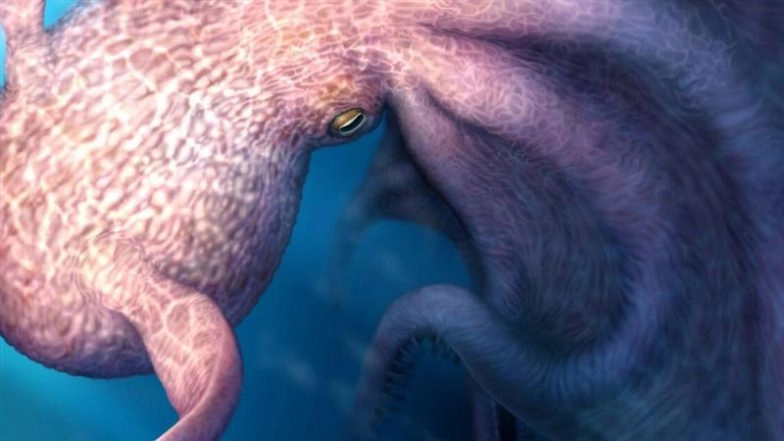
New research published Thursday in the journal Science has unveiled a "hidden" apex predator that once rivaled the largest marine reptiles: a giant, kraken-like octopus. Measuring up to 62 feet (19 meters) in length, these ancient cephalopods likely dominated the oceans during the Late Cretaceous period, challenging the long-held belief that only vertebrates like mosasaurs and sharks sat at the top of the prehistoric food chain.
A Giant Among Invertebrates
The study, led by paleontologist Yasuhiro Iba of Hokkaido University, focused on fossilized beaks found in Japan and Canada’s Vancouver Island. While octopus bodies are soft and rarely fossilize, their beaks are made of durable chitin, which can survive for millions of years.
Researchers identified several species, most notably Nanaimoteuthis haggarti, which lived between 72 million and 100 million years ago. By comparing these fossilized jaws to those of modern finned octopuses, the team estimated that the largest individuals reached lengths of nearly 19 meters - surpassing the modern giant squid (12 meters) and making them potentially the largest invertebrates ever recorded. 'Megachile Lucifer' Bee Discovered in Australia: Scientists Find New Species of Bee With Tiny Devil-Like 'Horns' in Goldfields, Name It 'Lucifer'; Here's Why.
Evidence of a Bone-Crushing Predator
The fossils provided more than just size estimates; they offered a glimpse into the creature's violent lifestyle. Digital imaging and AI-assisted modeling revealed significant wear and tear on the beaks, including chips, scratches, and blunted edges.
"The intense wear observed on the beaks is consistent with repeated crushing of hard structures such as bones and shells," Iba stated. This suggests that these "krakens" did not just eat soft fish but were powerful enough to process armored prey, possibly including large ammonites or even small marine reptiles. Dual-Sex Spider Discovered in Thailand: Scientists Find New Species Exhibiting Both Male and Female Traits, Here’s All You Need To Know.
Behavioral Sophistication
Beyond physical power, the study suggests these ancient octopuses were behaviorally advanced. The researchers noted "asymmetric wear" on the jaws, a sign of lateralized behavior similar to "handedness" in humans. This indicates the animals may have favored specific arms for capturing and positioning prey before delivering a fatal bite.
"This indicates not only strength, but also advanced and flexible behavior," Iba said. Scientists believe these octopuses likely possessed fins to help navigate the deep, much like some modern deep-sea species.
Redefining the Ancient Food Web
For decades, the Cretaceous seas were depicted as a battlefield dominated solely by vertebrate "sea monsters" like the long-necked plesiosaur. This discovery shifts that narrative, placing giant invertebrates in the same ecological tier.
"Our study shows that giant invertebrates also functioned as apex predators," said Iba. "This changes how we view ancient oceans."
While the lack of preserved stomach contents makes it difficult to confirm exactly what these giants ate, paleontologists are hopeful that future discoveries will provide more clues. For now, the "Cretaceous Kraken" stands as a reminder that the most formidable hunters of the ancient world didn't always need a backbone.
DISCLAIMER: This article is strictly for informational and educational purposes to raise awareness about the said topic. LatestLY DO NOT host, distribute, or provide links to sexually explicit content, leaked videos, or pirated material. Any search terms or keywords mentioned are solely for the purpose of explaining the viral trend and its associated dangers. We strongly condemn the circulation of non-consensual intimate imagery (NCII) and advise all readers to refrain from searching for or sharing such content, as doing so may lead to severe legal consequences.
(The above story first appeared on LatestLY on Apr 25, 2026 08:42 AM IST. For more news and updates on politics, world, sports, entertainment and lifestyle, log on to our website latestly.com).