Iran New Supreme Leader: How Succession Works and Why Mojtaba Khamenei Is Possible Choice
Following the death of Ayatollah Ali Khamenei, Iran has formed a temporary leadership council including President Masoud Pezeshkian and Judiciary Chief Gholamhossein Mohseni Ejei. The 88-member Assembly of Experts must now elect a successor. This transition occurs amid regional conflict and debate over whether Khamenei's son, Mojtaba (Mujtaba) Khamenei, will take power.

Tehran, March 1: Iran's government has officially formed a temporary leadership council today, March 1, following the death of Supreme Leader Ayatollah Ali Khamenei. The 86-year-old leader, who held power for nearly 37 years, was killed in a joint US.-Israeli airstrike targeting his compound in Tehran on Saturday, February 28.
The transition marks only the second time the Islamic Republic has faced a leadership succession since its 1979 revolution, triggering immediate regional instability and retaliatory strikes across the Middle East. Iran-Israel War: MEA Advises Foreign Nationals in India To Contact FRRO for Visa Help Amid West Asia Crisis.
Interim Governance and Constitutional Protocol
Under the Iranian constitution, a three-member council has assumed all duties of the Supreme Leadership to prevent a power vacuum. This interim body is composed of:
- Masoud Pezeshkian: Iran’s reformist President.
- Gholamhossein Mohseni Ejei: The hard-line Chief of the Judiciary.
- A Member of the Guardian Council: Appointed by the Expediency Council to represent the constitutional watchdog.
This council will oversee state affairs and the military while the country enters a mandated 40-day period of public mourning.
The Selection of Iran's New Supreme Leader
While the interim council governs, the formal responsibility for choosing a permanent successor lies with the Assembly of Experts. This 88-member body of Shiite clerics is required by law to convene "as soon as possible" to elect a new leader. The selection process is notoriously opaque. Candidates must be vetted by the Guardian Council, which has historically disqualified moderates - such as former President Hassan Rouhani - to ensure the assembly remains dominated by hard-liners loyal to the current system.
Contenders and Succession Challenges
The sudden nature of Khamenei's death has left the path to succession unclear. Previously, former President Ebrahim Raisi was considered the frontrunner, but his death in a May 2024 helicopter crash removed him from the race. Current speculation centers on:
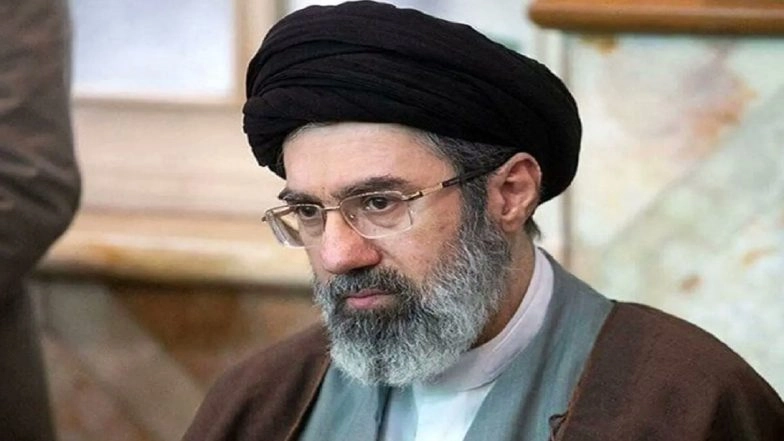
- Mojtaba Khamenei (Mujtaba Khamenei): The 56-year-old son of the late leader. While influential, his appointment could be viewed as "un-Islamic" by those who oppose a hereditary dynasty, potentially fueling further domestic unrest.
- A Senior Cleric: The Assembly may opt for a high-ranking religious figure to maintain traditional clerical legitimacy.
A Heightened State of Conflict
The leadership transition occurs amidst unprecedented military escalation. Following the strike on Khamenei, Iran’s Revolutionary Guard (IRGC) launched a massive missile barrage targeting Israeli cities and US military bases in Bahrain, Kuwait, and Qatar. Regional flight operations, including those at Dubai International Airport, have been suspended due to airspace closures. The IRGC, which was significantly empowered during Khamenei's 36-year tenure, remains the ultimate arbiter of Iran's domestic and foreign security policy during this transition.
(The above story first appeared on LatestLY on Mar 01, 2026 12:44 PM IST. For more news and updates on politics, world, sports, entertainment and lifestyle, log on to our website latestly.com).