













 Quickly
 Socially
 Trending
 Crypto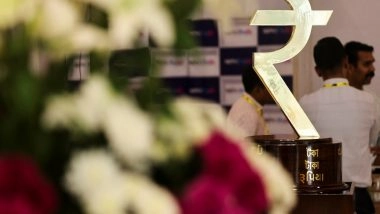
New Delhi [India], December 18 (ANI): The Indian Rupee, which has been under pressure in recent times, is likely to bounce back strongly in the second half of the next financial year, from October 2026 to March 2027, according to a report by the State Bank of India (SBI).
The report said the rupee is currently in a depreciating phase, but this trend is expected to reverse over time. SBI noted that past trends and its own analysis suggest that the rupee will exit the present depreciation regime and regain strength in the latter half of the next fiscal year.
It stated "we believe that the Rupee is likely to bounce back strongly in the second half of next fiscal"
According to the report, earlier movements in the rupee were largely influenced by strong foreign portfolio inflows. It said that before CY14, the abundance of portfolio inflows was the main reason behind rupee movements.
However, such large inflows are no longer available. The report pointed out that geopolitical uncertainties, especially delays in trade deals, have now become the most important factors affecting the rupee.
The report said the period of large and easy capital inflows is over, as global uncertainties have taken center stage. It highlighted that during CY07 to CY14, net portfolio inflows averaged USD 162.8 billion. In comparison, from CY15 to CY25 (till date), portfolio inflows have been much lower at USD 87.7 billion.
Despite these challenges, the report said India's trade data shows strong resilience. It noted that the country has been able to manage prolonged global uncertainty, rising protectionism and labour supply shocks without major disruptions.
The report explained that the rupee's movement over time can be divided into three distinct phases.
In Phase I, from January 2008 to May 2014, the rupee depreciated much more than the dollar appreciated. During this period, the dollar appreciated by 1.7 per cent on average, while the rupee depreciated by 16.3 per cent on average, reflecting weak domestic fundamentals.
In Phase II, from May 2014 to March 2021, the rupee's depreciation broadly matched the dollar's strength. The rupee depreciated by 7.9 per cent on average, while the dollar appreciated by 5.1 per cent, showing a more synchronized movement between the two.
In Phase III, from September 2024 to the present, both the rupee and the dollar have been depreciating at the same time. SBI said this simultaneous decline marks a new phase shaped by heightened geopolitical uncertainty in the current global environment.
So the report outlined that although the rupee remains in a depreciating regime at present, it is likely to exit this phase. Once global uncertainties ease, the rupee is expected to recover strongly in the second half of the next fiscal year. (ANI)
(The above story is verified and authored by ANI staff, ANI is South Asia's leading multimedia news agency with over 100 bureaus in India, South Asia and across the globe. ANI brings the latest news on Politics and Current Affairs in India & around the World, Sports, Health, Fitness, Entertainment, & News. The views appearing in the above post do not reflect the opinions of LatestLY)
 Share Now
 Google Trends



 Live Bot