













 Quickly
 Socially
 Trending
 Crypto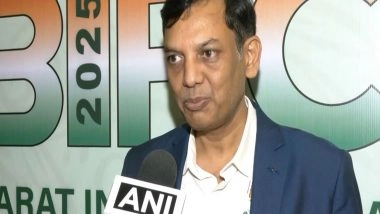
New Delhi [India], October 30 (ANI): Nese Sreenivasulu, Principal Scientist at the International Rice Research Institute (IRRI), on Thursday, emphasised the need to shift from highly processed food to nutrition-based diets to tackle rising lifestyle diseases.
Speaking to ANI on the sidelines of the Bharat International Rice Conference in New Delhi, Sreenivasulu said, "We need to shift from highly processed food towards nutritious food. And of course, palatability is very critical. We need to make sure that all those nutritious products we make should be higher in their palatability as well as in nutritional density."
Also Read | 'Hopeful My Wife Usha Vance Becomes Christian', Says US Vice President JD Vance (Watch Video).
Highlighting the health challenges posed by poor dietary habits, he said nearly 560 million people are type 2 diabetic worldwide, and India has around 101 million cases. "India is really a global capital for type 2 diabetes," he said.
He noted that nearly "60% of the energy we are getting in India comes from cereals -- rice, wheat, or processed millets." A small dietary change, he said, could make a big impact. Citing an ICMR study, he added, "If we can increase protein content by 5 per cent by replacing carbohydrates, then up to 15 to 30 per cent of increased type 2 diabetes can be reversed or contained."
Explaining the problem with current rice varieties, he noted that most of them have a high glycemic index (GI) of 70 to 94, whereas healthier carbohydrates should have a GI of 55 or lower. "IRRI has developed technologies to convert any rice variety into low GI with a value of 55 or below," he said, adding that next-generation varieties with GI below 45 have also been developed by increasing protein from 8 per cent to 16 per cent.
"These first and second-generation nutritious varieties release glucose slowly and steadily and add more protein," he said. Such low-GI rice, he added, would benefit low and middle-income communities, making it a "biggest intervention and the need of the hour."
He mentioned that "IRRI 147," a low-GI variety first released in the Philippines, has now been tested and released in India as "DRR-DAN-81" across seven states in collaboration with ICAR and the Indian Institute of Rice Research.
Sreenivasulu also said non-communicable diseases like diabetes, heart disease, and cancer represent "a USD 4 trillion investment in preventive health.
He emphasised the need to use food as medicine and shift towards healthier food with more nutritional density. He said that step changes such as staying active, avoiding highly processed foods, and focusing on "palatability with nutritional density" could help reduce the public health burden.
"In the long run, government would also see that as a big plus, not just addressing food security, but food and nutritional security hand in hand," he said.
Discussing the nutraceutical potential, he said that "around 15 million metric tons of bran is produced alone in India."
He said much of it is underutilised, though it contains rich nutrients.
"If you find a mechanism to tap the nutritional density in the rice bran, we could extract minerals, vitamins, and antioxidants," he said, suggesting that by using "microencapsulation or nanoencapsulation methods," India could "come up with cost-effective nutraceuticals" and "position it as an alternative industry to pharmaceutical applications." (ANI)
(The above story is verified and authored by ANI staff, ANI is South Asia's leading multimedia news agency with over 100 bureaus in India, South Asia and across the globe. ANI brings the latest news on Politics and Current Affairs in India & around the World, Sports, Health, Fitness, Entertainment, & News. The views appearing in the above post do not reflect the opinions of LatestLY)
 Share Now
 Google Trends



 Live Bot