Harish Rana Case: Supreme Court Allows Passive Euthanasia for Man in Coma for 13 Years in Landmark Judgment
In a landmark ruling, the Supreme Court of India has permitted passive euthanasia for Harish Rana, a 32-year-old man who has remained in a coma for 13 years following a severe accident. The emotional verdict was delivered by a bench of Justice JB Pardiwala and Justice KV Viswanathan.

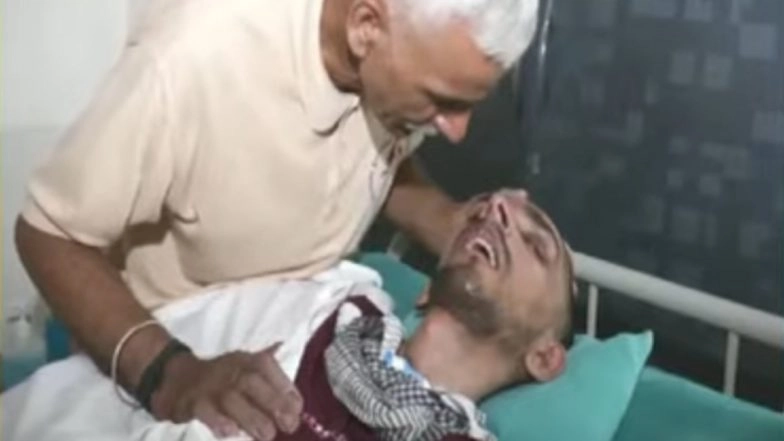
New Delhi, March 11: In a landmark ruling, the Supreme Court of India has permitted passive euthanasia for Harish Rana, a 32-year-old man who has remained in a coma for 13 years following a severe accident. The emotional verdict was delivered by a bench of Justice JB Pardiwala and Justice KV Viswanathan.
Rana slipped into a persistent vegetative state after falling from the fourth floor of a building in 2013 at the age of 20. Since then, he has survived through medically administered nutrition delivered via a PEG feeding tube, with doctors confirming there was no possibility of recovery. Delhi High Court Refuses To Permit Euthanasia of 30-Year-Old Man in Vegetative State for 10 Years, Says ‘No One Permitted To Cause Death of Another Person’.
Supreme Court Clarifies Passive Euthanasia Rules
The judgment further clarifies guidelines laid down in the court’s historic Common Cause v. Union of India ruling, which recognised the legality of passive euthanasia in India.
In the Harish Rana case, the court ruled that clinically administered nutrition and hydration, including feeding through medical tubes, qualifies as medical treatment. This means it can be legally withdrawn if medical boards conclude that continuing treatment is not in the patient’s best interest. SC Allows Passive Euthanasia: Mumbai Couple Unhappy with the Decision as They Sought for Active Euthanasia.
Parents Sought Court’s Permission
Rana’s parents approached the courts after years of caring for their son without any medical improvement. They argued that the treatment was only prolonging biological life without any hope of recovery and requested permission to withdraw life-sustaining medical support.
Accepting their plea, the Supreme Court allowed the withdrawal of medical treatment in a hospital setting, effectively allowing Rana to die with dignity under passive euthanasia guidelines.
Court Reflects on Life and Death
Opening the verdict, the bench reflected on the complexity of end-of-life decisions. The judges cited American preacher Henry Ward Beecher and also referred to William Shakespeare while discussing the difficult moral and legal questions courts must sometimes confront in such cases.
The ruling is expected to become a significant precedent in India’s evolving legal framework around passive euthanasia and patients’ right to die with dignity.
(The above story first appeared on LatestLY on Mar 11, 2026 12:07 PM IST. For more news and updates on politics, world, sports, entertainment and lifestyle, log on to our website latestly.com).